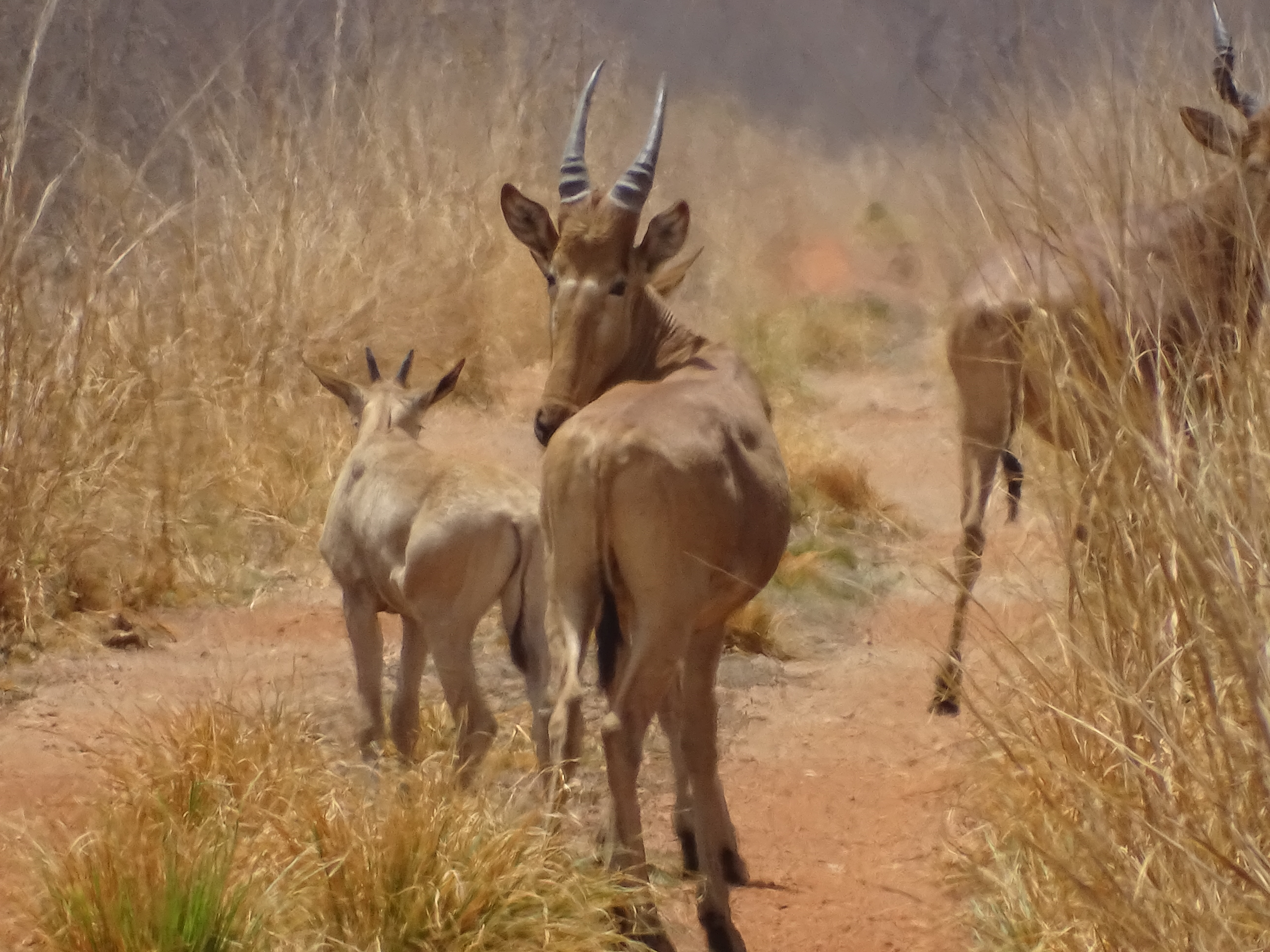
Pendjari National Park
Somewhere between five and thirteen Northwest African cheetahs survive in the grasslands and open woodland of northwestern Benin. That number -- recorded in a 2007 survey -- represents one of the last viable populations of the subspecies on earth. The cheetahs share this landscape with roughly 100 West African lions, herds of more than 800 elephants, and the endangered West African wild dog, a canid so rare that a confirmed sighting during a 2000 survey was treated as a significant scientific event. Pendjari National Park is not merely a nature reserve. It is a last stand.
Where Three Countries Meet
Pendjari covers 2,755 square kilometers of northwestern Benin, its western boundary running along the Pendjari River, which also marks the border with Burkina Faso. The park is part of the WAP Complex -- W, Arli, and Pendjari -- a transboundary protected area spanning Benin, Burkina Faso, and Niger that constitutes one of the largest contiguous wildlife reserves in West Africa. In July 2017, UNESCO inscribed the WAP Complex as a World Heritage Site, recognizing its global significance for biodiversity conservation. The Atakora range's rocky cliffs and escarpments form a dramatic backdrop to the east, while the park itself transitions between Sudanian and Guinean savannas -- dry grasslands giving way to gallery forests along the river corridors. Annual rainfall averages around 1,100 millimeters, and during the wet season from June to November, parts of the park become impassable.
The Big Mammals' Last Redoubt
The numbers tell a story of concentration by necessity. Between 2005 and 2010, Pendjari's elephant population held steady at more than 800 individuals. Across the entire WAP Complex, the count exceeded 3,800 -- the largest elephant concentration in all of western Africa. Hippopotamuses occupy the Pendjari River's banks and pools. African buffalo number roughly 2,700, western hartebeests around 1,500, roan antelope approximately 2,000, and kob antelope some 2,600. These populations exist because habitat elsewhere has disappeared. The animals that once ranged across vast swaths of West African savanna have been compressed into this network of protected areas, making Pendjari's survival a matter of continental, not merely national, importance. Olive baboons, patas monkeys, and tantalus monkeys represent the park's primates, while smaller antelope -- red-flanked duikers, oribis, common duikers -- move through the undergrowth.
Predators on the Edge
Pendjari's predator community reads like a roster of West Africa's most endangered carnivores. The lion population in the WAP Complex numbered about 100 individuals by 2009, possibly the largest remaining population in the region. African leopards patrol the forest margins. Spotted hyenas and side-striped jackals scavenge and hunt across the savanna. The African civet slips through the undergrowth at dusk. But the species that commands the most attention is the Northwest African cheetah, classified as critically endangered. With only a handful of individuals confirmed in Pendjari and neighboring W National Park, every sighting matters. The West African wild dog, recorded during a survey in April 2000, adds another layer of urgency. These are not animals that can simply relocate if this habitat fails. For many of them, there is nowhere else to go.
Three Hundred Kinds of Wings
Above the drama of the large mammals, Pendjari sustains an extraordinary avian community. Some 300 bird species have been recorded, including large, conspicuous residents like the African openbill stork, Abdim's stork, and the saddle-billed stork. Seasonal flocks of up to 60 European white storks pass through on migration. African fish eagles call from the riverside canopy, and the elusive Pel's fishing owl hunts the same waters after dark. Raptors cycle through with the seasons: pallid harriers and lesser kestrels appear as occasional visitors, while fox kestrels and African swallow-tailed kites are regular presences during the dry months. Smaller species fill every available niche -- violet turacos and blue-bellied rollers in the woodland, red-throated bee-eaters and bearded barbets along forest edges, and the Togo paradise whydah displaying in the open grassland. In 2018, a $23.5 million funding pledge through African Parks aimed to strengthen protection of this critical ecosystem, a recognition that Pendjari's value extends far beyond any single species.
From the Air
Pendjari National Park is located at 11.05°N, 1.52°E in northwestern Benin, along the border with Burkina Faso. From altitude, the park presents a vast expanse of savanna and woodland, with the Pendjari River tracing a sinuous path along its western edge -- the river marks the international border, with Burkina Faso on the right bank and Benin on the left. The Atakora range is visible to the east. The nearest airport is Natitingou Airport (DBBB) to the south. The park connects northward to Arli National Park in Burkina Faso as part of the WAP Complex. During dry season (December to May), the landscape appears brown and open; during wet season, it greens dramatically and portions become inaccessible.