Penn Center
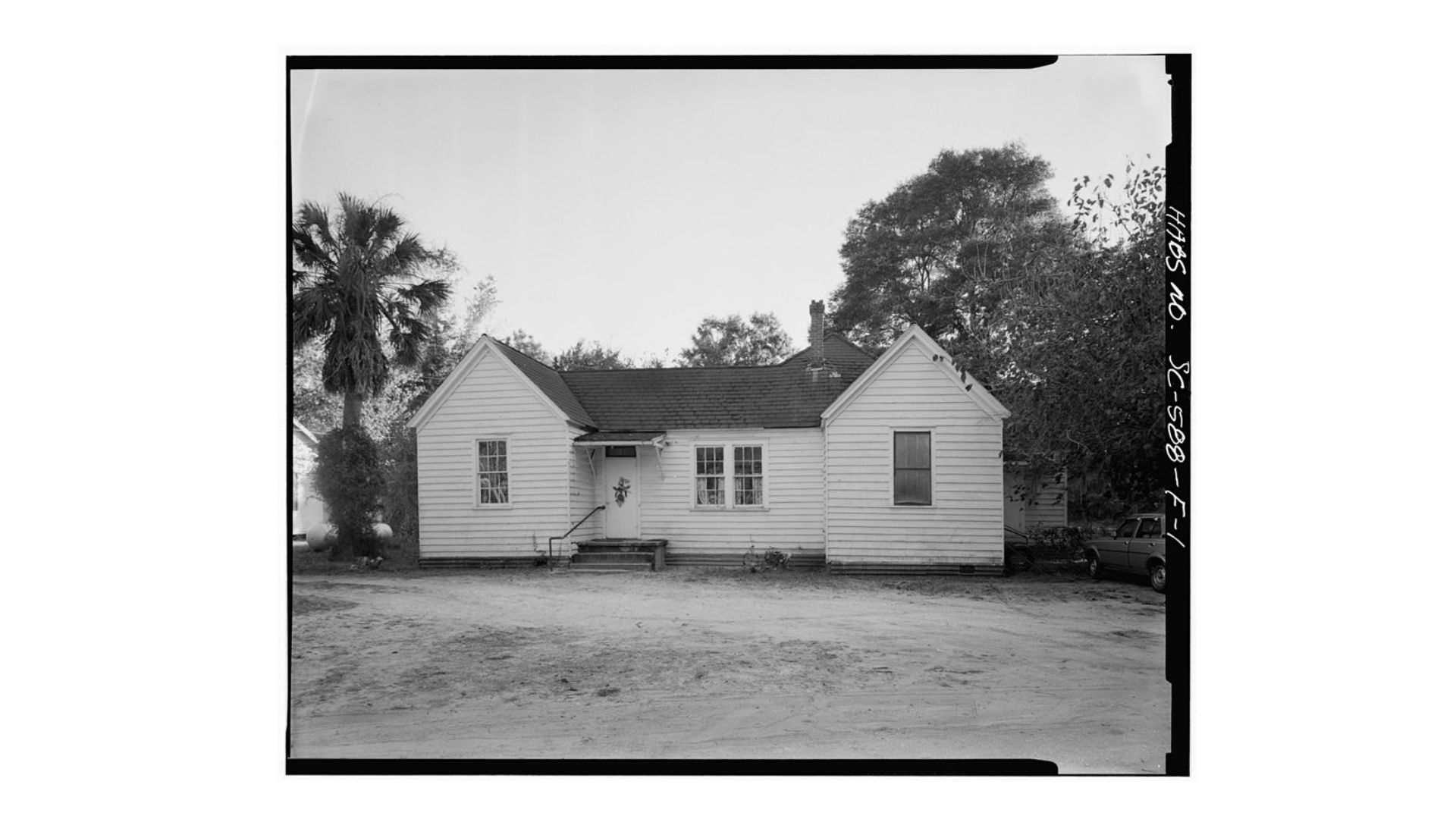
The record of Martin Luther King Jr. coming to St. Helena Island was kept secret, even from the local sheriff. Between 1964 and 1967, King and his Southern Christian Leadership Conference lieutenants slipped onto the Penn Center campus for strategy sessions, finding in this isolated Sea Island compound the privacy and peace that the movement's most visible leader could find almost nowhere else. King stayed in Gantt Cottage, a modest building that Penn School students had built in 1940, and it was there -- in a cottage on a barrier island where the Gullah language still carried the rhythms of West Africa -- that he worked on drafts of his 'I Have A Dream' speech. The cottage still stands. So does everything Penn Center was built to represent: the idea that education is the first act of freedom.
The Port Royal Experiment
Penn Center's origin story begins with cannon fire. In 1861, after the first shots of the Civil War at Fort Sumter, Union forces captured St. Helena Island and the surrounding Sea Islands, sending plantation owners fleeing to the mainland. The military administration partitioned their land and gave it to the formerly enslaved people who had worked it. Union General Thomas W. Sherman oversaw the beginning of what became known as the Port Royal Experiment -- an unprecedented effort to establish hospitals, schools, and economic opportunity for freed people in the Lowcountry around Port Royal, South Carolina. It was, in effect, the first test of whether formerly enslaved people could build independent lives as free citizens. Into this extraordinary moment stepped Laura Towne, a Quaker from Philadelphia who arrived in 1862 and, together with fellow teacher Ellen Murray, founded Penn School. Towne named it for William Penn, the Quaker champion of human liberty and founder of Pennsylvania. For decades, Philadelphia Quaker abolitionists financed the school's work.
A Campus Built by Its Students
Walk the Penn Center campus today and you walk through a timeline of Black self-determination. The oldest building, Darrah Hall, dates to 1882 and has served as a community nexus for over a hundred years. The Cope Industrial Shop, built in 1912, once housed classes in harness-making, wheelwrighting, blacksmithing, basketry, carpentry, and cobbling -- practical trades that gave graduates economic independence. It now houses the York W. Bailey Museum. Many of the campus buildings were constructed by the students themselves: Alden Sales House in 1900, Jasmine Cottage in 1911, the Butler Building in 1931, Gantt Cottage in 1940. Near the Benezet House stands a bell tower erected in 1865, housing a brass bell modeled after the Liberty Bell and inscribed with the words 'Proclaim Liberty.' The bell is now displayed in the museum. Across the road, the 1855 Brick Baptist Church -- built by plantation owners before the war -- served as Penn School's first classroom before the school moved into its own buildings.
From Schoolhouse to Civil Rights Sanctuary
In 1948, the school transitioned from educating children to serving the broader community, and by 1951 it had been renamed the Penn Center. The campus became a conference space, a cultural preservation hub, and -- crucially -- a safe meeting ground for the civil rights movement. The Frissell Community House, built in 1925 on the site of the original schoolhouse, hosted training and strategy meetings for the Southern Christian Leadership Conference. King's visits to the island were carefully guarded secrets; community members worked to keep him out of the public eye for his own safety. In 1968, the year of King's assassination, the Retreat House and Dock were completed -- planned as a more scenic, meditative meeting place to replace the smaller Gantt Cottage. The building became both a memorial and a reminder that the work King planned on this island was never finished.
Gullah Ground Zero
St. Helena Island's isolation -- surrounded by tidal creeks and salt marshes, accessible only by bridge -- is the reason Gullah culture survived here with such intensity. The Gullah language, a creole born from English and several West African tongues, is still spoken on the island. The Emory S. Campbell Dining Hall serves traditional Gullah-style foods to conference guests. Sweetgrass basketry, taught in the old Cope Industrial Shop, continues as a living art form. Penn Center sits at the heart of a cultural landscape that UNESCO recognized in 2024 when it included the campus in its Routes of Enslaved Peoples network. The campus was designated a National Historic Landmark District in 1974, and in 2019 it became part of the Reconstruction Era National Historical Park. Today, the Penn Center Heritage Days celebration draws visitors from across the country to an island where the story of African-American resilience is not a museum exhibit but a daily reality.
From the Air
Located at 32.388N, 80.575W on St. Helena Island, one of the Sea Islands of South Carolina's Lowcountry. The campus is about one mile south of Frogmore along Dr. Martin Luther King Jr. Boulevard (visible as a road bisecting the campus). Best viewed at 2,000-4,000 feet AGL. The island is surrounded by tidal creeks and salt marshes. Nearest airports: KARW (Beaufort County Airport, ~6nm NW on Lady's Island), KSAV (Savannah/Hilton Head Intl, ~40nm SW). The Brick Baptist Church and campus buildings are visible clustered along the road corridor.