Pera Museum
An old man in flowing robes stands in a sunlit chamber, surrounded by tortoises. He carries a flute and a small drum. The tortoises, naturally, ignore him. This is The Tortoise Trainer, painted by Osman Hamdi Bey in 1906, and it hangs in a former Istanbul hotel that opened to a very different kind of guest. Pera Museum, the Bristol Hotel rebuilt for art, lives in a stone building from 1893 on Mesrutiyet Avenue, just off the bustle of Istiklal. The painter knew his metaphor: training tortoises was, and is, a Sisyphean act. The Ottoman Empire was running out of time. The reformers were running out of patience. The painter was running out of years.
From Bristol Hotel to Modern Museum
The architect Achille Manoussos designed the original building in 1893 as one of Pera's grand hotels, when the neighborhood was the cosmopolitan European quarter of late-Ottoman Constantinople. Embassies clustered nearby. French was the lingua franca of the boulevards. The Bristol catered to travelers passing through on the Orient Express. By 2005, when the Suna and Inan Kirac Foundation reopened the building as a museum, Pera had been Beyoglu for almost a century, and the surrounding district had cycled through Greek, Armenian, and Turkish identities. The bones of Manoussos's hotel held all of it.
The Orientalist Eye, Inverted
The collection's heart is Orientalist painting, and the framing is unusual. Most Orientalist art in Western museums was painted by European visitors gazing at imagined Easts. Here, Ottoman and Turkish painters share the walls with their European counterparts, and the dialogue gets interesting. Jean-Etienne Liotard's A Woman in Turkish Dress hangs near Antoine de Favray's portraits of French ambassadors costumed in Ottoman attire. Jean-Baptiste van Mour painted Sultan Ahmed III receiving the Dutch envoy at Topkapi Palace in 1727. The Ottomans painted the Europeans painting them. Osman Hamdi Bey painted them all back, and his Tortoise Trainer became the most expensive Turkish painting ever sold when it changed hands at auction in 2004.
Weights, Measures, and the Texture of Daily Life
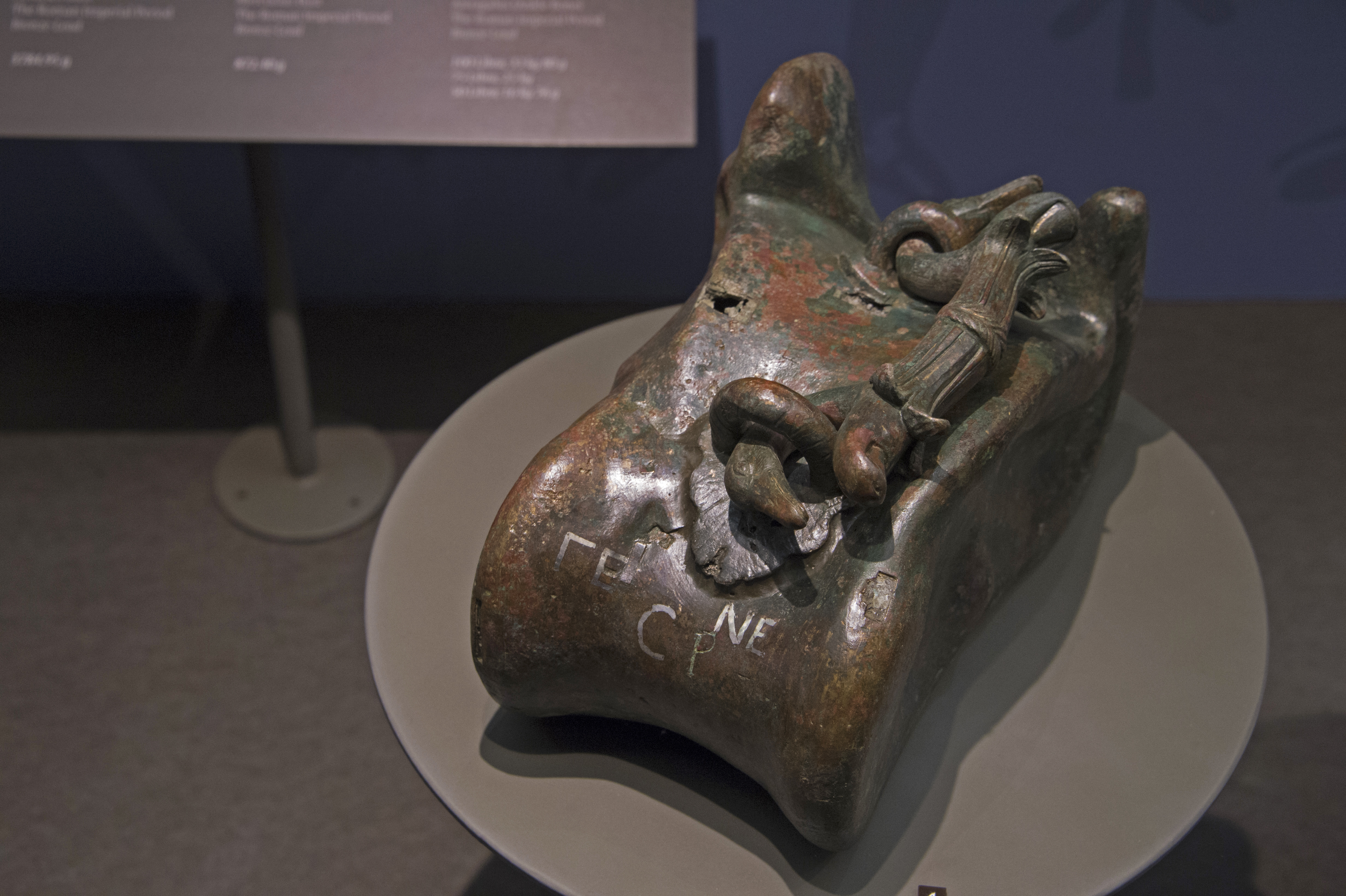
The Anatolian Weights and Measures Collection holds over 10,000 objects spanning prehistory to the present day. Scales for weighing gold. Rulers for sizing cloth. Vessels for measuring oil. Each object answers an old, stubborn question: how did people in Anatolia agree on what a thing weighed, and at what price it changed hands? The collection charts thousands of years of commerce in stone, bronze, copper, and brass. A separate gallery showcases 800-plus pieces of Kutahya tiles and ceramics from the 18th to 20th centuries, with their distinctive blues and greens that decorated mosques, fountains, and the homes of wealthy Ottomans.
Big Names, Small Building
Pera Museum punches above its weight on temporary exhibitions. Tate Britain has lent. Centre Pompidou has lent. The V&A has lent. The roster of artists shown here reads like a thumbnail history of modern art: Giacometti, Dubuffet, Cartier-Bresson, Rembrandt, Pirosmani, Koudelka, Miro, Kurosawa, Chagall, Picasso, Botero, Frida Kahlo, Etel Adnan, Diego Rivera, Goya. For a private foundation museum in a converted hotel, that is an unusual reach. It also runs Pera Film, a small cinema program that screens classics, independents, and animation alongside the temporary exhibitions, layering moving images onto still ones.
The Tortoise's Patience
Osman Hamdi Bey's painting works on multiple registers. The official reading is that it satirizes the difficulty of reforming Ottoman institutions, with the painter himself as the doomed trainer. Hamdi Bey was a polymath who founded the Istanbul Archaeology Museum and excavated the Sidon necropolis. He believed in slow, patient work. He died in 1910, twelve years before the empire he served. The tortoises he painted are still there in the museum, frozen mid-meander. The flute is still raised. Beyond the gallery walls, Istiklal Avenue rumbles on with a city that has remade itself again, and again, and again.
From the Air
Located at 41.0318 N, 28.9752 E in the Beyoglu district of Istanbul, on the European side of the Bosphorus. Just south of Taksim Square and adjacent to Istiklal Avenue. Visible from the air as part of the dense Pera district between the Galata Tower and Taksim. Istanbul Airport (LTFM) lies 35 km northwest. Sabiha Gokcen (LTFJ) lies 35 km southeast on the Asian side. The Golden Horn flows just south of the museum.