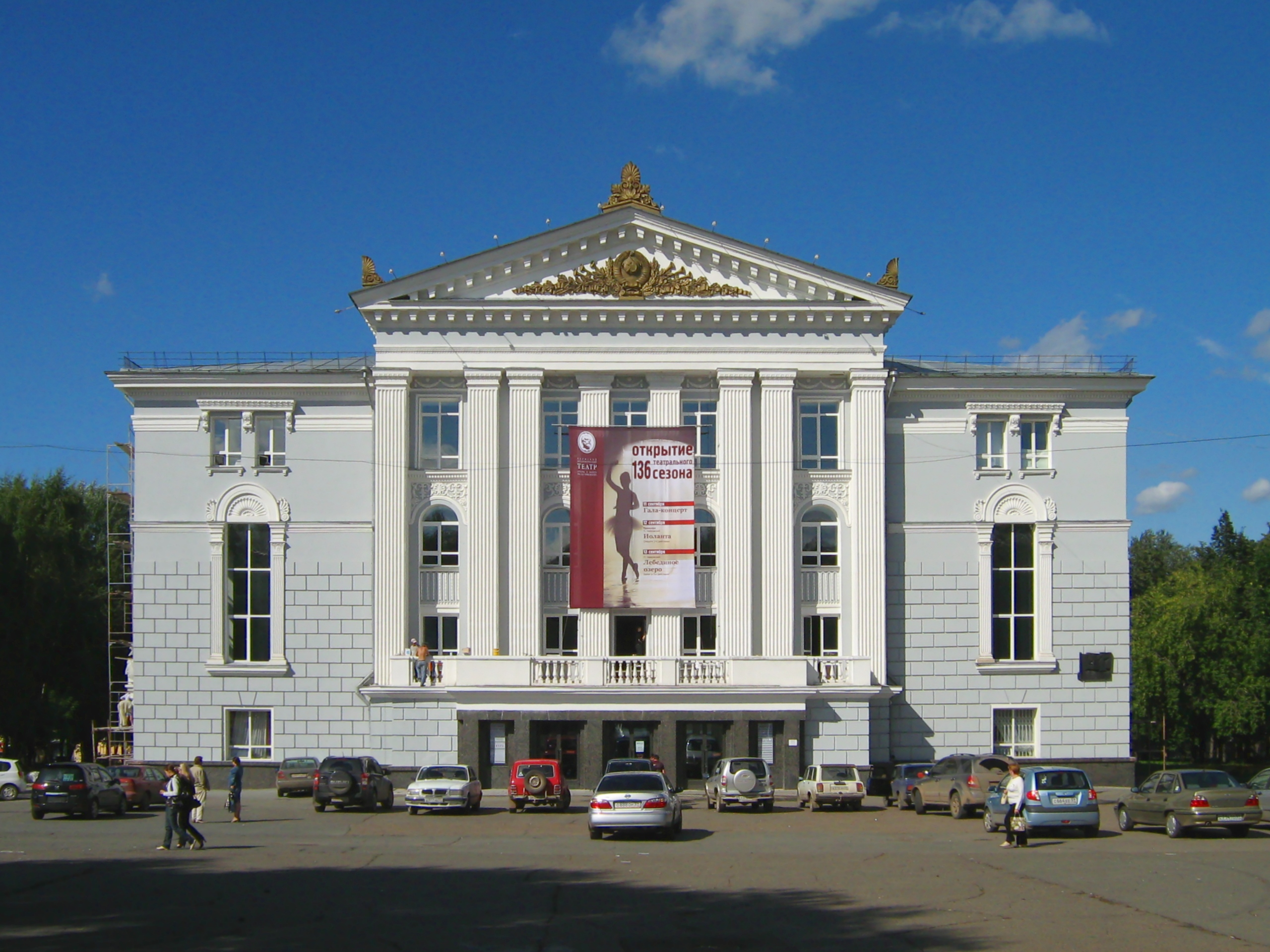
Perm Opera and Ballet Theatre
They call it Tchaikovsky's House, and the name is not honorary decoration. All ten of Pyotr Ilyich Tchaikovsky's operas and all three of his ballets are performed in the repertoire of the Perm Tchaikovsky Opera and Ballet Theatre -- the full catalog of stage works by a composer born in this region of the Urals. Since its inauguration in 1870, the theatre has grown from a provincial stage into one of Russia's most important musical institutions, a place where the Leningrad ballet company sheltered during World War II and where the Diaghilev Seasons festival now draws international audiences annually.
Opening Night, 1870
The theatre inaugurated on November 24, 1870, with a performance of Mikhail Glinka's A Life for the Tsar. The building itself came later, constructed between 1874 and 1879, with the first performance in the new structure during the winter of 1879-1880. A turning point arrived in 1896 when the Perm city parliament decided to finance the theatre and its opera troupe from the municipal budget -- an unusually progressive commitment for a provincial Russian city at the time. A board of directors was elected to manage operations and recruit artists. The theatre survived the Russian Civil War and reopened its first post-war season on August 20, 1921, a signal that cultural life in the Urals would endure through upheaval.
Wartime Refuge
When World War II reached Leningrad, the Leningrad State Academic Theatre of Opera and Ballet -- known today as the Mariinsky -- evacuated its personnel to Perm. For three winters and two summers, the Mariinsky's artists performed on the Perm stage. The arrangement was more than logistical convenience. It created a direct transmission line between the most elite tradition in Russian ballet and a regional company hungry for exactly that kind of exposure. The influence lingered long after the war ended, embedding a standard of excellence in Perm's ballet culture that would distinguish the company for decades.
Balanchine in the Urals
The theatre's ballet troupe, which performs internationally as The Tchaikovsky Ballet, has built its reputation through collaborations that bridge Russian tradition and Western choreography. Long-term partnerships with the George Balanchine Foundation and the Jerome Robbins Foundation have brought masterpieces by two of the twentieth century's most distinguished choreographers into the repertoire. The Arabesque ballet competition, held in Perm since 1990 and headed by Vladimir Vasiliev, has drawn more than 650 young dancers from countries spanning Russia, China, Japan, South Korea, Argentina, and the United States. For many decades, the theatre has served as a launching pad for artists who go on to international careers far from the Urals.
Diaghilev Comes Home
Sergei Diaghilev, the impresario who revolutionized ballet in Europe with the Ballets Russes, was born in the Perm region. The theatre honors that connection through the Diaghilev Seasons festival -- 'Perm-Petersburg-Paris' -- held since 2003, initially biennial and annually since 2011. The festival has become one of the most visible cultural events in Russia, linking the three cities that defined Diaghilev's life and legacy. The theatre itself seats 972 in its auditorium, with a stage 21.5 meters high and 18 meters wide. It is not the grandest performance space in Russia, but its history gives it weight disproportionate to its size. A performance of Mazeppa at Carnegie Hall in January 2008 introduced American audiences to the company under the name The Tchaikovsky Theatre, confirming what the Russian cultural world had known for decades: Perm punches well above its weight.
From the Air
Located at 58.016N, 56.246E in central Perm on the south bank of the Kama River. The theatre building is in the city center. Perm International Airport (USPP) is to the southwest. From altitude, the Kama River is the dominant feature bisecting the city; the theatre area is in the dense urban core south of the river.