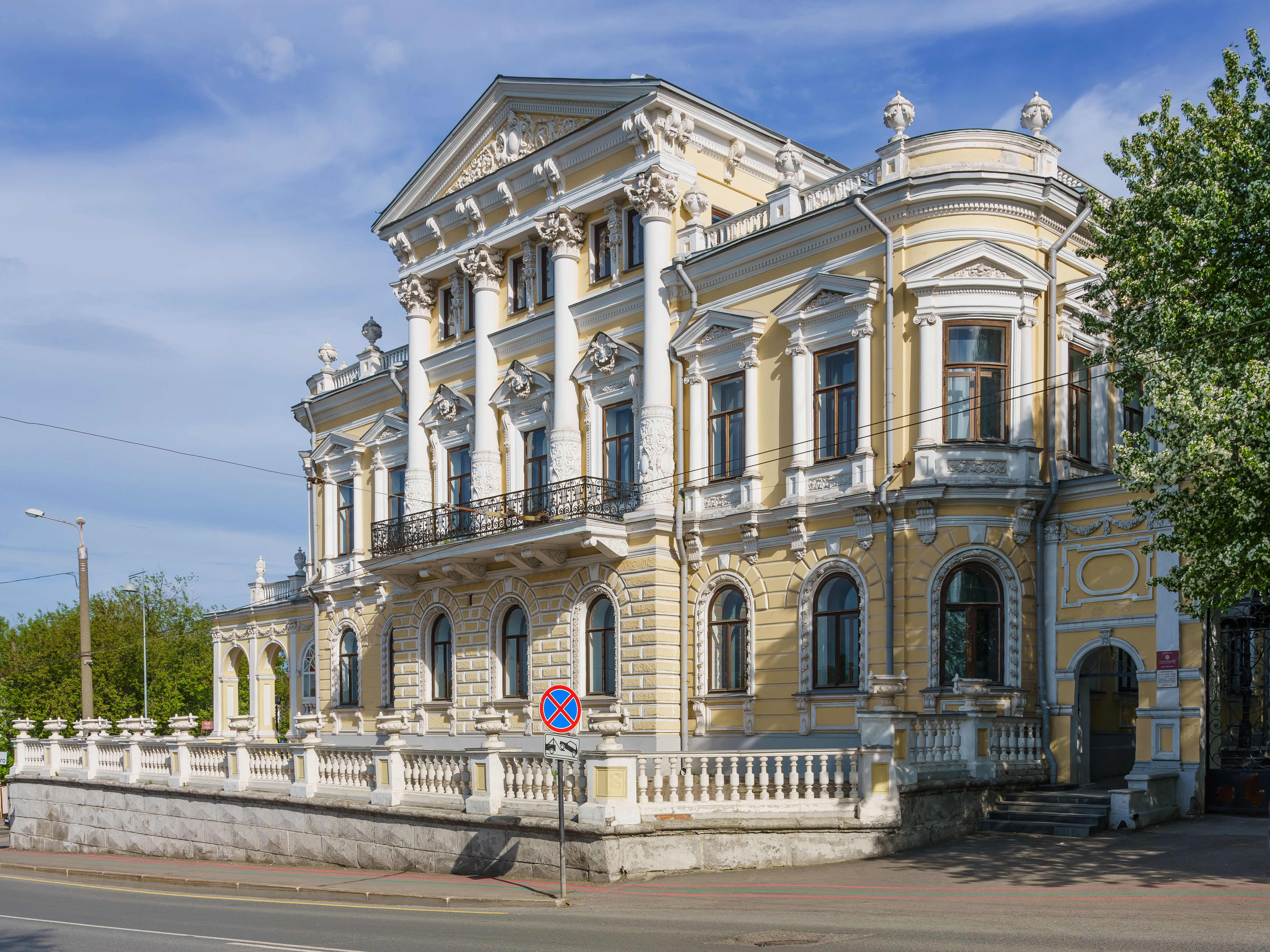
Perm Regional Museum
Before Perm had a university, it had a museum. For 26 years, from 1890 to 1916, the Perm Regional Museum served as the city's only institution of higher education -- a place where free lectures, scientific courses, and a growing collection of natural specimens and archaeological artifacts provided the nearest thing to academic life on the western edge of the Urals. Today it remains the oldest and largest museum in Perm, housed in a building on Monastyrskaya Street with a collection assembled over more than a century.
Born from Curiosity
The museum's origins trace to 1870, when a group of Russian intellectuals in Yekaterinburg founded the Ural Society of Natural Science Lovers. The society was dedicated to studying the natural history of the Ural Mountains and the surrounding region -- its geology, its flora, its fauna, its buried past. As the society expanded, it established commissions in several cities. In November 1890, a new commission convened its first meeting in Perm. That date is considered the museum's founding. The commission immediately set about creating a public museum, and by January 25, 1894, the first building opened its doors to visitors. What began as an outpost of naturalist enthusiasm became Perm's central cultural institution.
Science on Petropavlovskaya Street
In 1897, the museum relocated to Petropavlovskaya Street, a move accompanied by institutional reinvention. A new society was formed, and the museum was renamed the Perm Scientific and Industrial Museum. The new institution offered free educational courses and public lectures by notable scientists, fulfilling a role that went far beyond the display of specimens. In 1901, the museum launched the Mobile Museum of Teaching Materials, a program designed to support local schools with pedagogical literature and educational resources. Until Perm State University was established in 1916, the museum was the closest thing the city had to a university -- a gathering point for intellectual life in a region defined more by industry and forestry than by scholarship.
Layers of Time Under Glass
Over its century-long history, the museum accumulated a collection that mirrors the deep layers of the Ural region itself. Archaeological artifacts span thousands of years, including items associated with the ancient cultures that inhabited the Kama River valley. The fossil and bone collection is extensive, reflecting the geological richness of a region where Permian-period formations gave their name to an entire geological epoch. Cultural artifacts donated by prominent locals complement the natural history holdings, creating a collection that moves from deep geological time through the Iron Age settlements of the Kama valley to the industrial and cultural development of Perm itself.
The House on Monastyrskaya
The museum is housed in a historic building on Monastyrskaya Street, a structure that contributes to the museum's character as much as its contents. Perm's architecture carries the weight of its history as a gateway to the Urals and Siberia, and the museum building belongs to that tradition of solid, purposeful provincial construction. The museum maintains both permanent and temporary exhibitions, drawing visitors who come for the archaeology, the natural history, or simply for the experience of encountering a 135-year-old institution that has outlasted empires, wars, and revolutions. In a city better known for its ballet theatre and its industrial legacy, the Perm Regional Museum offers a quieter kind of depth -- the accumulated knowledge of a region that has been studied, cataloged, and preserved since the age of the natural science societies.
From the Air
Located at 58.019N, 56.247E in central Perm, on Monastyrskaya Street near the south bank of the Kama River. The museum is in the historic city center. Perm International Airport (USPP) is to the southwest. From altitude, the Kama River corridor and the dense urban grid of central Perm are the primary visual references.