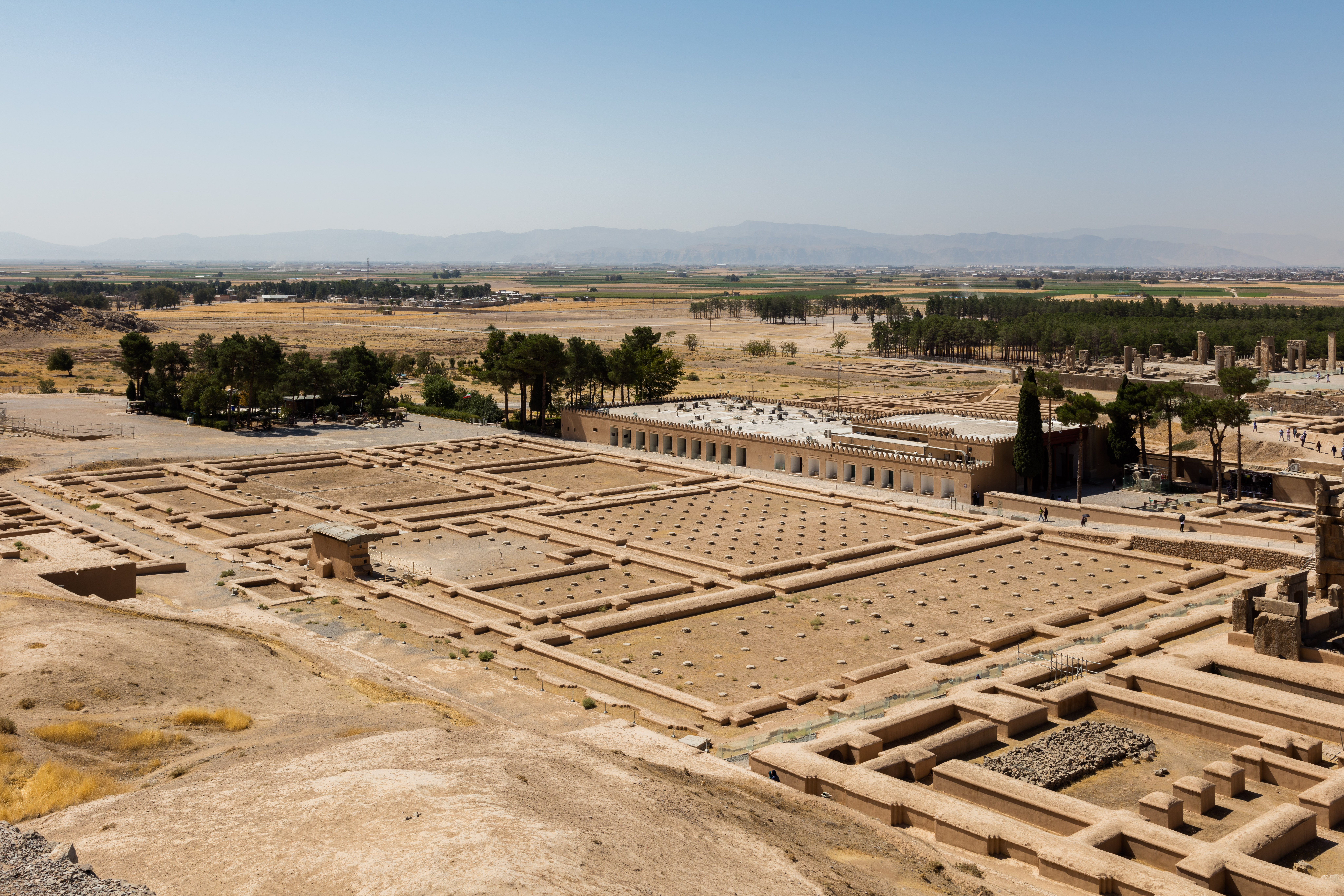
Persepolis: Visiting the Throne of Jamshid
Iranians do not call it Persepolis. They call it Takht-e Jamshid -- the Throne of Jamshid -- naming the ruins after a mythical first king rather than the Greek word for "Persian city." The distinction matters. For Western visitors, this UNESCO World Heritage Site is a magnificent archaeological ruin. For Iranians, it is something closer to a national origin story carved in stone, a place where the Achaemenid Empire once summoned representatives from every corner of its vast territory to pay tribute to the King of Kings each spring during the Nowruz festival.
Arriving at the Plain
There is no public transport to Persepolis. The nearest town reachable by bus is Marvdasht, fourteen kilometers away, where you transfer to a taxi for the final stretch across the Marvdasht plain. Long-distance buses bypass both towns entirely, following the main highway. From Shiraz, minibuses depart from the Ali Ibn Hamze Terminal, and most also stop near the Qur'an Gate. The remoteness is part of the experience. The ruins do not sit within a city or beside a highway. They sit where Darius the Great placed them around 518 BC: on a massive stone terrace at the foot of Kuh-e Rahmat, the Mountain of Mercy, visible for miles across the flat terrain before you reach them.
What the Flames Spared
Alexander the Great took Persepolis in 330 BC and set it ablaze. One ancient account attributes the fire to a drunken feast and the persuasion of Thais, an Athenian courtesan. Another claims Alexander acted deliberately, avenging the Persian destruction of Athens. Whatever the cause, the wooden roofs and cedar beams burned. The stone survived. The great terrace -- 125,000 square meters of raised platform -- still holds the remains of the Apadana palace, the Gate of All Nations with its massive winged bulls, the Throne Hall, and the reliefs that make Persepolis unique. Carved into the stairways, delegations from twenty-three subject nations process in stone, each wearing distinctive clothing, each bearing specific tribute: Babylonians with humped bulls, Indians with gold dust, Ethiopians with an okapi. The reliefs are not art for art's sake. They are imperial propaganda frozen in limestone.
Walking the Ruins
Guides can be hired at the entrance for a two- to three-hour tour, and they earn their fee. The site has almost no descriptive signage, and without context the scale of the ruins overwhelms the details. Food and bags must be left at the entrance. Souvenirs are sold at the ticket office and from kiosks near the food stalls outside. Inside, the experience is one of immense horizontal space -- the terrace stretches in every direction, columns stand in partial rows like a forest after a catastrophe, and the reliefs require close inspection to appreciate. The double stairway leading to the Apadana is the masterpiece: each step reveals another carved figure, another diplomatic procession, another fragment of a world that ruled from the Indus to the Nile.
Beyond the Gates
Persepolis does not stand alone in the region. Fifty kilometers to the northeast lies Pasargadae, the earlier Achaemenid capital built by Cyrus the Great in the 6th century BC, also a UNESCO World Heritage Site. Naqsh-e Rostam, with its rock-cut royal tombs and Sassanid reliefs, is only a few kilometers from Persepolis itself. Together these sites form a corridor of Persian imperial history spanning centuries. Shiraz, the nearest large city, offers its own layers of history -- the tombs of the poets Hafez and Saadi, gardens that have been cultivated for a thousand years, and a culture that considers itself the heartland of Persian civilization. Persepolis is the monumental anchor, but the region surrounding it is the context that makes the monument legible.
From the Air
Located at 29.94°N, 52.89°E on the Marvdasht plain in Fars province, Iran. From altitude, the raised stone terrace of Persepolis is visible as a geometric platform at the base of Kuh-e Rahmat (Mountain of Mercy), contrasting sharply with the surrounding agricultural flatlands. The site sits approximately 60 km northeast of Shiraz. Shiraz Shahid Dastgheib International Airport (OISS) is the nearest major airport. The ruins of Naqsh-e Rostam are visible a few kilometers to the northwest. The flat terrain of the Marvdasht plain makes the elevated terrace distinctive even from considerable altitude.