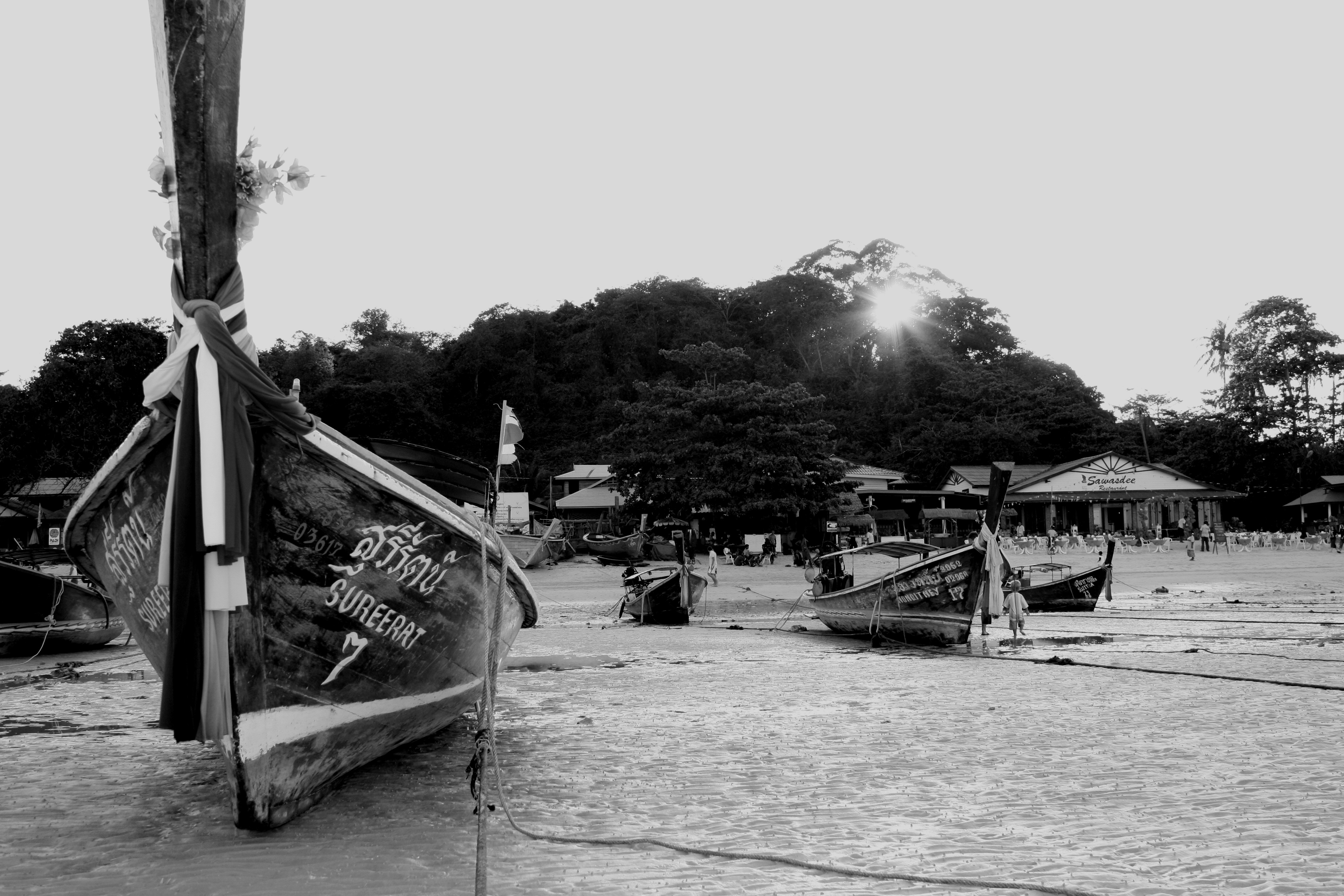
Phi Phi Islands
Maya Bay became the most famous beach on Earth because of a movie about a man trying to escape the modern world. The irony has been playing out ever since. When Leonardo DiCaprio's 2000 film The Beach sent millions of travelers to Ko Phi Phi Le in search of unspoiled paradise, they brought with them the very thing they were fleeing: crowds, waste, and the slow destruction of something beautiful. The Phi Phi Islands sit in the Andaman Sea between Phuket and the Krabi coast, a cluster of limestone karsts so dramatic they look art-directed. In a sense, they were.
Fishermen Before the Ferries
Thai Malay fishermen settled Ko Phi Phi Don in the late 1940s, drawn by abundant waters and sheltered bays. The island became a coconut plantation, a quiet place where the rhythms of harvest and tide set the clock. Today the resident population remains more than 80 percent Muslim, though the thousands of transient workers who service the tourism industry have shifted the island's demographics. Between 2,000 and 3,000 permanent residents share the 10-square-kilometer island with a daily flood of visitors that can exceed a thousand. Phi Phi Don is the only inhabited island in the group; its smaller sibling, Ko Phi Phi Le, has little more than a ranger station, limestone cliffs that drop vertically into the sea, and the bay that changed everything.
The Wave That Reset the Clock
On December 26, 2004, the Indian Ocean tsunami struck Phi Phi Don with almost no warning. The island's narrow isthmus, where most of the tourist infrastructure was concentrated, sat barely above sea level. Approximately 70 percent of the buildings were destroyed. By July 2005, an estimated 850 bodies had been recovered and 1,200 people remained missing; local tour guides put the real toll closer to 4,000. Among Phi Phi Don's residents, 104 surviving children had lost one or both parents. Emiel Kok, a former Dutch resident, returned within two weeks to found Help International Phi Phi. His team of 68 Thai staff and more than 3,500 backpacker volunteers removed 23,000 tonnes of debris, 7,000 tonnes of it by hand. "We try and do as much as possible by hand," Kok explained, "that way we can search for passports and identification." The organization was nominated for a Time Magazine Heroes of Asia award.
Paradise Choking on Its Own Success
The rebuild brought the tourists back faster than anyone expected. By December 2005, nearly 1,500 hotel rooms were open again. But what returned was not what had been lost. Mass tourism engulfed the islands on a scale the ecosystem could not absorb. By 2016, more than a thousand tourists arrived daily, generating 25 to 40 tonnes of waste. Without a wastewater treatment plant, 83 percent of the island's sewage flowed untreated into the sea. Maya Bay alone received up to 5,000 visitors and 200 boats a day, an intensity that bleached coral, eroded sand, and drove marine life away from the shallows. In June 2018, Thai authorities closed Maya Beach indefinitely. It did not reopen until January 1, 2022, with strict visitor caps and a ban on boats entering the bay.
Limestone and Light
Step back from the tourism debate and the islands themselves remain staggering. The Phi Phi archipelago occupies just over 12 square kilometers, most of it vertical. Limestone karsts plunge into water so clear it barely seems to exist. The national park, Hat Noppharat Thara-Mu Ko Phi Phi, covers 242,437 rai and shelters coral gardens, caves, and long white beaches flanked by jungle. The climate swings between monsoon rains from May through December and a hot, dry season from January through April, with annual rainfall averaging 2,231 millimeters. During the dry months, the Andaman Sea turns the color of bottle glass, and the cliffs catch the low sun in shades of amber and rust. From the air, the islands look like the spine of some submerged creature breaking the surface, all ridge and no flat ground, impossibly green against impossible blue.
From the Air
Located at 7.73N, 98.77E in the Andaman Sea, roughly halfway between Phuket and the Krabi mainland coast. The islands are unmistakable from altitude: dramatic limestone karsts rising steeply from turquoise water with virtually no flat terrain. Ko Phi Phi Don's distinctive narrow isthmus connecting two hilly halves is a clear visual landmark. Nearest major airport is Phuket International (VTSP) approximately 46 km to the northwest. Krabi Airport (VTSG) lies to the northeast. Clear weather reveals the surrounding reef systems and the lighter-colored shallows ringing each island.