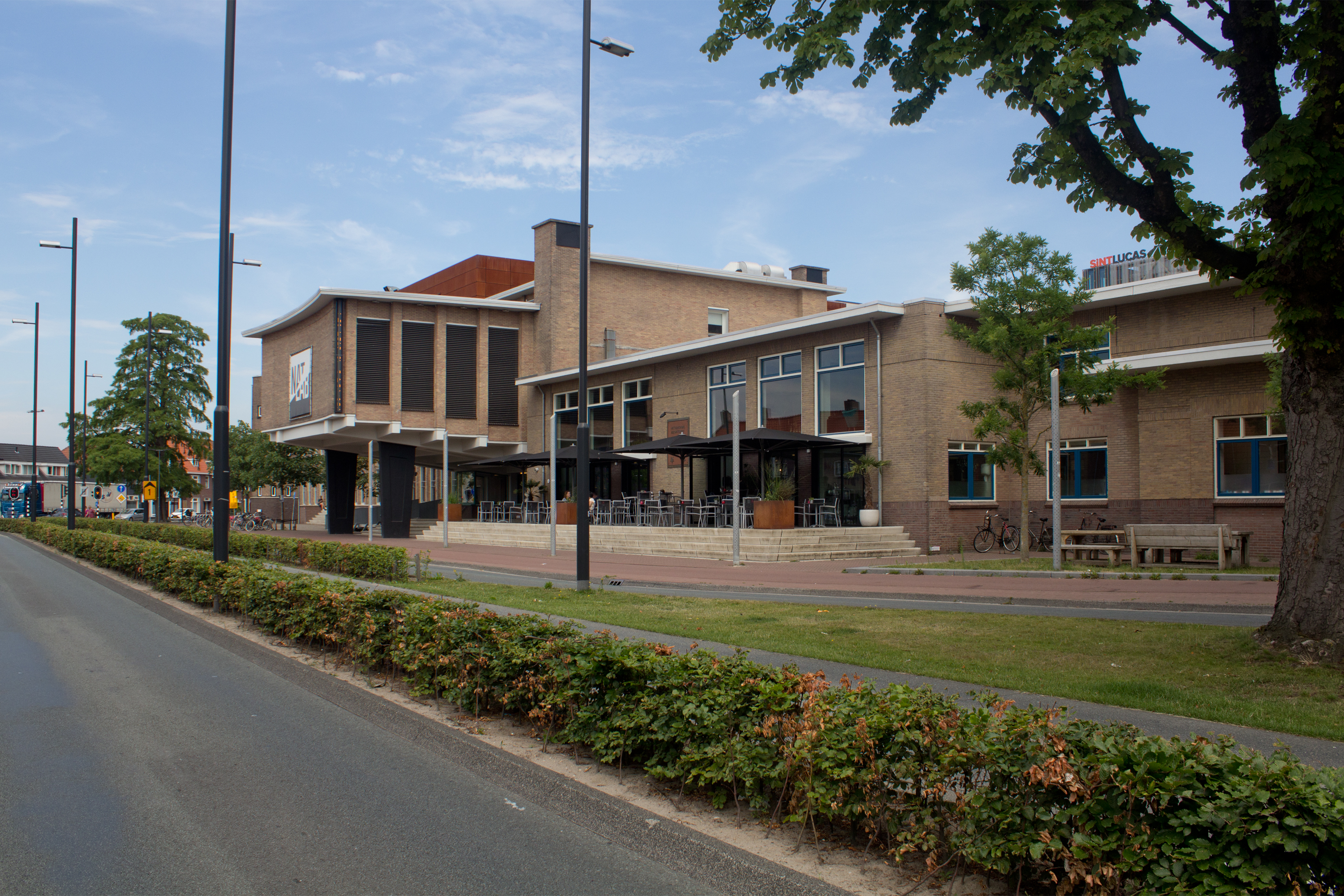
Philips Natuurkundig Laboratorium
"We went to work, not knowing what we would do that day." That is how Kees Schouhamer Immink, one of the engineers who would later put the compact disc on track, described showing up at the NatLab. The Philips Natuurkundig Laboratorium - everyone simply called it the NatLab - was a laboratory in Eindhoven where the lights stayed on, the budgets were nearly unlimited, and the company was content to let the best physicists in the Netherlands chase their own ideas for years at a time. The bet paid off, again and again, in objects that would end up in almost every home on Earth.
An Industrial Bell Labs on the Brabant Plain
When Gerard and Anton Philips founded the lab in 1914, the company was scrambling to escape its dependence on other firms' patents. They hired the young physicist Gilles Holst as director and, crucially, let him run the place like a university. Researchers had intellectual freedom, no teaching loads, and time to think. Holst would hold the post for 32 years. In 1923 Albert Einstein himself stopped in to give a colloquium. The NatLab was Holland's answer to Bell Laboratories, planted in a provincial city on the Brabant plain where Philips had begun life as a small light bulb factory. By 1975, two thousand people worked here, six hundred with university degrees, on everything from electron tubes to information theory.
Inventions That Found Their Way Into Every Home
The list of objects the NatLab launched into the world is remarkable. The pentode vacuum tube, invented in 1926 by Bernard Tellegen with director Holst, became the heart of the famous Philips radio and then of every amplifier on the market. In 1962 the lab released the Compact Cassette, which Lou Ottens' audio group had developed with NatLab help and which Philips, in a generous gesture, licensed for free so that the format would become a global standard. The Plumbicon camera tube put colour television on the air. LOCOS technology and Integrated Injection Logic shaped a generation of chips. And then there was the disc.
How a Dutch Lab and a Japanese Giant Agreed on the CD
In 1974 the audio group started work on a small optical disc that had to sound better than vinyl. Inside the NatLab, Hans Peek and his colleagues argued for going digital, because a digital signal could carry an error-correcting code. They built a coder-decoder that ended up in the prototype Philips showed to the press in 1978. Sony had been working on the same problem from the other side of the world, and its CIRC code turned out to be better. Philips dropped its own scheme, adopted Sony's, and in June 1980 the two companies agreed on a single CD standard. Kees Schouhamer Immink, who had played a central role in the design, would go on to win an Emmy and the IEEE Medal of Honor for his work on optical recording. Every CD, DVD, and Blu-ray since traces back, in part, to a building outside Eindhoven.
The Slow Twilight
After Hendrik Casimir's retirement in 1972 the climate changed. The 1973 oil crisis killed the long postwar boom, and companies could no longer justify enormous research budgets purely on faith. Some of the NatLab's biggest bets - the videodisc, the Video 2000 cassette format - lost in the market. Curiosity-driven research was reined in; product divisions wanted short-term results. In 2000 Philips decided to throw the campus open to other companies, rebranding it as the High Tech Campus Eindhoven. The Lighting business was spun off, the semiconductor arm became NXP, and by 2016 Philips Research was a tenant of two hundred people on grounds it had once owned outright. In 2012 the campus itself was sold to a private investment consortium.
What Remains
Today the High Tech Campus is one of Europe's densest concentrations of R&D, home to thousands of researchers from hundreds of companies - a kind of open-source successor to the closed paradise the NatLab once was. The original Strijp building that housed the lab in its early decades has been converted to a film theatre and cafe. The main street through the Waalre campus still carries the name Prof. Holstlaan, after the first director. And the engineers who learned the trade here scattered to ASML, NXP, and the rest of the Brainport Eindhoven cluster that now drives Dutch tech. The NatLab is gone, but the habit it created - of treating physics as a long game - still defines the city it grew up in.
From the Air
The former NatLab campus, now the High Tech Campus Eindhoven, sits at 51.41 degrees north, 5.46 degrees east, on the southern edge of the city. Eindhoven Airport (EHEH) is roughly 6 km northwest. From cruise you can pick out the dense low-rise cluster of research buildings just south of the A2/A67 motorway interchange. Best viewed from 5,000-15,000 ft in clear daytime conditions.