Phleger Estate
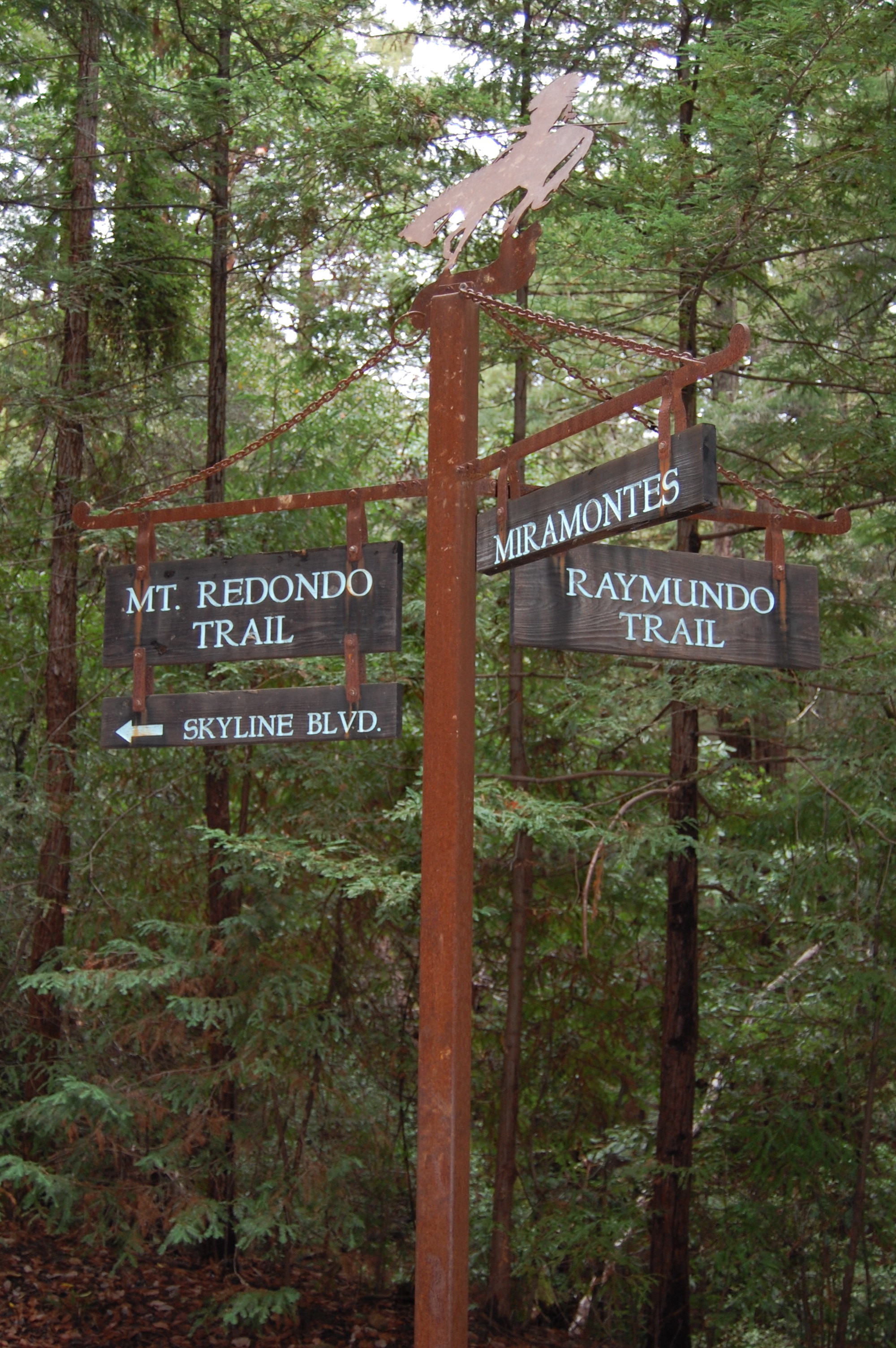
The trail signs at the Phleger Estate look like they belong in a national park, and they should, because this 293-acre parcel on the San Francisco Peninsula is part of the Golden Gate National Recreation Area. But the story of how this land traveled from Ohlone village to Spanish rancho to British deserter's grant to tuberculosis sanitarium to Intel co-founder's conservation easement is a compressed history of California itself, told in second-growth redwoods and crumbling retaining walls.
Four Villages, Four Centuries
When the Spanish arrived on the San Francisco Peninsula in 1769, the land stretching from Belmont south to Redwood City and west into the foothills was home to the Lamchin, a local tribe of the Ohlone people. The Portola expedition encountered the Lamchin as it descended from Sweeney Ridge to San Francisquito Creek through what Portola called the Canada de San Francisco, now traversed by Canada Road. Spanish padres recorded that the Lamchin maintained four villages: Cachanigtac, Guloisnistac, Oromstac, and Supichon. Between 1784 and 1793, the mission system forced the Lamchin to relocate to Mission San Francisco de Asis for Christianization and indentured servitude, emptying the land of its original inhabitants.
A Deserter's Reward
After secularization of the California missions, Governor Juan Bautista Alvarado granted 12,545 acres that included the future Phleger Estate to John Coppinger in 1841. Coppinger was a British seaman who had deserted his ship in San Francisco in 1835, then earned the governor's favor by supporting Alvarado's revolt against the Mexico-installed Governor Gutierrez in Monterey in 1836. When Coppinger died in 1847, his widow Maria Luisa Soto Coppinger married another Irish seaman, Captain John Greer, who sold off timber rights and laid out Canada Road in 1862. The land changed hands through the lumber boom, and in 1927, architect Gardner Dailey, fresh from Willis Polk's firm, designed the Mountain Meadow estate for Spring Valley Water Company vice president Samuel P. Eastman, just south of the famous Filoli mansion.
From Sanitarium to Sanctuary
The 293 acres that now form the core of the Phleger Estate were once the Hassler Health Farm, a tuberculosis sanitarium owned by the City of San Francisco. The Midpeninsula Regional Open Space District purchased the land in 1983, and buildings were demolished two years later. In 1994, the Phleger family completed a sale to the Peninsula Open Space Trust for 21 million dollars, a figure well below the property's market value. POST transferred the land to the National Park Service. The mansion itself posed a problem: the Park Service did not want it. Audrey Rust of POST convinced Gordon Moore, the co-founder of Intel Corporation, and his wife Betty to purchase the home and 24 acres as a conservation easement for six million dollars. Today, most of the non-native plants have been removed, though old retaining walls and stone steps off the Hassler Trail still whisper of the sanitarium era.
Redwoods Returning
The trails at the Phleger Estate pass through a mix of second-growth redwood forest and oak woodland, the legacy of aggressive nineteenth-century logging across what was once Rancho Canada de Raymundo. In the lower elevations, the Miramontes Trail follows West Union Creek through lush riparian forest. The Lonely Trail climbs steeply from the valley floor to Skyline Boulevard, gaining elevation through groves where banana slugs leave silver trails across the leaf litter and Coast Range newts navigate the understory. Three minor tributaries flow into West Union Creek, which travels southeast to the town of Woodside, where it joins Bear Gulch Creek and eventually reaches San Francisquito Creek and San Francisco Bay. To the north lies San Francisco watershed land; to the west, Skyline Boulevard and the Pacific beyond.
From the Air
Located at 37.45°N, 122.31°W in the Santa Cruz Mountains foothills. The estate lies between Huddart County Park to the south and Filoli to the north along Canada Road. San Carlos Airport (KSQL) is approximately 5 miles east. Half Moon Bay Airport (KHAF) is about 8 miles west over the ridge. Dense redwood and oak canopy makes the site less visible from altitude, but Crystal Springs Reservoir to the north is a prominent landmark.