Phoenix Art Museum
In 1915, the Phoenix Women's Club spent $125 on a painting. Carl Oscar Borg's Egyptian Evening seemed an extravagant purchase for a city that had been a state capital for only three years. But those women had a vision: Phoenix deserved art. They presented the painting to the city, beginning a community collection that would grow over the next century into the largest art museum in the American Southwest. Today, the Phoenix Art Museum houses over 18,000 works spanning continents and centuries, from Renaissance masters to contemporary installations where visitors walk among digital fireflies.
From State Fair to Fine Art
Arizona became the 48th state in 1912, and almost immediately, civic-minded women began building cultural institutions from scratch. The Phoenix Women's Club worked with the Arizona State Fair Committee to develop a fine arts program. By 1925, the State Fair Committee had expanded its mission, forming the Phoenix Fine Arts Association. The next breakthrough came during the Great Depression, when the Works Progress Administration's Federal Art Project created the Phoenix Art Center in 1936. Its first director was painter Philip C. Curtis. The center's success inspired even grander ambitions: in 1940, the Civic Center Association began planning a purpose-built museum on a 6.5-acre plot donated by the heirs of Adolphus Clay Bartlett. Among those heirs was Maie Bartlett Heard, who with her husband Dwight had founded the Heard Museum nearby.
A Complex Takes Shape
Architect Alden Dow was retained in the early 1950s to design an ambitious complex that would house not just the museum, but also the Phoenix Public Library and Phoenix Little Theater. The Phoenix Fine Arts Association named its first director, Forest M. Hinkhouse, in 1957, and the museum opened on November 18, 1959. Two years later, expansion plans were already underway. The museum grew from its original footprint to significantly larger galleries by 1965. Additional expansions in 1996 and 2006, designed by acclaimed New York architects Tod Williams Billie Tsien, more than doubled the museum's size, adding a 300-seat theater, research library, studio classrooms, and the landscaped Bennett and Jacquie Dorrance Sculpture Garden with its striking cantilevered entrance canopy.
Masters on Central Avenue
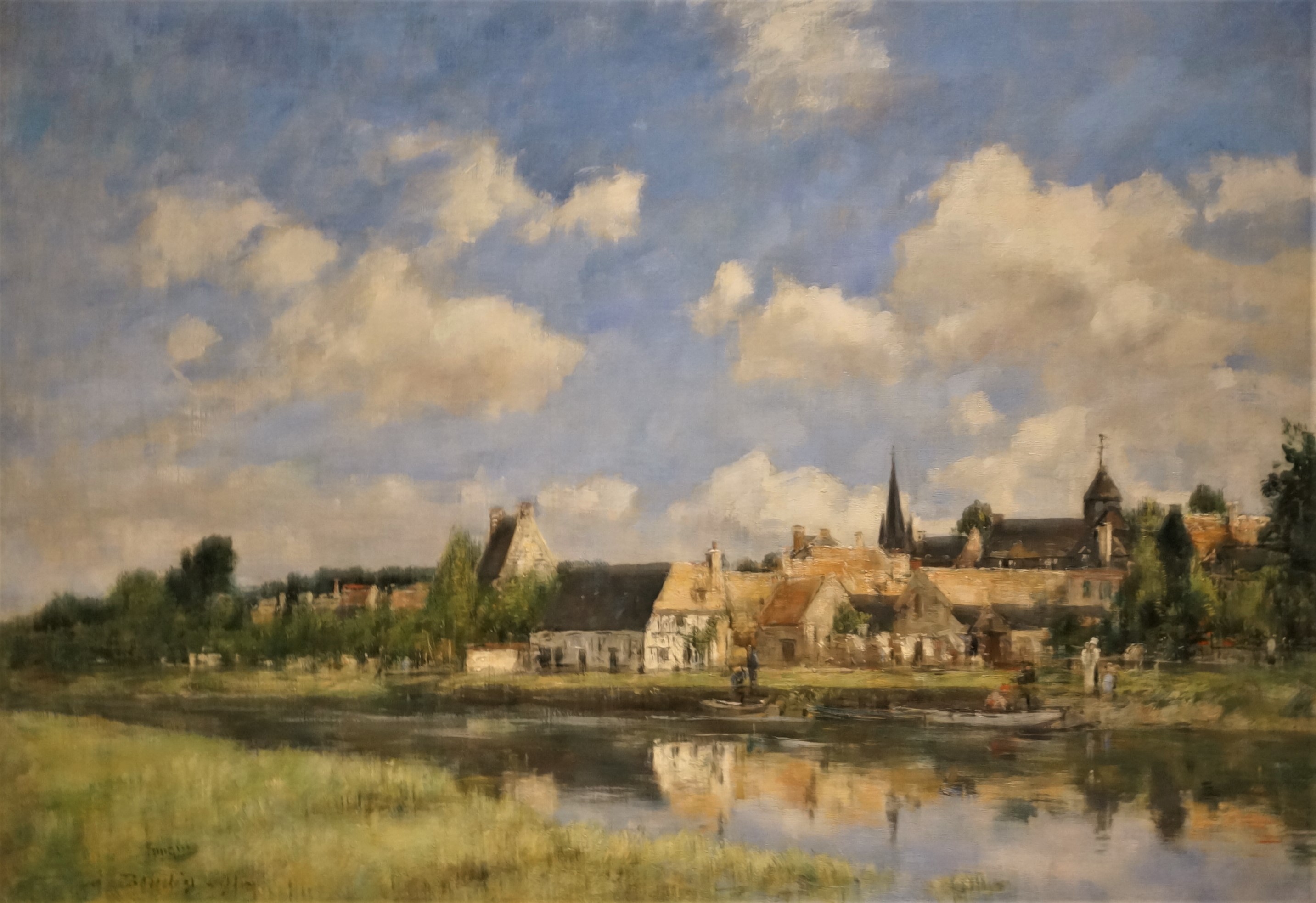
The collection spans from Renaissance Italy to contemporary America. European galleries display works by Guercino, Carlo Dolci, and Giovanni Piazzetta alongside French masters like Jean-Leon Gerome, whose dramatic Thumbs Down depicts a Roman gladiator's fate. Claude Monet's Flowering Arches, Giverny brings Impressionist light to the desert. The American collection runs from Gilbert Stuart through Georgia O'Keeffe to Western painters like Ernest Blumenschein and Ed Mell. Sculpture by Aristide Maillol, Max Ernst, Hans Arp, and Alberto Giacometti occupies the galleries. Contemporary art includes Kehinde Wiley's monumental portraits and Carlos Amorales's Black Cloud installation - thousands of paper moths that transform entire rooms into dreamscapes.
Obliterated by Fireflies
Perhaps no work captures the museum's spirit of immersion better than Yayoi Kusama's You Who Are Getting Obliterated in the Dancing Swarm of Fireflies. Visitors step into a dark room filled with hanging LED lights that blink in gentle patterns, surrounded by mirrors that extend the field of lights into infinity. It's a meditation on the cosmos, on consciousness, on what it means to stand small amid something vast and beautiful. The Japanese artist, now in her nineties, created the piece as part of her Infinity Room series. In Phoenix, where the desert night sky inspired ancient peoples and modern astronomers alike, the installation resonates with particular power.
A Point of Pride
The Phoenix Art Museum has been designated a Phoenix Point of Pride, one of the city's most treasured institutions. The Lemon Art Research Library, containing over 40,000 books and periodicals, is the largest specialized fine arts library in the region. The museum's partnership with the University of Arizona's Center for Creative Photography brings world-class photography exhibitions to Central Avenue. Community support provides roughly 80 percent of the museum's revenue through admissions, memberships, and facility rentals. In the last five decades, the museum has hosted more than 400 exhibitions from around the world and welcomed millions of visitors - a remarkable trajectory from that single $125 painting that a women's club purchased to give their young city a taste of beauty.
From the Air
Located at 33.47N, 112.07W on the Central Avenue Corridor, approximately one mile north of downtown Phoenix. The museum complex occupies multiple acres with distinctive modern architecture and a visible sculpture garden. Best viewed at 2,500-3,500 feet AGL approaching from the north or west. Phoenix Sky Harbor International Airport (KPHX) lies approximately 4 miles southeast. The museum sits between Encanto Park to the east and the Heard Museum to the north, forming part of Phoenix's cultural corridor along Central Avenue. Clear desert visibility makes identification straightforward except during dust storms.