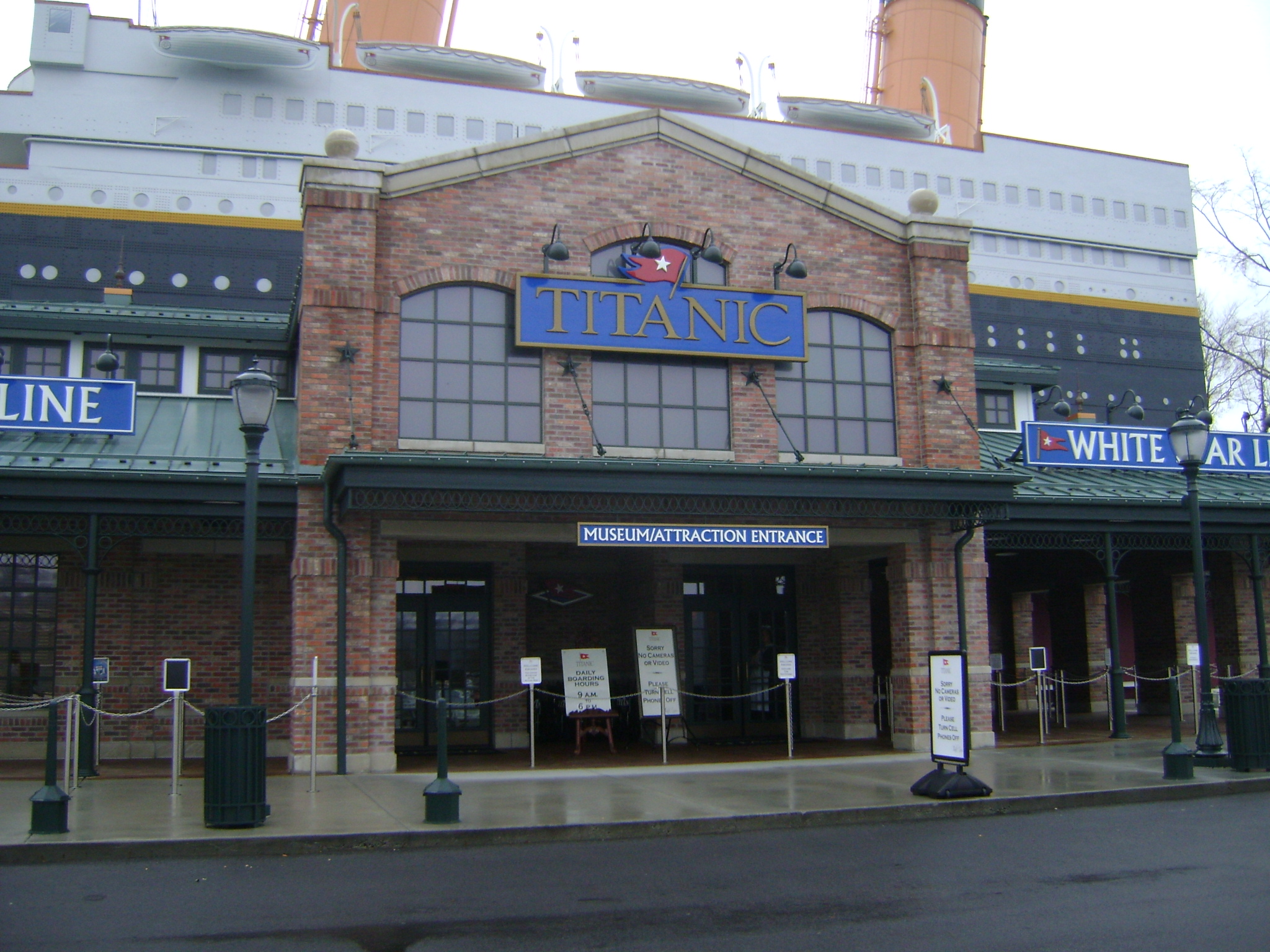
The Titanic Museum: The Ship That Docked in Tennessee
In the Smoky Mountain tourist town of Pigeon Forge, Tennessee - home to Dollywood, go-kart tracks, and every variety of family-friendly kitsch - a ship rises from the parking lot. The Titanic Museum is a half-scale replica of the bow section, as though the ship struck an iceberg and lodged itself in the Tennessee hills. Inside, visitors receive boarding passes bearing the names of actual passengers. They walk through recreated cabins, touch a real iceberg, feel 28-degree water, and stand on a deck tilted to the angle of the sinking. At the end, they check their boarding pass against a manifest. Did their passenger survive? Probably not. The Titanic Museum makes 1,500 deaths personal, one visitor at a time.
The Concept
John Joslyn, an explorer who participated in Titanic expeditions and helped recover artifacts from the wreckage, created the museum with his wife Mary Kellogg. Their insight was simple: the Titanic isn't interesting because of the ship; it's interesting because of the people. Every visitor receives a boarding pass with a real passenger's name, class, and biographical details. Throughout the tour, interactive exhibits personalize that passenger's experience. What cabin would they have slept in? What food would they have eaten? Would they have heard the band playing as the ship went down? The reveal at the end - survived or perished - converts abstract tragedy into personal loss.
The Artifacts
The museum contains over 400 artifacts from the Titanic, many recovered from the wreck site two and a half miles below the Atlantic. There's a deck chair that floated to the surface. There's a piece of the ship's hull. There are passengers' possessions - playing cards, spectacles, coins - that lay on the ocean floor for decades before recovery. The artifacts are displayed in recreated ship environments: a first-class cabin, a third-class berth, the grand staircase (full-scale reproduction). Touching an actual iceberg - kept frozen in the museum - reminds visitors what 28°F water felt like to those who went into it.
The Experience
The museum is designed for immersion. The deck is tilted to 23 degrees - the angle at which the Titanic finally went under. A pool of 28-degree water lets visitors understand how quickly hypothermia would have set in. Lifeboat davits show how few boats there were; passengers can sit in a reproduction lifeboat and count spaces. Audio plays survivors' accounts. The sinking is narrated in real time, compressing the two hours and forty minutes into something visceral. The experience is emotional by design - children cry, adults get quiet, everyone leaves understanding that these were real people who really died, often needlessly.
The Setting
Pigeon Forge is an unlikely location for Titanic commemoration - the ship never came anywhere near Tennessee. But the tourist economy of the Smoky Mountain region runs on attractions, and the Titanic Museum draws hundreds of thousands of visitors annually. A similar museum operates in Branson, Missouri (another landlocked tourist town). The juxtaposition is jarring: pancake houses and miniature golf surround a memorial to mass death. But perhaps that's appropriate. The Titanic was a monument to Gilded Age excess, a floating luxury hotel that couldn't survive nature's indifference. The tourist strip outside is its own kind of excess. The museum stands between them, asking visitors to remember.
Visiting the Titanic Museum
The Titanic Museum is located on Parkway (Highway 441) in Pigeon Forge, Tennessee - impossible to miss, as there's a 30,000-square-foot ship replica in the parking lot. Open daily year-round; admission is charged. Allow 2-3 hours. The experience is family-friendly but emotionally intense - very young children may be overwhelmed. The Branson, Missouri location offers a similar experience. Pigeon Forge has extensive tourist services; Gatlinburg and the Great Smoky Mountains National Park are nearby. The museum is serious amid the strip's silliness - come for the attractions, stay for the confrontation with mortality.
From the Air
Located at 35.81°N, 83.58°W in Pigeon Forge, Tennessee. From altitude, the Titanic Museum is visible as an incongruous ship-shaped structure amid the tourist strip - look for the bow section jutting from the ground like a beached vessel. Pigeon Forge spreads along the valley approaching the Great Smoky Mountains, visible to the southeast. Gatlinburg is visible at the mountains' foot. Dollywood is nearby. The setting is pure American roadside: attractions competing for attention along a commercial strip backed by one of the most visited national parks. The ship doesn't belong here, which is part of the point - it didn't belong on the bottom of the Atlantic either.