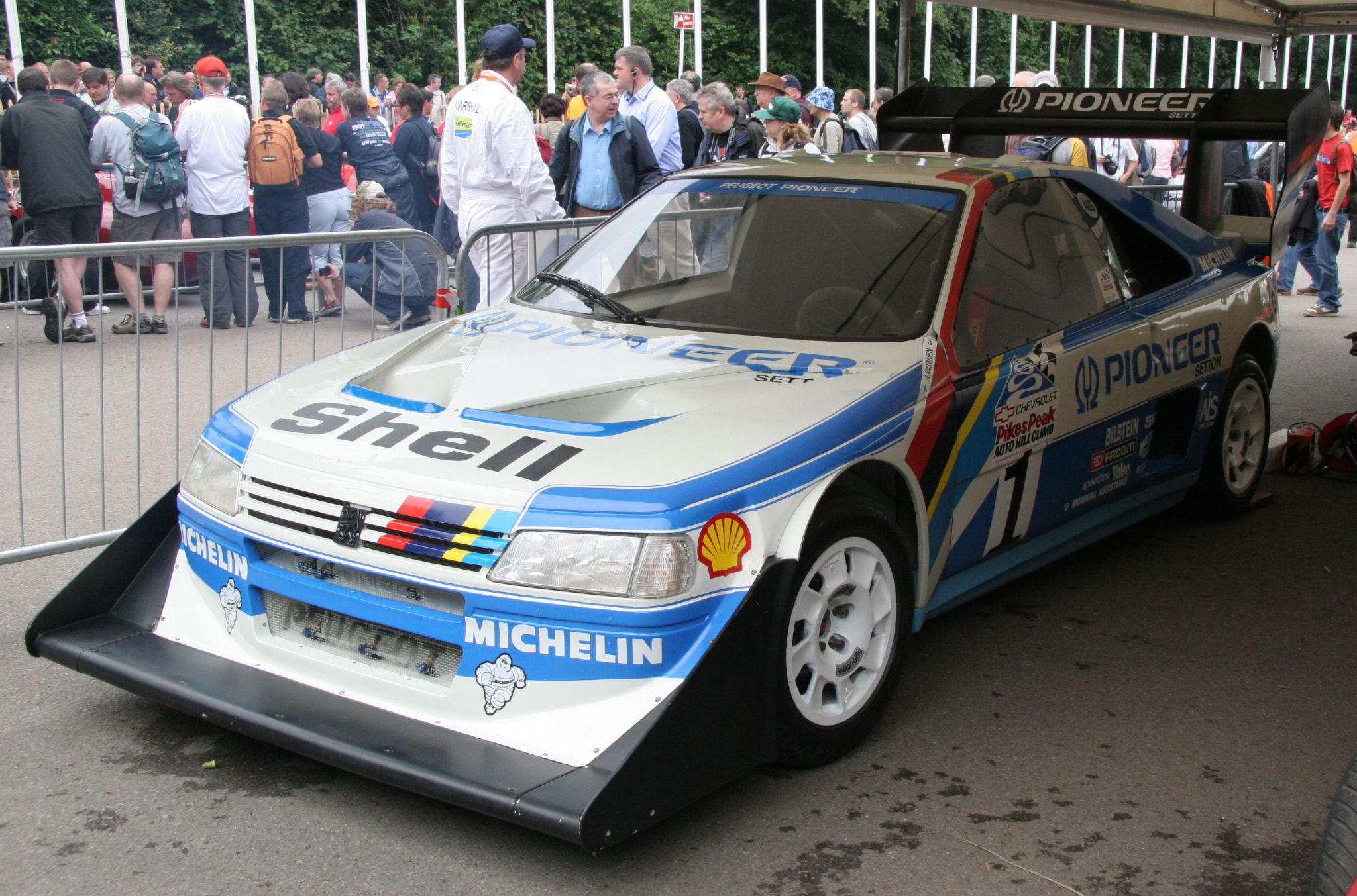
Pikes Peak International Hill Climb
Seven minutes, fifty-seven seconds. That is all the time Romain Dumas needed in 2018 to hurl an all-electric Volkswagen I.D. R up 12.42 miles of switchbacks, past 156 turns, climbing nearly 5,000 feet to the 14,115-foot summit of Pikes Peak. He shattered the eight-minute barrier that had stood as the sport's holy grail, and he did it without burning a drop of fuel. The Pikes Peak International Hill Climb, known simply as the Race to the Clouds, has been pushing humans and machines to their absolute limits since 1916, making it the second-oldest motorsport event in the United States. Up here, the air is so thin that engines lose a third of their power, brakes fade on endless grades, and a moment's lapse at the edge of a cliff can be fatal.
A Century of Chasing Clouds
The first Race to the Clouds took place in 1916, when Rea Lentz won the inaugural Penrose Trophy with a time of 20 minutes and 55 seconds. That same year, Floyd Clymer became the first motorcycle winner, riding a British Excelsior up the unpaved mountain road in just under 22 minutes. In the decades that followed, Glen Schultz and Louis Unser built a fierce rivalry, winning the event 12 times between them. When the Sports Car Club of America began sponsoring the race in 1953, an influx of sports cars pushed the course record down every single year from 1953 through 1962, the longest unbroken streak of record-breaking runs in the event's history. Most of those records fell to Louis's nephew, Bobby Unser, cementing the Unser family as Pikes Peak royalty.
Dirt, Gravel, and a Lawsuit
For most of its history, the Race to the Clouds was a dirt-and-gravel affair, with clouds of dust trailing every competitor and loose surfaces demanding rally-style car control. That changed in 2002, when the Sierra Club sued the City of Colorado Springs over erosion damage caused by 1.5 million tons of road gravel washing into streams, reservoirs, and wetlands downstream. The city lost the lawsuit and began paving roughly ten percent of the highway each year. The 2011 event was the last to feature dirt sections. When the 2012 race became the first run entirely on asphalt, registrations exploded from 46 to over 170, and records tumbled across nearly every division. The fully paved surface transformed the mountain from a rally stage into something closer to a vertical circuit, and lap times plummeted.
The Electric Revolution
Electric cars first appeared at the Race to the Clouds in the early 1980s, when Joe Ball nursed a Sears Electric Car to the summit in a leisurely 32 minutes. By 2013, Nobuhiro Tajima broke ten minutes in his electric E-RUNNER Pikes Peak Special. The following years saw electric entries steadily dominate: in 2015, Rhys Millen won overall in an electric car, and by 2018, Romain Dumas obliterated the all-time record in the Volkswagen I.D. R with a time of 7:57.148. The thin air at altitude, which robs combustion engines of roughly a third of their power, has no effect on electric motors. Where gasoline cars gasp for oxygen near the summit, electric machines deliver full torque from start to finish, turning Pikes Peak's greatest hazard into an electric advantage.
The Price of Speed
The mountain has always extracted a cost. Motorcycle racing was part of the event from its inception in 1916, producing legendary competitors and heart-stopping runs along the exposed cliff edges. In 1982, William Gross Jr. was killed when struck by another rider after a fall. The sport persisted, and by 2012 Carlin Dunne became the first motorcyclist to break ten minutes, riding a Ducati Multistrada on the newly paved course. Dunne won the event four times. On June 30, 2019, riding a prototype Ducati Streetfighter V4, he crashed less than a quarter mile from the finish line and was killed. The organization suspended motorcycle competition after his death, and following a review after the 2021 event, permanently discontinued it. Rennie Scaysbrook's 2019 time of 9:44.963 on an Aprilia Tuono V4 stands as the fastest motorcycle run in the event's history.
Machines Without Limits
What makes the Race to the Clouds unlike any other motorsport event is its radical openness. The Unlimited Division accepts any vehicle that passes safety inspection, producing purpose-built machines that look more like fighter jets on wheels than anything street-legal. Open-wheel racers, rally cars, heavy trucks, production sedans, and prototype electrics all share the same start line. In 2012, big-rig driver Mike Ryan spun his truck in a hairpin section called the W's, executed a three-point turn after hitting the guardrail, and still broke his own class record by five seconds. The mountain does not care what you drive. It only asks one question: how fast can you climb?
From the Air
Pikes Peak summit stands at 14,115 feet (38.84N, 105.04W), making it one of Colorado's most prominent fourteeners. The hill climb course runs from mile 7 on Pikes Peak Highway to the summit with 156 turns and grades averaging 7.2%. From the air, the switchbacks are clearly visible carved into the mountainside. Colorado Springs Airport (KCOS) lies approximately 15 nautical miles to the east. Meadow Lake Airport (KFLY) is closer at roughly 12nm east-northeast. Mountain wave turbulence is common along the Front Range, especially at higher altitudes. Expect density altitude challenges above 10,000 feet. The summit area has no shelter from weather and conditions can change rapidly.