Pilanesberg National Park
Seen from the air, the concentric rings give it away. Pilanesberg National Park occupies the eroded remains of an alkaline volcanic complex roughly 1.2 billion years old, one of the largest of its kind on Earth. The ancient caldera forms a natural amphitheater of ridges and valleys just a few kilometers from the glittering resort of Sun City in South Africa's North West province. Inside those rings, elephants browse through bushveld, lions doze in the shade of rocky kopjes, and more than 300 species of birds ride the thermals above a landscape that was once molten rock.
A Volcano Turned Sanctuary
The geology of Pilanesberg is its most distinctive feature. The park sits within the Pilanesberg Alkaline Ring Complex, a structure formed by volcanic activity during the Precambrian era. Erosion over more than a billion years has worn the original volcano down to its roots, exposing concentric rings of syenite and other rare igneous rocks that create the park's distinctive topography. The result is a landscape of ridges radiating outward from a central depression, crossed by seasonal streams and dotted with small dams. This ancient structure creates diverse habitats within a relatively compact area: grasslands on the lower slopes, dense bushveld in the valleys, and rocky outcrops along the ridges. The transition zone between the dry Kalahari thornveld to the west and the wetter lowveld bushveld to the east gives Pilanesberg an unusually rich mix of plant and animal species for its size.
Operation Genesis
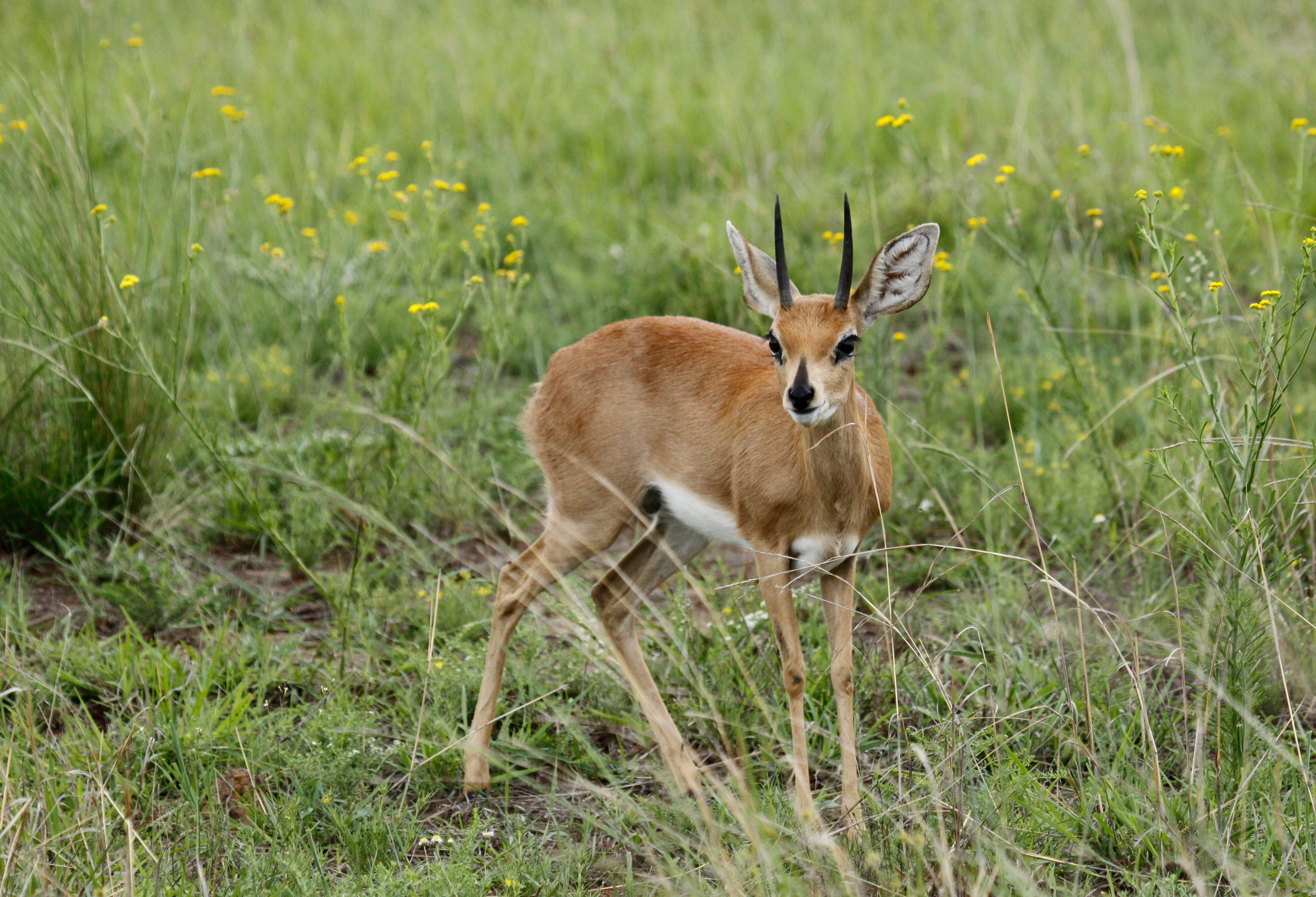
Pilanesberg was not always a game reserve. Before its establishment, the land was used for farming and grazing, and the original large mammal populations had been hunted out long ago. In the 1970s, the Bophuthatswana government initiated what became known as Operation Genesis, one of the largest game restocking programs ever attempted in Africa. Thousands of animals were translocated from reserves across southern Africa to repopulate the caldera. Today the park is home to the Big Five: lion, leopard, elephant, both black and white rhinoceros, and buffalo. The buffalo were absent for years, but 20 disease-free animals, nine cows and eleven bulls, were reintroduced on 15 October 2013. Alongside the headline species, sixteen antelope species graze the grasslands, giraffes move through the acacia thickets, hippos wallow in the dams, and cheetahs hunt across the open areas.
Wings Over the Caldera
Birding at Pilanesberg is exceptional. Over 300 species have been recorded within the park, a count that reflects the habitat diversity created by the ancient volcanic structure. Cape vultures soar above the ridges, African harrier-hawks patrol the woodland edges, and jackal buzzards circle on the updrafts. Migrants arrive seasonally, joining resident species that include fiery-necked nightjars, purple rollers, and several eagle species. The park maintains bird hides at strategic points around the dams, where patient observers can watch waterbirds, kingfishers, and herons at close range. At Manyane Complex in the eastern section, a walk-in aviary houses more than 80 species of indigenous birds, and a self-guided trail through the adjacent walking area offers the chance to combine game viewing with birding on foot.
The Sun City Neighbor
Pilanesberg's proximity to Sun City and to the Johannesburg-Pretoria metropolitan area makes it one of the most accessible Big Five reserves in South Africa. The drive from Johannesburg takes roughly two and a half hours via the N4 or R24 highways, and Pilanesberg Airport, just outside Sun City, offers weekly flights to Johannesburg. Inside the park, most roads are well-maintained dirt tracks passable by ordinary vehicles, though some routes in the mountainous interior require four-wheel drive. Accommodation ranges from the upmarket lodges of Kwa Maritane and Tshukudu, tucked into the bushveld along the caldera rim, to the more accessible Bakubung lodge near the western gate and the rustic camping and tented sites at Manyane and Bakgatla. The park sits in a malaria-free zone, removing one common concern for visitors to African game reserves.
Billion-Year Horizons
What sets Pilanesberg apart from South Africa's other game parks is the depth of time written into its landscape. Kruger may be larger, Addo may have denser elephant herds, but no other reserve lets you watch a rhino drink at a waterhole framed by rocks that cooled from magma more than a billion years ago. The concentric ridges visible from the air are not just scenic features; they are the exposed plumbing of an extinct volcano, a geological structure so significant that it draws researchers from around the world. For visitors arriving from the neon sprawl of Sun City, the contrast is stark and deliberate: within minutes, the slot machines and wave pools give way to impala herds crossing the road and the distant rumble of an elephant in the bush. Pilanesberg proves that one of Africa's great wildlife experiences can exist just a short drive from one of its most extravagant resorts.
From the Air
Located at 25.26°S, 27.10°E in the North West province of South Africa. The volcanic ring structure is clearly visible from altitude, with concentric ridges forming a distinctive circular pattern approximately 25 km in diameter. Sun City resort complex is visible immediately to the east. Pilanesberg International Airport (FAPS) lies just outside the park. Lanseria International Airport (FALA) is approximately 120 km to the southeast near Johannesburg. The area is malaria-free with generally good visibility, though summer thunderstorms can build rapidly on the Highveld.