Pima Air & Space Museum
The SR-71 Blackbird sits motionless in Hangar One, its titanium skin still holding secrets from missions flown at the edge of space. Across the desert floor outside, nearly 400 aircraft stretch toward the horizon, their wings casting long shadows across the Sonoran sand. The Pima Air & Space Museum opened in 1976 with just 48 planes, but the Arizona desert proved to be the perfect keeper of aviation history. Low humidity preserves aluminum skin that would corrode elsewhere. Clear skies mean flying weather year-round for the vintage aircraft that occasionally take to the air for events. And next door lies the 309th Aerospace Maintenance and Regeneration Group, better known as the Boneyard, where over 4,000 military aircraft sit in organized rows awaiting either resurrection or the scrapper's torch.
Steel Eagles in the Sun
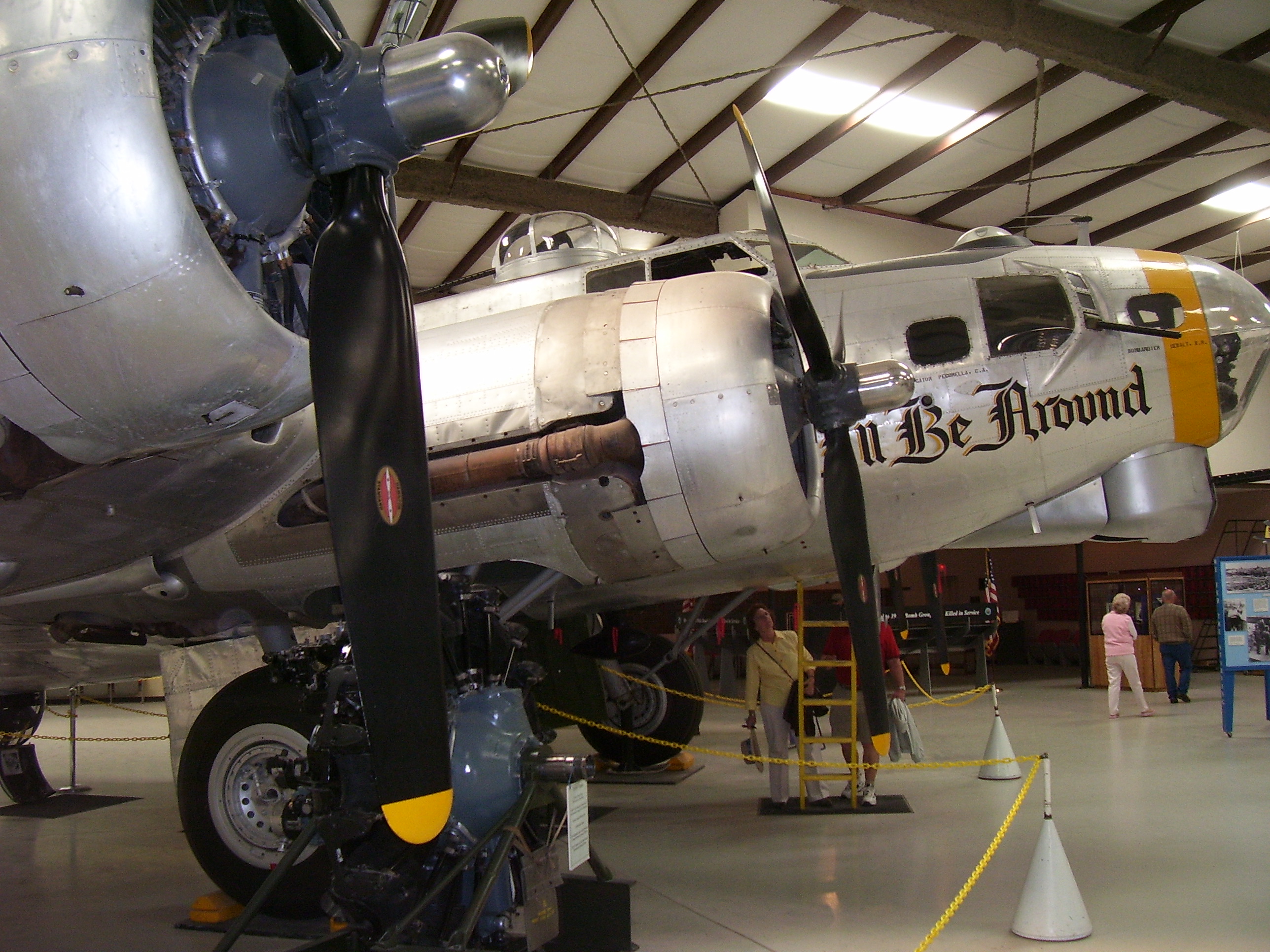
Six massive hangars punctuate the museum's outdoor display area, each holding aircraft too precious or too fragile for the relentless Arizona sun. The B-29 Superfortress and B-24 Liberator represent the muscle of World War II strategic bombing, while the sleek A-10 Warthog embodies the philosophy that ungainly aircraft can become legends through sheer effectiveness. The B-36J Peacemaker, with its six pusher propellers and four jet engines, represents a moment when the Air Force thought bigger was always better. Outside, an English Electric Lightning points toward the sky it once guarded, its vertical climb capability still visible in its aggressive stance.
From Warbirds to Dreamliners
The museum's collection spans aviation's entire history, from World War II bombers to the cutting edge of modern commercial flight. In 2015, Boeing donated the second 787 Dreamliner ever built, a flight test aircraft that helped prove the revolutionary composite airframe could safely carry passengers across oceans. The plane wears the livery of All Nippon Airways, the first airline to operate the type. A year later, the world's oldest surviving DC-10 arrived, having spent its later years as Orbis International's Flying Eye Hospital, performing sight-restoring surgeries in developing nations. In 2025, a disassembled Martin Mars water bomber arrived after landing on Lake Pleasant, one of only two remaining examples of the largest flying boats ever built.
Art Among the Aluminum
In 2012, the Boneyard Project transformed several of the museum's retired aircraft into unexpected canvases. Artists painted abstract murals and intricate designs on decommissioned fuselages, creating a dialogue between military hardware and contemporary art. The project acknowledged what pilots and mechanics have always known: aircraft possess a strange beauty that transcends their function. Bombers built for destruction became vessels for creation. The painted planes remain on display, their art slowly weathering alongside their aluminum skin.
The Boneyard Next Door
The museum offers tours of the adjacent 309th Aerospace Maintenance and Regeneration Group, commonly called the Boneyard. This 2,600-acre facility is where aircraft go when their active service ends, but it is neither graveyard nor dump. Desert air keeps corrosion at bay while technicians maintain many aircraft in flyable condition, ready to return to service if needed. Others donate parts to keep their brothers in the sky. The rows of retired jets, bombers, and transports form geometric patterns visible from commercial flights overhead, a final formation for aircraft that spent careers formation flying.
Reaching for the Stars
Aviation history at Pima extends beyond the atmosphere. The museum houses a full-scale mockup of the Space Shuttle's Solid Rocket Booster and the Guidance and Navigation Simulator trainer from the actual Shuttle Mission Simulator. Astronauts practiced docking procedures and emergency scenarios in this very machine. The museum's expansion continues with the 2021 acquisition of land for the Tucson Military Vehicle Museum, which will display ground vehicles including 50 donated by the Imperial War Museum. What began with 48 aircraft now encompasses nearly every aspect of military technology.
From the Air
The Pima Air & Space Museum sits at 32.14°N, 110.87°W, immediately west of Davis-Monthan AFB (KDMA). The museum and adjacent Boneyard are unmistakable from the air. From 3,000-5,000 feet AGL, you can clearly see the geometric rows of aircraft in the Boneyard and the museum's outdoor collection. Approach from the west for best views without conflicting with KDMA traffic. Tucson International (KTUS) is 5nm southwest. Fly on a clear morning for the best shadows across the aircraft rows.