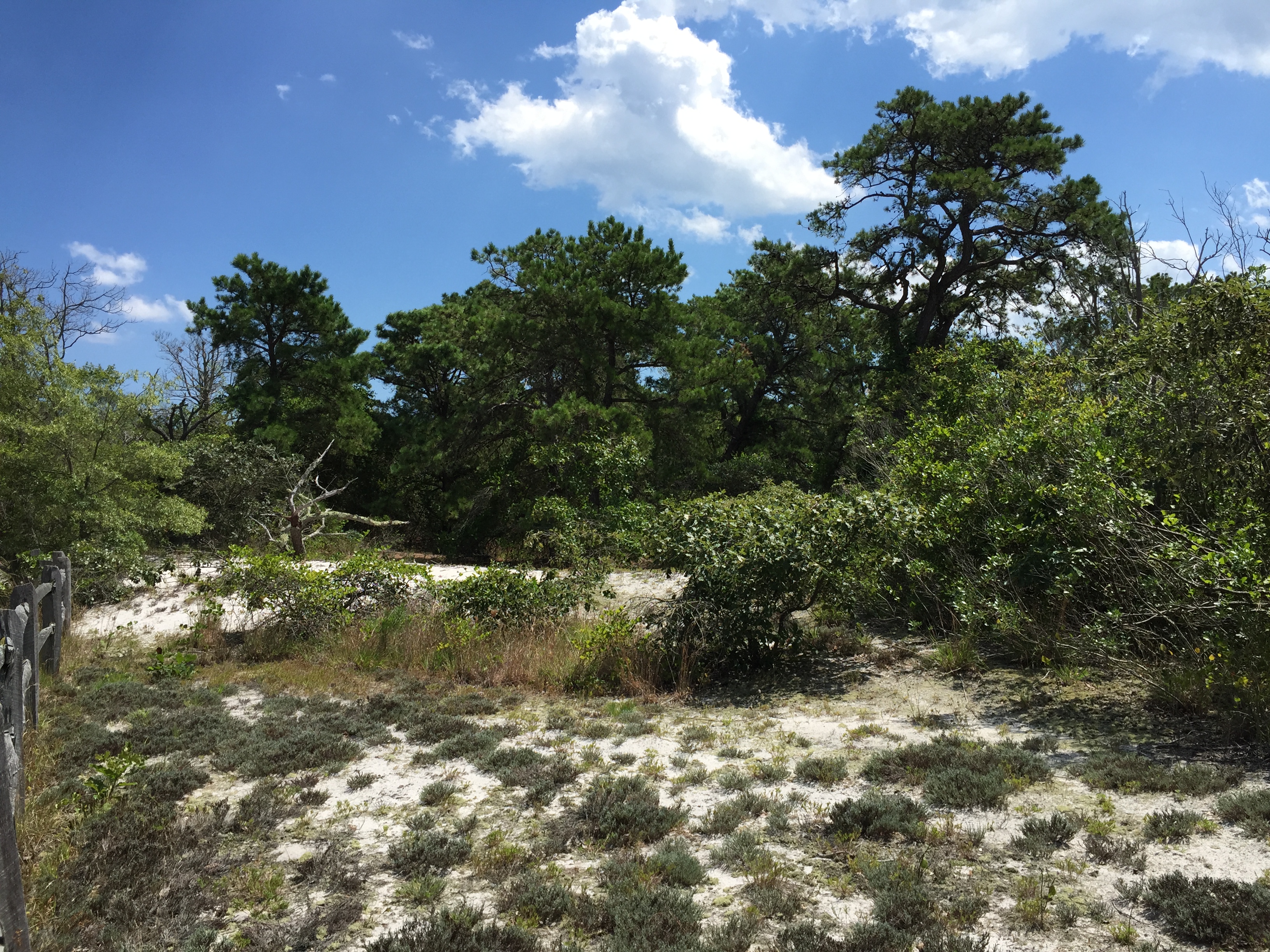
The Pine Barrens: Home of America's Oldest Monster
The Jersey Devil was born in 1735, at least according to legend. Mrs. Leeds of the Pine Barrens, pregnant with her thirteenth child, reportedly cursed the pregnancy: 'Let it be the Devil!' When the baby arrived, it transformed - hooves, wings, forked tail - screamed, and flew up the chimney into the surrounding swamps. Nearly three centuries later, the creature is still sighted. The Pine Barrens remain one of the largest undeveloped areas on the East Coast - 1.1 million acres of pitch pine and cedar swamp, dark enough and empty enough to hide almost anything. The Jersey Devil has become the state's unofficial mascot, lending its name to a hockey team. But some people in the Barrens still don't laugh when you mention it.
The Legend
Mother Leeds had twelve children already; the thirteenth was unwanted. The story varies: some say she was a witch, others merely desperate. The curse was spontaneous or calculated. The baby was born normal, then changed; or it emerged monstrous from the womb. The creature killed the midwife, ate the siblings, and escaped through the chimney. The historical Leeds family was real - Daniel Leeds published an almanac that Quakers denounced as heretical, his family acquiring occult associations. Whether the Jersey Devil legend attaches to actual events or simply borrowed a convenient name, the story has persisted since colonial times.
The Sightings
The Jersey Devil has been sighted for nearly 300 years. Notable flaps occurred in 1820, 1840-41, 1873, and most famously in January 1909, when hundreds of people across the Delaware Valley reported encounters. Schools closed. Workers refused to leave their homes. The Philadelphia Zoo offered a $10,000 reward for capture. Witnesses described a creature with bat wings, hooves, a forked tail, and a blood-curdling scream. The 1909 wave produced hoofprints in snow, frightened livestock, and a terrorized region. Sightings continue sporadically; the creature appeared as recently as 2015.
The Barrens
The Pine Barrens create perfect monster habitat. Over a million acres of pitch pine forest and cedar swamp sprawl across southern New Jersey - the largest open space on the East Coast between Boston and Richmond. The terrain is difficult: sandy soil, acidic water, tangled vegetation. Historic ironworks, paper mills, and entire towns were abandoned when industries failed; their ruins dot the forest. The Barrens feel ancient and slightly wrong - too empty, too quiet, too separate from the surrounding megalopolis. If a creature wanted to hide for three centuries, this is where it would hide.
The Explanations
Skeptics offer candidates: the sandhill crane (a large, strange-looking bird that occasionally wanders into the region), owls, escaped exotic animals, deliberate hoaxes. The 1909 wave was likely mass hysteria, fed by newspaper coverage and communal anxiety. But rational explanations don't erase three centuries of consistent sightings in the same location. The Jersey Devil functions psychologically as the Barrens' guardian spirit - a warning that this wilderness belongs to itself, that civilization ends at its edges. Whether the creature is real, the fear it represents is genuine.
Visiting the Pine Barrens
The Pine Barrens stretch across seven New Jersey counties, roughly 70 miles from Philadelphia and 60 miles from New York City. Wharton State Forest is the largest publicly accessible area, offering hiking, camping, and canoeing on the Mullica and Batsto Rivers. Historic Batsto Village preserves a restored ironworks community. The terrain is challenging - sand roads require appropriate vehicles; trails can flood; ticks and mosquitoes are abundant. Ghost towns and ruins are scattered throughout. The Jersey Devil is not a formal attraction, but local gift shops sell souvenirs. Visit during fall for optimal hiking conditions and minimal insects. Bring maps; cell coverage is limited.
From the Air
Located at 39.75°N, 74.50°W across southern New Jersey. From altitude, the Pine Barrens appear as a surprising expanse of undeveloped land amid the densely populated Northeast Corridor - over a million acres of green between the Philadelphia suburbs and the Jersey Shore. The terrain is uniformly flat and forested; rivers snake through in dark ribbons. The contrast with surrounding development is stark: the Barrens are a hole in the regional population density, a wilderness stubbornly persisting where wilderness shouldn't exist. Whatever hides in those forests - the Jersey Devil or merely ordinary wildlife - has plenty of space to remain unseen.