Pioneertown, California
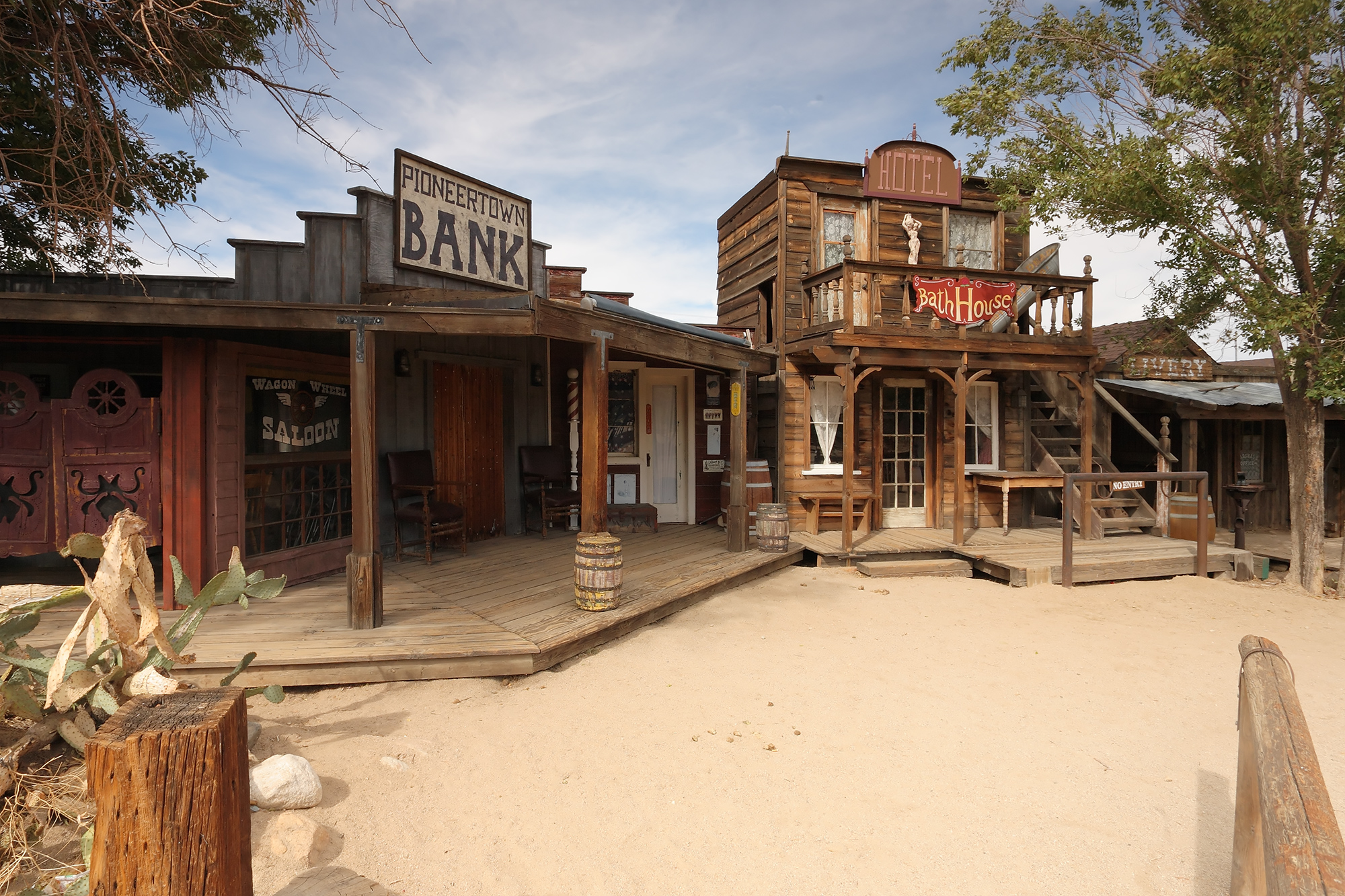
Roy Rogers bowled a 211 game in his cowboy boots while over 200 townfolk watched. It was opening night at Pioneer Bowl, the third building constructed in a town that existed for the cameras first and the residents second. Pioneertown was designed so Hollywood actors could live in their sets, waking up in 1880s-styled homes that doubled as film locations by day. Now listed on the National Register of Historic Places, this unincorporated community in the High Desert continues to blur the line between movie magic and daily life.
Hollywood Builds a Town
In 1946, character actor Dick Curtis gathered a group of Hollywood investors with a novel idea: build an Old West town where production companies could both film and live. Roy Rogers, Russell Hayden, and Gene Autry were among the original developers who put money into the project. The town rose from the Mojave Desert with Mane Street, a pun on the town's western theme, serving as both the commercial district and a ready-made film set. Gene Autry shot his weekly television show here for five years, using the storefronts and saloons as backdrops. Hundreds of Westerns followed, including The Cisco Kid and Judge Roy Bean. The buildings weren't props; they were functional businesses where actors bought supplies, collected mail, and lived between takes.
Strikes and Pinsetters
The Thompson and White families built Pioneer Bowl in 1946, and Mrs. White volunteered to become Pioneertown's first postmistress, establishing the post office inside the bowling alley. Movie extras in costume would wander in on breaks to collect their mail, spurs jingling against the polished wood floors. When Westerns fell out of favor with Hollywood in the 1960s, the bowling leagues kept Pioneertown alive. By 1969, Pioneer Bowl enrolled more women league bowlers from California's citrus belt than any other alley in Southern California. The Brunswick automatic pinsetters replaced the local boys who had worked as pin setters, but the bowling tradition endured. In 79 years of operation, only two documented 7-10 split conversions have been recorded, both accomplished by women bowlers.
Fire on the Mountain
In July 2006, the Sawtooth Complex fire swept through the High Desert, burning parts of Pioneertown along with neighboring Yucca Valley and Morongo Valley. A lightning strike to a Joshua tree started the blaze; it was knocked down and then reignited three days later when winds returned. Firefighters and residents fought side by side, using tractors to stamp out embers while protecting the historic movie-set buildings. Every shop and structure on Mane Street survived. Among the saved buildings was Pappy & Harriet's Pioneertown Palace, a legendary music venue built within the town's original gas station. The fire made international headlines, with Italian news showing the Pioneer Bowl sign silhouetted against billowing smoke. In the late 1980s, the bowling alley had been stuccoed and its wooden porch replaced with concrete specifically to protect against wildfire.
Where Rock Stars Play the Saloon
Pappy & Harriet's has evolved into an improbable destination for major musical acts. Eric Burdon and Robert Plant of Led Zeppelin count among its regular patrons, drawn by the intimate venue's authentic atmosphere and desert isolation. The Palace sits in what was once the town's only gas station, its neon signs glowing against the dark High Desert sky. Indie filmmakers still occasionally shoot in Pioneertown; Christopher Coppola directed a short film called Gunfight at the Red Dog Saloon here, and the werewolf movie Howling VII used local residents as extras. In 2019, the Kidz Bop Kids filmed their cover of Lil Nas X's "Old Town Road" on Mane Street. The juxtaposition captures Pioneertown perfectly: a town built for fiction that keeps generating new stories.
Keeping the Character
Pioneertown's approximately 600 residents remain fiercely protective of their town's identity. The charter forbids paving or automobile traffic on Mane Street, preserving the dusty pedestrian thoroughfare that cameras first captured in the 1940s. In 2020, the Mane Street Historic District earned listing on the National Register of Historic Places. When San Bernardino County officials proposed applying generic commercial zoning to the district in 2023, residents pushed back to maintain the town's unique character. The controversy intensified in 2024 when a reality television personality falsely claimed to own the entire town, prompting a community response and eventual retraction. Pioneertown is no longer a working movie set; each property is individually owned. But tourists still find horses, mini-mules, goats, tumbleweeds, and gunfighter reenactors wandering Mane Street most days, maintaining the illusion that the cameras might roll again at any moment.
From the Air
Located at 34.15N, 116.50W in the High Desert of San Bernardino County. The winding scenic drive from Yucca Valley is visible as a ribbon through the desert northwest of Joshua Tree National Park. The Sawtooth Mountains rise to the south, Black Hill to the north. Nearby airports include Yucca Valley Airport (L22) and Hi Desert Airport (KBPM). The small cluster of buildings along unpaved Mane Street is identifiable from low altitude. Best viewed at 2,000-4,000 feet AGL in morning light.