PLA Tank Museum
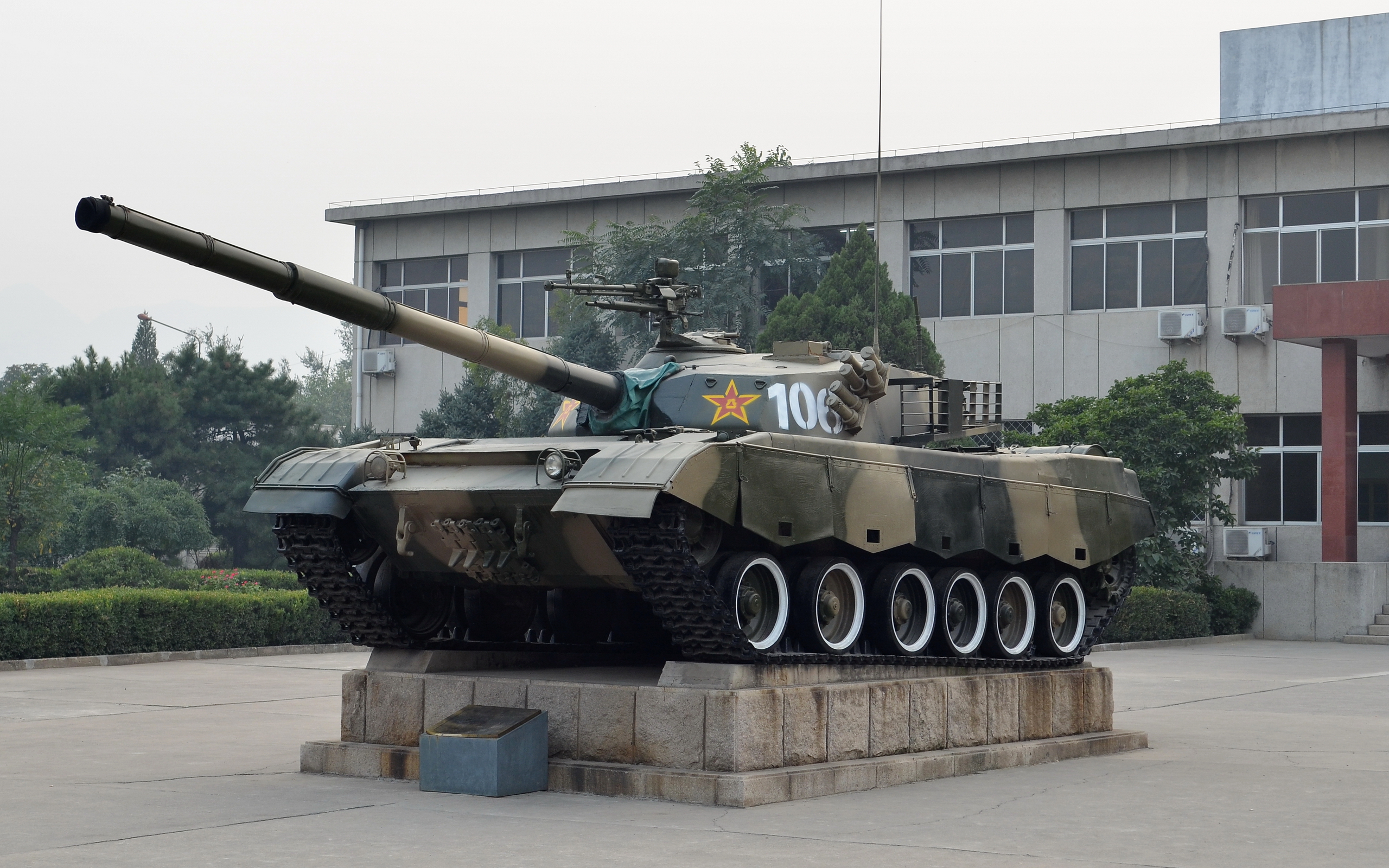
A Type 96 main battle tank guards the entrance, its 125mm smoothbore cannon pointed at nothing in particular, a sentinel for a museum that tells the story of armored warfare from multiple perspectives at once. The PLA Tank Museum in Beijing's Changping District is China's only specialist tank museum, and its collection reads like a catalog of twentieth-century geopolitics: Chinese, Soviet, American, and Japanese machines parked side by side, former enemies sharing the same exhibition halls.
Inside Unit 8837
The museum sits within the compound of Unit 8837 of the People's Liberation Army Ground Force, a fact that gives it a character distinct from civilian museums. Completed on September 1, 1990, it was originally named the People's Armored Forces Exhibition Hall. After an expansion, it reopened on August 1, 1997, under its current name, with 5.3 hectares of display space spread across eleven exhibition halls. The layout divides into three sectors: the history of the PLA's armored forces, the history of the world's armored forces, and the physical exhibition of vehicles themselves. That tripartite structure reflects a military educational philosophy, placing China's armored development within a global context rather than treating it in isolation.
Iron from Every Direction
The collection spans the full arc of China's complex military relationships. Soviet T-34s, the tanks that broke the Wehrmacht at Stalingrad, sit near IS-2 heavy tanks and SU-76 self-propelled guns, all supplied to China during the years of Sino-Soviet cooperation. American M3 Stuart light tanks and LVT amphibious vehicles represent a different chapter, equipment captured during the Korean War or acquired through other channels. Japanese Type 97 Chi-Ha medium tanks and Type 94 tankettes recall the machines that invaded China in the 1930s. And threading through it all are the Chinese-designed vehicles, from the Type 59, China's first domestically produced main battle tank based on the Soviet T-54, to the experimental WZ-111 heavy tank that never entered mass production.
Armor as History
What the collection captures is not just military hardware but the story of a nation learning to build its own weapons. The progression from the Type 59, essentially a Soviet design built under license, through the Type 69 and Type 80 to the Type 96 at the museum's entrance traces China's journey from technological dependence to indigenous capability. Each generation of tank represents not only an advance in armor, firepower, and mobility but a step toward self-sufficiency in military manufacturing. The Type 63 amphibious tank, designed for operations in China's river-laced southern terrain, shows how Chinese engineers adapted armored warfare concepts to their own geography. The museum tells this story with the directness one expects from a military institution, letting the machines speak for the industrial and strategic choices behind them.
From the Air
Located at 40.16N, 116.12E in the Changping District, approximately 45 km northwest of central Beijing. The museum is within a military compound, so aerial observation may be restricted. Nearest major airport is Beijing Capital International Airport (ZBAA/PEK), about 55 km to the east-southeast. The open-air display area with large armored vehicles may be visible from moderate altitude.