Place Ville Marie
Every night, a counter-clockwise rotating beacon on the rooftop sweeps four white beams across the Montreal sky, visible from kilometers away. It is not a navigational aid -- aviation authorities are careful to note that -- but it functions as something more primal: a signal that this city is still awake, still ambitious, still the place that once dared to build its tallest skyscraper directly over an active railway tunnel. Place Ville Marie is a 47-storey cruciform office tower in downtown Montreal, and when it opened in 1962, it was the tallest skyscraper in the entire British Commonwealth and the third tallest on Earth outside the United States. Yet the building's most revolutionary contribution was not its height. It was the world hidden beneath it.
Building Over the Abyss
The site of Place Ville Marie was not prime real estate when the project began. It was a vast, unsightly railway trench carved into the southern flank of Mount Royal -- the gash between the southern portal of Canadian National Railway's Mount Royal Tunnel and Central Station. The land belonged to the CNR, and it had been an open wound in the city's downtown grid for decades. Developer William Zeckendorf saw potential where others saw a problem. He hired Henry N. Cobb, a founding partner of the firm that would become Pei Cobb Freed & Partners, to design a complex that would bridge the trench and transform it into usable urban space. Because the building sits directly above active rail tracks, it had to be engineered to resist vibrations far beyond normal standards. The unintended result: Place Ville Marie became the most earthquake-resistant office tower in Montreal. Mayor Jean Drapeau chose the name himself, reaching back to 1642, when French colonists founded the Catholic settlement of Ville-Marie on the same island.
The City Below the City
Nearly half of Place Ville Marie's 280,000 square metres of floor space lies beneath street level. Design historian Mark Pimlott called it "the most radical aspect" of the entire project -- a vast underground network that shielded workers and shoppers from Montreal's brutal winters and sweltering summers alike. That subterranean concourse became the seed of what Montrealers now call RESO, the Underground City: the world's busiest network of connected indoor spaces, linking over 1,600 businesses, multiple Metro stations, a suburban transportation terminal, and tunnels stretching throughout the downtown core. Before Place Ville Marie, the idea of running a city's commercial life underground was experimental at best. After it, Montreal became a global reference point for climate-adapted urbanism. The plaza above the underground shopping promenade evolved into one of downtown Montreal's most important public spaces, featuring a large fountain with programmed water jets and the abstract sculpture "Feminine Landscape" by Gerald Gladstone.
Power, Ambition, and a Ten-Cent Bet
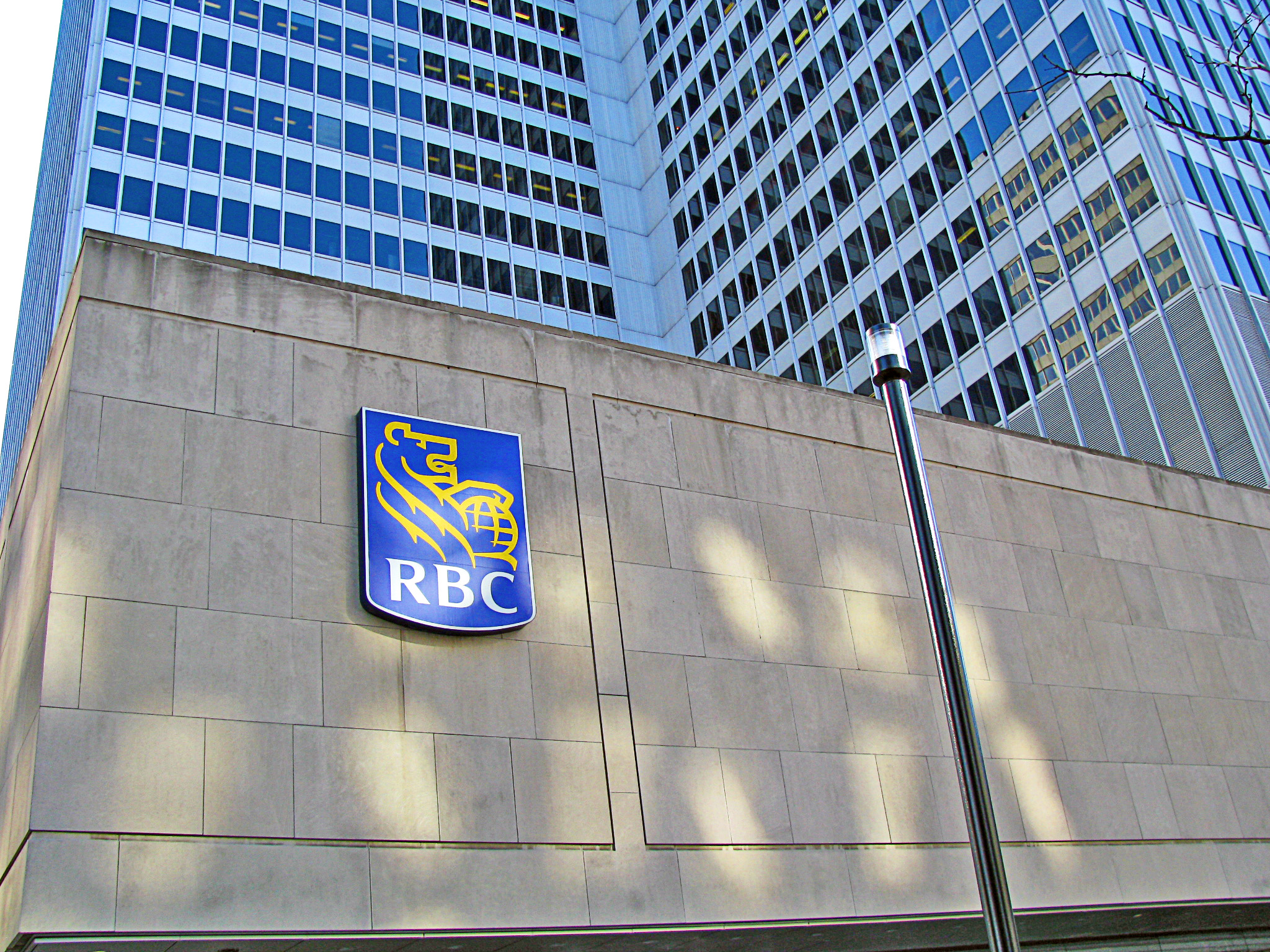
Place Ville Marie was conceived when Montreal was the undisputed metropolis of Canada, and the building wore that confidence openly. The Royal Bank of Canada, the country's largest bank, claimed it as its new head office, moving from its previous location at 360 Saint Jacques Street in Old Montreal. The Aluminum Company of Canada, Alcan, established six floors of operations in November 1962. Air Canada's headquarters occupied space by 1975. Three floors were reportedly added late in construction for a single reason: to ensure the tower would not be surpassed by the neighboring Tour CIBC, then rising simultaneously. The central plaza hosted an election rally for Pierre Elliott Trudeau during the 1968 federal campaign. At some point during that era, Trudeau lost a bet to Royal Bank President Earle McLaughlin. The payment -- ten American cents -- was delivered in an elaborate dime encased in acrylic. What the bet concerned has never been recorded.
Altitude 737 and After
For decades, the building's penthouse floor was home to Altitude 737, a nightclub and restaurant named for its elevation in feet above sea level. It was one of Montreal's most famous venues, featuring a dance floor that twisted and turned across two levels and opened onto a rooftop terrace with panoramic views of the city and the Saint Lawrence River. The club eventually gave way to the 360 Observatory, which closed permanently in May 2020. The complex itself has changed hands and faces over the years. Ivanhoé Cambridge, a division of the Caisse de depot et placement du Quebec, purchased the building in March 2000 for CA$450 million. The grey concrete and terrazzo of the original plaza have been softened with grass, flowers, and shrubs. Via Rail maintains its headquarters in 3 Place Ville Marie. On March 12, 1976, Canada Post immortalized the building alongside Notre-Dame Church on a one-dollar stamp -- a fitting pairing of the old spiritual heart and the modern commercial pulse of a city that has always built with ambition.
From the Air
Place Ville Marie stands at 45.50N, 73.57W in downtown Montreal. The cruciform shape of the main tower is clearly distinguishable from the air, and the rotating rooftop beacon is visible at night from considerable distance (though it is not classified as a NAVAID). Best viewed from 3,000-5,000 feet AGL. Montreal/Pierre Elliott Trudeau International Airport (CYUL) lies approximately 12 nm to the west. Montreal/Saint-Hubert Airport (CYHU) is roughly 9 nm to the southeast. Mount Royal to the north and the Saint Lawrence River to the south provide strong visual reference points.