Plered
Somewhere beneath the rice paddies of Bantul Regency, the foundations of a royal palace wait for no one. Plered was the capital of the Mataram Sultanate for barely three decades -- from 1647, when Amangkurat I moved his court here, to 1677, when rebels plundered it and the king died fleeing. It resurfaced briefly as a fortress during the Java War of the 1820s, only to be stormed and abandoned again. When the Dutch scholar G. P. Rouffaer visited in 1889 to draw a map, the walls were already rubble. Today, the site is a cultural heritage designation and little else, the kind of place where the drama of the history wildly outweighs the visibility of the ruins.
A Lake, a Fire, and a New Capital
The story of Plered begins with a fire at the previous capital. Sultan Agung, the most powerful of the Mataram rulers, had built his court complex at Karta in the early years of his reign. In 1634, a fire swept through Karta and killed many people of the court -- a catastrophe that may have planted the seed for relocation. A decade later, in 1644, Agung began constructing an artificial lake in an area that would become known as Plered. He died in 1646 before completing the project. His son Amangkurat I took the throne and, in 1647, built a royal residence beside the lake and relocated the court. The move marked a material upgrade: while Karta had been built of wood, Plered's royal compound was constructed in brick. Amangkurat continued expanding the complex for nearly two decades, through 1666, building what became the most substantial kraton the dynasty had yet produced.
The Fall of the Brick Palace
In 1677, the Trunajaya rebellion reached Plered's gates. The rebel forces -- Madurese troops, Javanese fighters from East Java and the northern coast, led by Raden Kajoran -- attacked the capital. Amangkurat's four eldest sons commanded the defense, but their resistance was ineffective. The royal family fled, and the rebels poured into the compound. They took the royal treasury: at least 300,000 Spanish reals, a fortune in the currency that greased trade across the Indonesian archipelago. Accounts diverge on the exact haul. One eyewitness claimed 300,000 reals were carried to Trunajaya's base at Kediri. Amangkurat II, the king's son and eventual successor, later put the figure at 150,000 sent to Kediri and 200,000 left behind with Trunajaya's local commander. The discrepancy hardly mattered to Amangkurat I. He died during the retreat near Tegal, his capital lost, his treasury looted.
Brothers, Rivals, and a Capital That Moved Again
After the rebels withdrew, a prince named Pangeran Puger occupied Plered and declared himself the rightful king. His brother Amangkurat II, who had inherited the throne on their father's death, could not dislodge him. Rather than fight for a ruined palace, Amangkurat II chose to start fresh. In 1680, he established a new capital at Kartasura, roughly 50 kilometers to the east. Plered was abandoned as a seat of power -- one more link in the chain of Mataram capitals that kept moving across central Java. From the original settlement at Kotagede, the court had gone to Kerta, then Plered, then Kartasura, and would eventually reach Surakarta and Yogyakarta. Each relocation carried the same logic: a tainted or defeated capital required a purified center, a fresh start on fresh ground.
Diponegoro's Last Stronghold
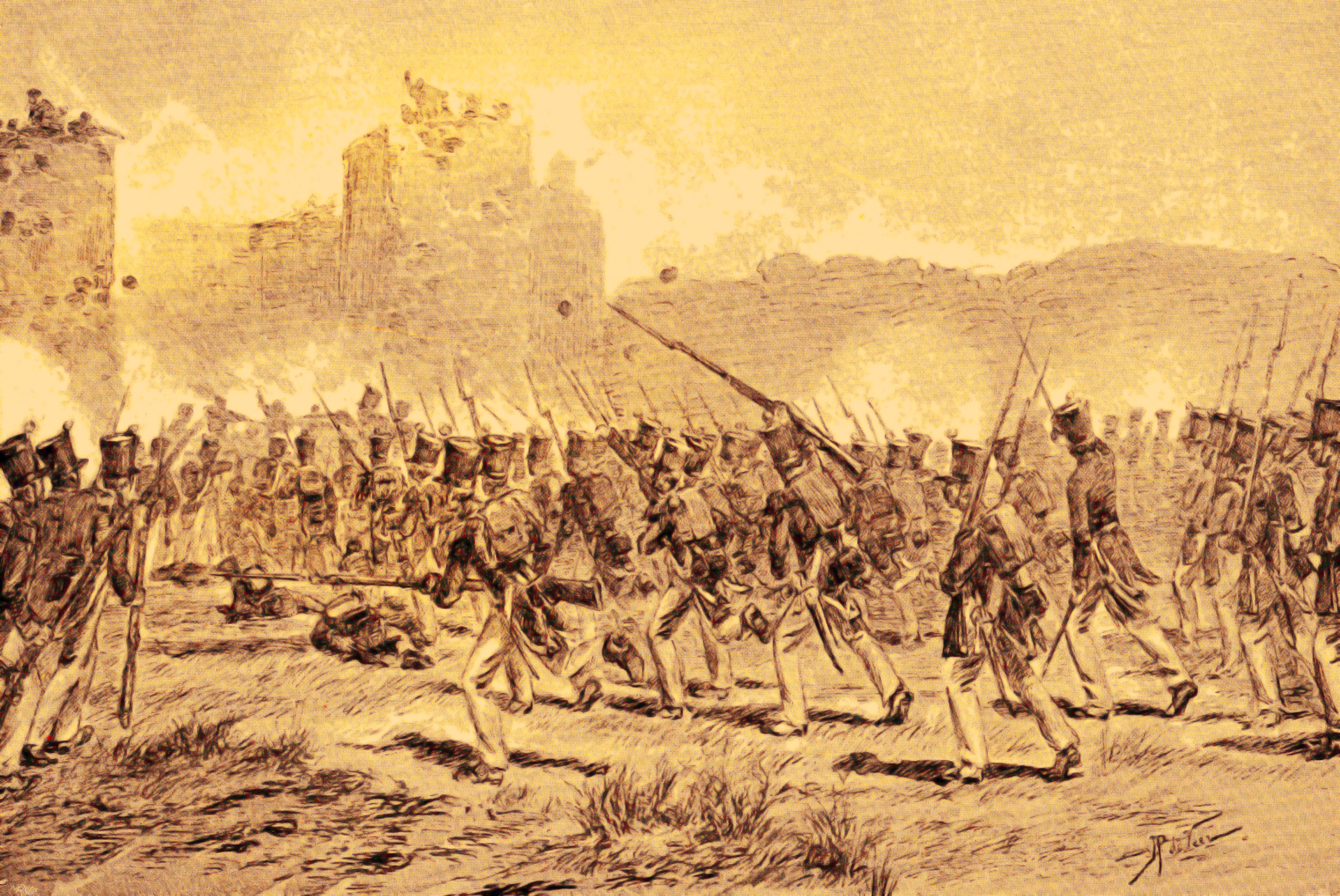
A century and a half after its fall, Plered entered history one more time. During the Java War of 1825 to 1830, Prince Diponegoro occupied the abandoned town, using its old walls to store weapons and livestock and to stage raids on Dutch convoys supplying the nearby garrison at Imogiri. In April 1826, Dutch General Van Geen marched on Plered. Diponegoro withdrew without a fight; Van Geen seized the stockpile but lacked the forces to hold the position and retreated to Yogyakarta. Diponegoro returned, fortified the town, and dared the Dutch to try again. They did. In June 1826, a Dutch force reinforced by Madurese auxiliaries besieged Plered. On June 9, they detonated a mine beneath the ramparts, blew open a breach, and fought their way in over a day of what records call bloody fighting. It was Diponegoro's first major defeat. The Dutch left a garrison of 700 men, and Diponegoro never attempted to retake the site.
Reading the Ruins
Reconstructing what Plered looked like requires stitching together fragments from widely separated sources. The Dutch envoy Van Goens, who visited the palace in 1648 -- just one year after Amangkurat moved in -- described walls with a circumference of 600 roede, roughly 2,256 meters, standing 18 to 20 feet high and 12 feet thick. Rouffaer's 1889 map, drawn when only rubble remained, named structures inside the compound: a mosque, a tiger cage -- the first known permanent tiger cage in any Javanese court -- and chambers with traditional names like Sitiinggil, Keben, and Srimanganti. Indonesian archaeologists have since estimated the wall circumference at 3,040 meters and its thickness at 220 to 280 centimeters, built from bricks, tuff, and andesite. Around the walled complex, settlement neighborhoods carried names that persist today: Kauman for the Islamic scholars, Gerjen for the tailors. The rice paddies that now fill the old enclosure grow above a cultural heritage site designated as Cagar Budaya, where the walls are gone but the place-names remember.
From the Air
Located at 7.86S, 110.41E in Bantul Regency, Special Region of Yogyakarta, near the Opak River. The site lies south of Kotagede and southeast of central Yogyakarta. The area appears as flat agricultural land (rice paddies) with scattered village settlements. Mount Merapi (2,930 m) is visible to the north. The Karta Palace archaeological site lies a short distance to the west. Nearest airport: WAHH (Adisucipto International Airport), approximately 10 km to the northwest. At low altitude, traces of the former wall perimeter and moat system may be faintly discernible in field boundaries and irrigation channels.