Plitvice Lakes National Park
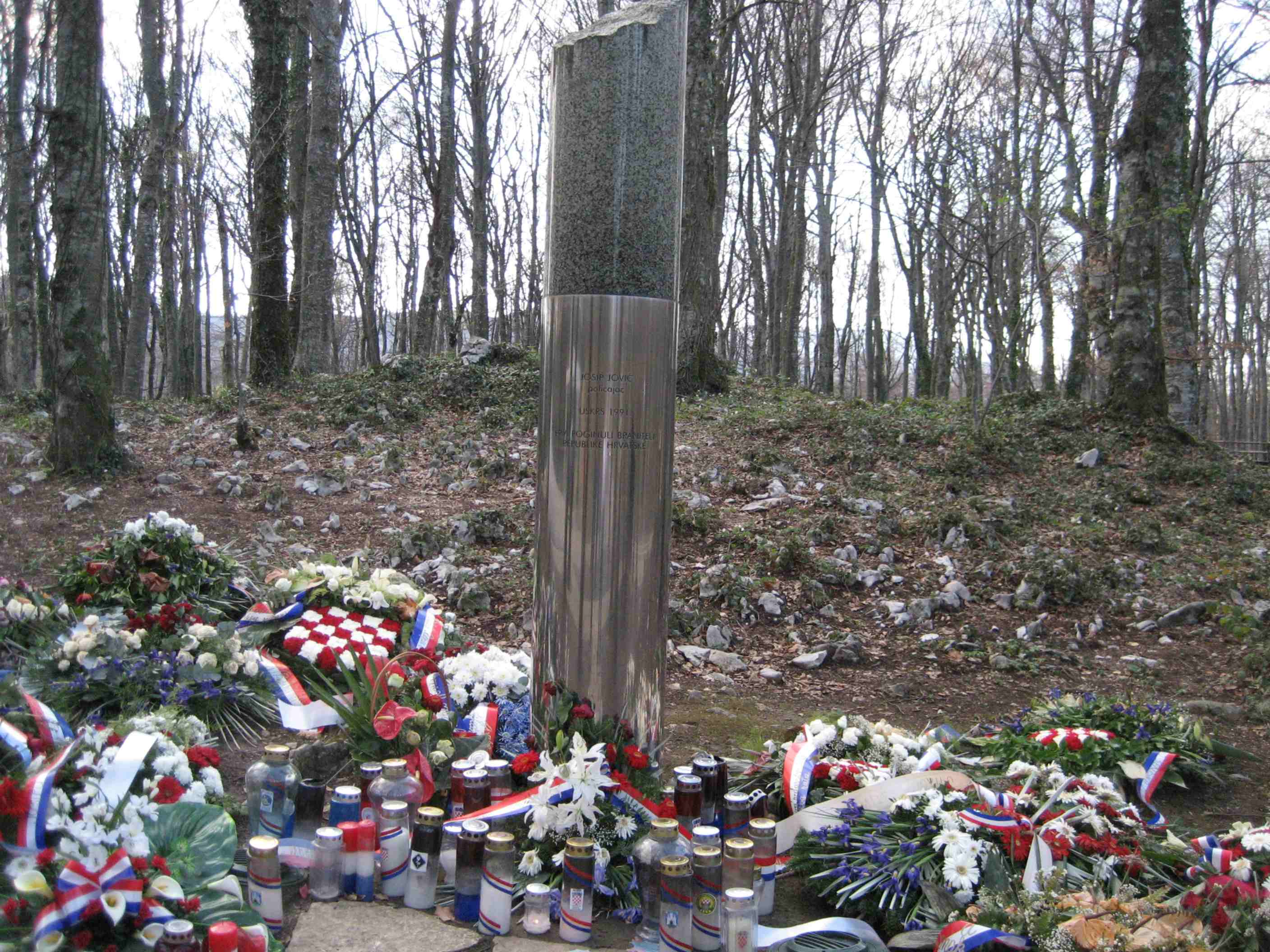
On Easter Sunday 1991, gunfire echoed through these forests for the first time in decades. Croatian police clashed with armed Serb forces who had seized Plitvice Lakes National Park, and a young officer named Josip Jovic became the first combat fatality of the Croatian War of Independence. The park reopened after the war, its lakes indifferent to the politics of the surface world. They had been here long before any border was drawn and would outlast the next one too. Sixteen lakes, linked by waterfalls and cascades, descend through a forested karst basin in central Croatia, building and rebuilding their own travertine dams in a process so unusual that UNESCO inscribed the park as a World Heritage Site in 1979.
Water Becomes Architecture
The lakes of Plitvice sit in a basin of dolomite and limestone between the mountains of Licka Pljesevica, Mala Kapela, and Medvedak. Runoff from these mountains feeds sixteen lakes that descend from 636 meters to 503 meters over a distance of roughly eight kilometers, aligned south to north. The lakes collectively cover about two square kilometers, and the water exiting from the lowest one forms the Korana River. What makes Plitvice extraordinary is the mechanism connecting them. Moss, algae, and bacteria absorb calcium carbonate from the mineral-rich water, encrusting themselves in travertine, a porous limestone that hardens over time. These living organisms become the building material for natural dams that grow at about one centimeter per year. The barriers create the waterfalls. The waterfalls create the lakes. And the process never stops, so the landscape visitors see today is not the one that existed a century ago, nor the one that will exist a century from now.
Palette of a Karst Basin
The lakes are famous for their colors, which range from azure to emerald, grey to blue, shifting through the day and across seasons. The color depends on the quantity of minerals and organisms in the water, the angle of sunlight, and the depth. Shallow pools over white travertine glow turquoise. Deeper lakes with dense underwater vegetation turn a dark, saturated green. On overcast days the palette mutes to silver and slate. The upper lakes, a chain of smaller bodies between Proscansko Lake and Kozjak Lake, are surrounded by dense forest and connected by dozens of cascading waterfalls. Kozjak, the largest lake, stretches wide enough to require a ferry crossing. The lower lakes drop more steeply, culminating in the Veliki Slap, the park's tallest waterfall at 78 meters. Walking the entire system takes roughly four hours on boardwalks and gravel paths that thread between the cascades, though rushing through would miss the point entirely.
The Forest Around the Water
This is one of the last regions in Europe where brown bears roam freely. A lone bear is more frightened of visitors than they are of it, but surprising a mother with cubs in these woods is a genuine hazard. Wolves, lynx, and wild boar inhabit the surrounding forests, which extend far beyond the lake system into a landscape of beech, fir, and spruce. The park's forests are themselves a study in ecological layering: Mediterranean influences from the south mix with continental species from the north, creating a transitional zone of unusual biodiversity. What lies beyond the marked trails carries a different kind of danger. During the Croatian War of Independence, this area saw combat, and land mines were laid in the forests around the park. The park itself has been cleared and is safe, but wandering off-trail outside its boundaries remains genuinely risky, a sobering reminder that these serene woods were a battleground within living memory.
From Illyrians to Holidaymakers
Humans have inhabited the Plitvice area for thousands of years. Illyrians, Thracians, Celts, Japods, Romans, Avars, Slavs, and Turks all passed through or settled. The Ottomans held the region from 1528 until the Austrian Empire retook it 150 years later, incorporating it into the Military Frontier. By the late 19th century, the lakes had become a tourist attraction; the first hotel opened in 1896, and a conservation committee was formed as early as 1893. Communist Yugoslavia nationalized the area and declared it a national park in 1949. The UNESCO inscription followed in 1979, citing the park's outstanding natural beauty and the undisturbed production of travertine through chemical and biological action. Many Germans know the landscape from an unexpected angle: the Karl May Western films of the 1960s, which used Plitvice's forests and lakes as stand-ins for the American frontier, a Wild West conjured from Croatian karst.
The Staircase from Above
From altitude, the lakes reveal their geometry: a chain of irregular blue and green shapes descending through dark forest, connected by white threads of falling water. The travertine barriers appear as pale arcs across the darker water, and the boardwalks trace thin lines along their edges. Kozjak Lake, the largest, stretches wide enough to read as a distinct body of water rather than a link in the chain. The surrounding mountains, rising to 1,640 meters at Gornja Pljesevica, frame the basin in a horseshoe of forested ridges. In winter, snow blankets the entire system, and the waterfalls slow to crystalline curtains of ice. The Mukinje Ski Resort operates nearby from December to March, a reminder that this landscape has a second life once the summer crowds depart.
From the Air
Located at 44.88N, 15.62E on the Plitvice plateau in central Croatia. The sixteen lakes are visible from above as a chain of blue-green pools descending through dense forest, connected by white waterfalls. The surrounding mountains rise to 1,640 meters. Nearest airports: Zadar (LDZD) approximately 130 km south, Zagreb (LDZA) approximately 140 km northeast, Rijeka (LDRI) approximately 150 km northwest. The park lies near the Bosnian border. Recommended viewing altitude: 3,000-6,000 feet to appreciate the staircase geometry of the lakes.