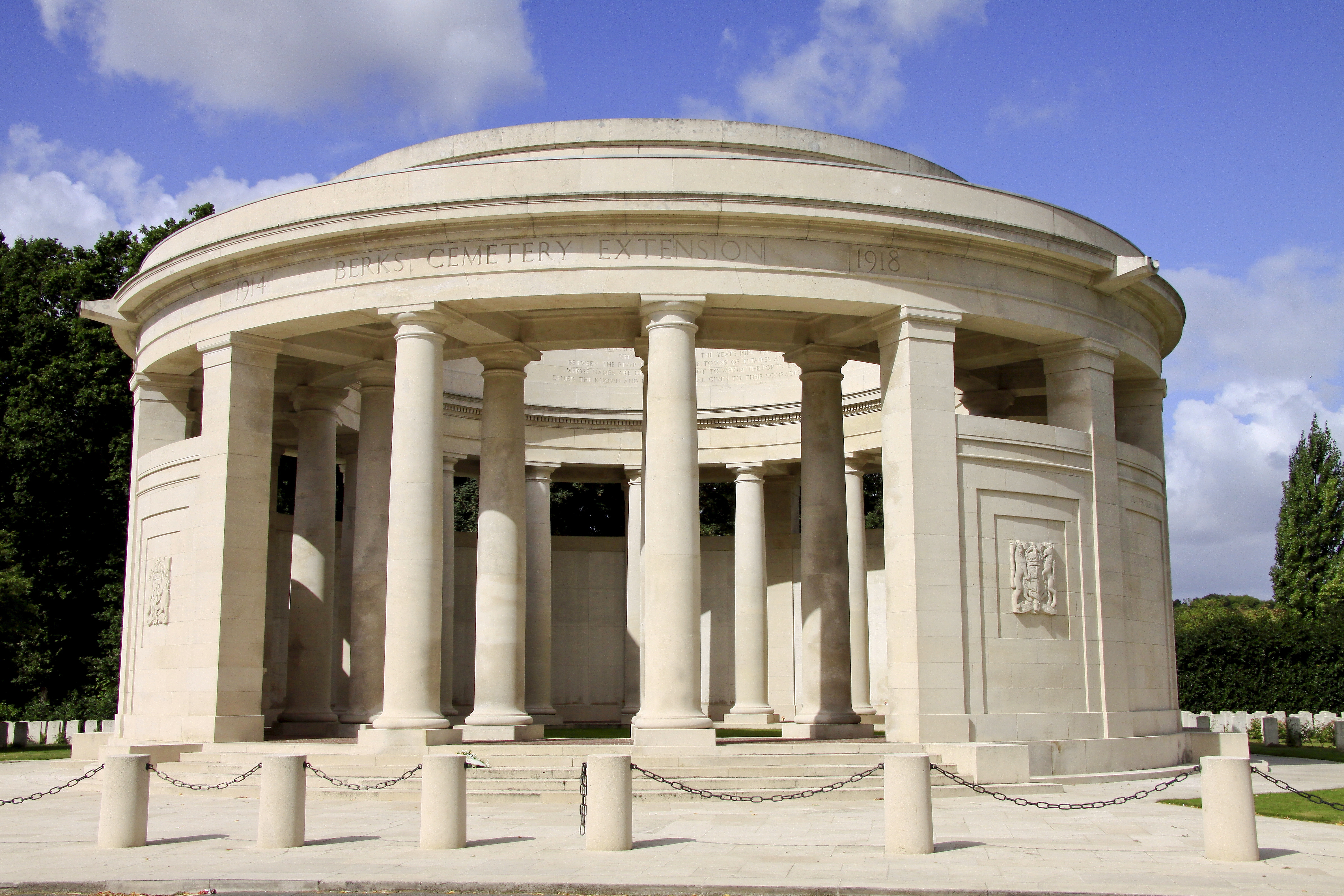
Ploegsteert Memorial to the Missing
Plugstreet, the British soldiers called it, because Ploegsteert was harder than it needed to be at four in the morning in a wet trench. They came here from Lancashire mill towns, Welsh valleys, Scottish fishing villages, Cape Province farms, Auckland suburbs. Most of them survived. A quiet stretch of the Western Front, the officers said. Then 11,447 of them did not come home, and 11,447 of them have no grave that anyone can find. Their names are cut into the Portland stone of a small rotunda in a village called Ploegsteert, and on the first Friday of every month, just after sunset, a bugler stands inside the circle and plays the Last Post into the cold air.
The Quiet Sector
Ploegsteert Wood, just north of the French border in Belgian Hainaut, was fought over hard in the autumn of 1914. After that it became what the British army called a quiet sector, which meant that battalions came here from the worst places to recover before going back. Winston Churchill commanded a battalion of the Royal Scots Fusiliers in these trenches in early 1916 after his resignation from the Admiralty. The poet Roland Leighton, whose fiancée Vera Brittain would write about him in Testament of Youth, had served in this wood in the spring of 1915 — his poem "Violets from Plug Street Wood" was written here — and died on 23 December 1915 at Hébuterne, further south, shot crossing the wire to repair it. Quiet meant that snipers shot a few men a day, that trench mortars killed in ones and twos, that the wet rotted feet faster than the bullets killed. Over four years it added up.
Berks Cemetery Extension
Commonwealth troops founded Berks Cemetery Extension in June 1916 as an overflow for the Hyde Park Corner (Royal Berks) Cemetery across the road. After the war, King Albert I of Belgium granted the cemetery grounds to the United Kingdom in perpetuity, a small parcel of Belgian soil belonging to Britain forever, in recognition of what the British Empire had spent in the defence and liberation of Belgium. The grass is cut to the same length here as at every other Commonwealth War Graves Commission site from Gallipoli to Burma. The roses are pruned in February. The names on the white headstones face east, toward the line where these men were last seen alive.
The Rotunda
The Ploegsteert Memorial stands in the middle of the cemetery, a circular colonnade of Portland stone seventy feet across and thirty-eight feet tall, designed by H Chalton Bradshaw and unveiled on 7 June 1931 by the Duke of Brabant, soon to become King Leopold III. Two great lions by the sculptor Gilbert Ledward guard the approach. The roll of names commemorates the missing of the battles fought outside the Ypres Salient in the area around Ploegsteert: Armentieres, Aubers Ridge, Loos, Fromelles, Estaires, Hazebrouck, Bailleul, Kemmel, and the long routine of trench-holding that never made a battle's name at all. Among the names are three Victoria Crosses: Sapper William Hackett, who chose to stay with a trapped comrade as their gallery flooded; Private James MacKenzie, killed dragging a wounded man back to the lines at Rouges Bancs; and Captain Thomas Pryce, who died holding a position to the last cartridge in April 1918.
The Bugler in the Circle
Since 7 June 1999, the Comite du Memorial de Ploegsteert has arranged for the Last Post to be played at the memorial on the first Friday of each month. It is the smaller, quieter cousin of the famous nightly ceremony at the Menin Gate ten kilometres north in Ieper. A handful of local people gather. Sometimes a school group is there, sometimes descendants who have travelled from New Zealand or South Africa with a name on a piece of paper. The names in the rotunda were boys and men who were known: William of the Royal Welsh Fusiliers, who used to whistle when he walked; Henare from Hawke's Bay, whose mother kept his last letter for forty years; the cooper from Stellenbosch who left a wife and a small daughter. They did not become statistics here. They became gaps in family photographs in towns the maps barely show.
What the Stone Carries
The Ploegsteert Memorial does what all the great Commonwealth memorials to the missing do, what Lutyens did at Thiepval and Blomfield at the Menin Gate. It refuses to pretend that there is nothing to say when there is no body to bury. Each name on the rotunda is a refusal, a small architectural insistence that this person was here. The village around it has grown quiet again. Plugstreet Wood has regrown into something like a wood. Cattle graze where the trenches were. The flag on the rotunda pole moves in the same Flanders wind that moved over the boys when they were alive, and on the first Friday of the month the bugler steps into the circle, and for two minutes the village does what the war first asked of it: it stops, and it remembers, and it lets the names be heard.
From the Air
Located at 50.74N, 2.88E in the village of Ploegsteert (Comines-Warneton), Belgium, about 12 km south of Ieper. The memorial is a small circular structure visible from the road N365 (Ypres-Armentieres). At cruising altitude the cemetery and rotunda read as a precise white circle in green farmland on the south side of the village. Nearest airports are Wevelgem (EBKT, 17 km NE) and Lille-Lesquin (LFQQ, 23 km SW). Open agricultural terrain, no significant relief. Visibility usually good except in winter morning fog off the Lys.