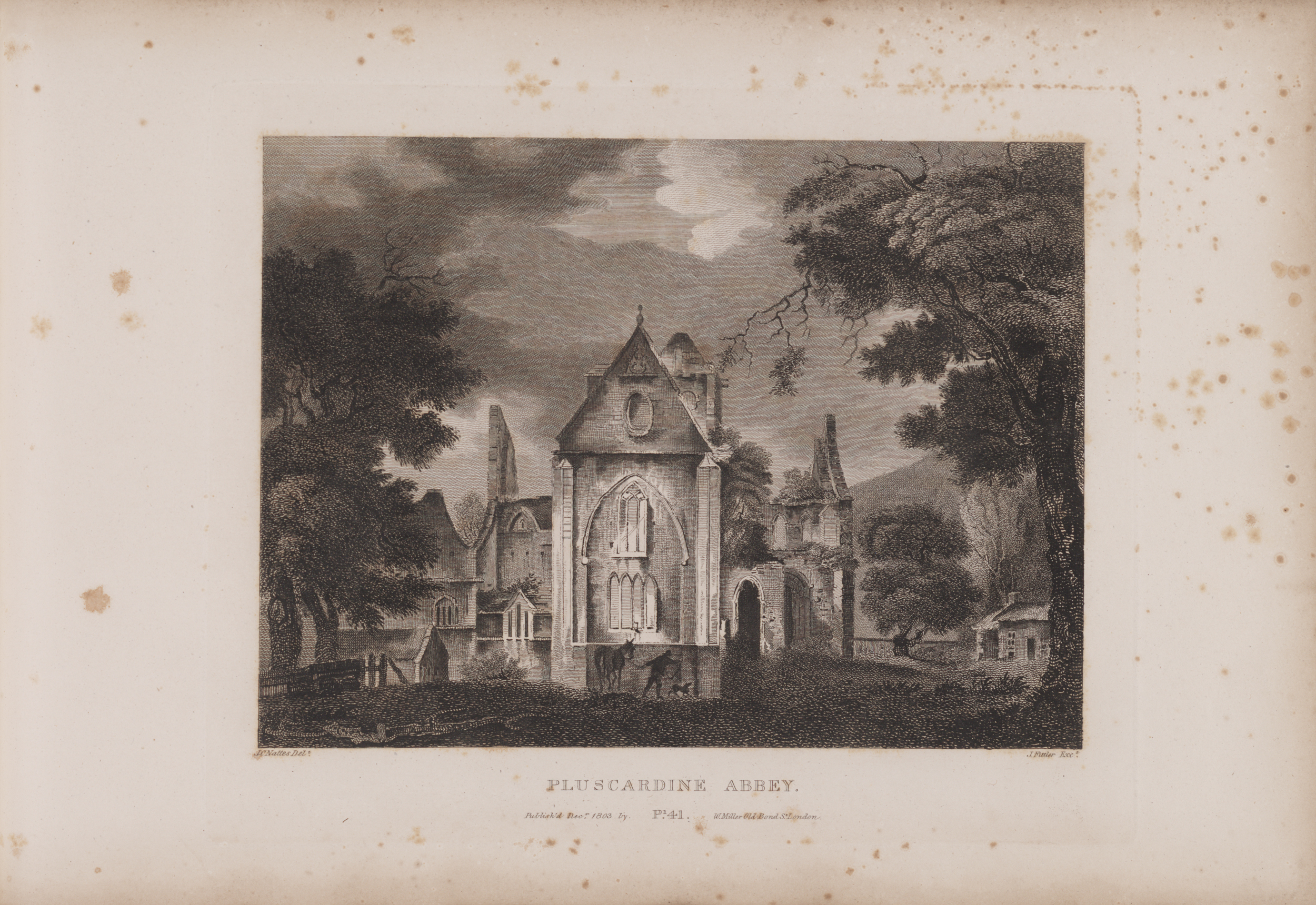
Pluscarden Abbey
The bells still ring for prayer. In the glen of the Black Burn, six miles southwest of Elgin in Moray, Pluscarden Abbey has been calling monks to worship since 1230 -- with an interruption of roughly three and a half centuries during which the buildings were set on fire, quarried for stone, converted into a shooting lodge, and left to the weather. Today it is the only medieval monastery in Britain still inhabited by monks and used for its original purpose. The community follows the Benedictine Rule, observing silence in the church and refectory, welcoming guests, and maintaining a rhythm of prayer and labour that would be recognisable to the men who built the first walls nearly eight hundred years ago.
A French Order in Moray
King Alexander II founded the priory in 1230 for the Valliscaulian Order, a small and ascetic monastic community based at Val des Choux in Burgundy, about twenty kilometres from Chatillon-sur-Seine. The Valliscaulians blended Cistercian and Carthusian practices: monks lived in separate cells, tended private vegetable plots in the afternoons, and the priory was limited to no more than twenty monks. The Order had only twenty-one houses in total. Alexander granted them extensive estates between the rivers Ness and Spey, along with the income from mills in Pluscarden, Elgin, Forres, and other towns, plus salmon fishing rights on the Findhorn and Spey. The priory even received a tithe on all iron mined in the forests of Pluscarden.
Fires and Falling Income
Two fires struck the priory in the 14th century. The first was attributed to Edward I of England in 1303. The second, in 1390, was the work of Alexander Stewart, Earl of Buchan -- the Wolf of Badenoch, the same man who burned Elgin Cathedral. The damage to the transepts was never fully repaired, evidence of dwindling resources. Contact with the mother house in Burgundy became difficult during the Hundred Years' War. By the 15th century, the priory was in crisis: arguments broke out over who should be prior, income was falling, and the community was shrinking. In 1453, the Prior of nearby Urquhart -- which had only two monks left -- petitioned the Pope to merge his house with Pluscarden, which had six. Pope Nicholas V issued a bull joining the two, and Pluscarden became a Benedictine daughter house of Dunfermline Abbey.
Reformation and Ruin
The last pre-Reformation prior, Alexander Dunbar, alienated priory property to his own family on a grand scale. He died in 1560, and the community passed to a series of lay commendatory priors who managed the revenues but had no monastic vocation. The last monk recorded at Pluscarden was Thomas Ross, who witnessed a grant of fishings in 1586. After that, the buildings emptied. During the 17th century, the priory became a quarry: its stones were hauled away to rebuild St Giles Kirk in Elgin, with payments to hauliers suggesting demolition on an industrial scale. The Earls of Fife later owned the lands, and the 4th Earl converted the east range into a shooting lodge. In 1897, the 3rd Marquess of Bute bought the property and began restoration, but his death in 1900 halted the work.
The Monks Return
In 1943, Lord Colum Crichton-Stuart gave Pluscarden and its land to the Benedictine monks of Prinknash Abbey in Gloucestershire. The community arrived in 1948. Within seven years they had roofed the bell tower. Restoration work continued for decades. The priory gained independence from Prinknash in 1966 and was elevated to abbey status in 1974. In 1987, St. Mary's Monastery in Petersham, Massachusetts, became a dependency of Pluscarden, extending the community's reach across the Atlantic. The abbey now welcomes guests who observe the silence of the monastic areas and sometimes help with manual work. Standing in the restored church, where stained glass filters coloured light across medieval stonework, the survival of this place feels improbable. Fire, neglect, quarrying, and four centuries without monks should have finished it. The bells, apparently, had other plans.
From the Air
Located at 57.60N, 3.44W in a glen 6 miles southwest of Elgin, Moray. The abbey complex is in a secluded valley of the Black Burn. RAF Lossiemouth (EGQS) is approximately 10 miles northeast. Best viewed at 2,000-3,000 ft AGL. The abbey buildings are visible in a green valley surrounded by wooded hills.