Pola Museum of Art
Tsuneshi Suzuki never hired an art advisor. The second-generation head of the Pola cosmetics empire taught himself about painting by reading treatises and monographs, then spent four decades quietly building one of the most remarkable private art collections in Asia. By the time of his death in 2000, he had accumulated over 10,000 works, including 19 paintings by Monet, 16 by Renoir, 19 by Picasso, and 176 by Leonard Foujita. Two years later, those works found a permanent home in the mountains of Hakone, inside a building designed to be nearly invisible. The Pola Museum of Art sits in the forested highlands of Sengokuhara, within Fuji-Hakone-Izu National Park, and most of it lies underground. From above, the beech tree canopy barely hints at the galleries below. It is a museum that insists you look inward before you look at art.
A Cosmetics King's Private Passion
Suzuki Tsuneshi was born in 1930 in Shizuoka Prefecture, the eldest son of Shinobu Suzuki, who had founded Pola that same year as a cosmetics research and manufacturing firm. At just 23, Tsuneshi took over the company from his father. By 28, he had purchased his first painting, a work by Leonard Foujita, the Japanese-born artist who had become the toast of 1920s Montparnasse. That initial acquisition sparked a systematic campaign. Without specialist guidance, Suzuki read widely and developed a connoisseur's eye, focusing on French Impressionism and the Ecole de Paris but also collecting Japanese Western-style paintings, ukiyo-e prints, Oriental ceramics, glasswork, and cosmetic utensils from around the world. His philosophy was rooted in a belief that "internal beauty is important," and he saw art collecting not as a hobby but as an extension of his life's work at Pola. He established the Pola Art Foundation to share that vision, ensuring the collection would outlast him.
Buried in the Forest
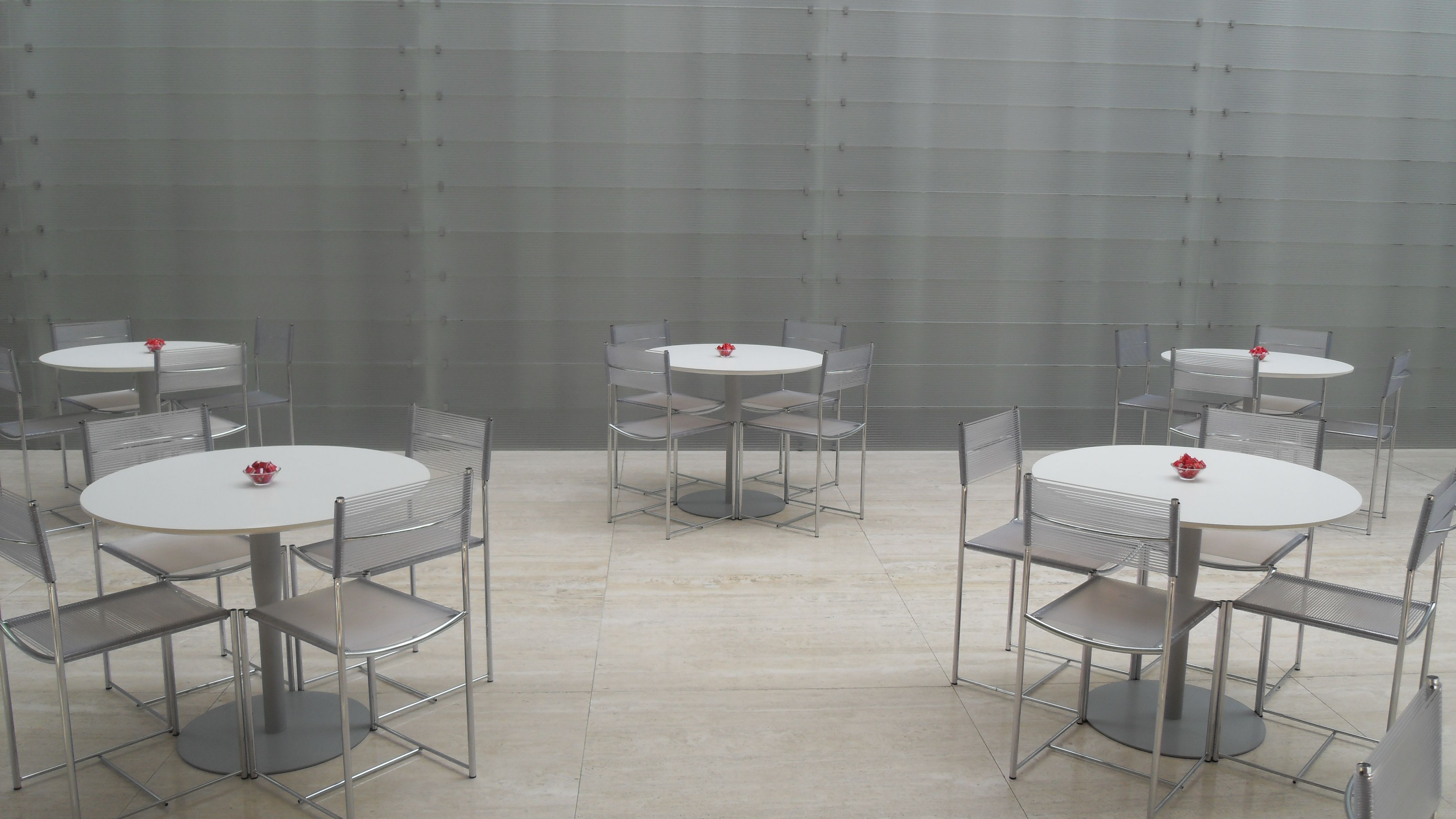
When it came time to build a permanent home for the collection, the challenge was environmental as much as architectural. The chosen site lay within Fuji-Hakone-Izu National Park, where strict regulations protect the volcanic landscape. The architectural firm Nikken Sekkei responded with a radical solution: bury most of the museum underground. The building rises only eight meters above grade, keeping its profile well below the surrounding beech canopy. Two floors sit above ground and two more extend below, containing the bulk of the gallery space. Despite being largely subterranean, the interior feels anything but dark. A vast skylight floods the central atrium with diffused natural light, and floor-to-ceiling windows in the corridors frame views of the surrounding forest. The effect is of walking through a series of light-filled clearings, with art hanging where sunbeams fall. Nikken Sekkei's design earned widespread acclaim for proving that a world-class museum could coexist with a national park rather than compete against it.
Monet, Renoir, and the Weight of Light
The collection's strength lies in its depth. Where many museums hold a token Impressionist painting or two, Pola owns enough to trace the movement's entire arc. Nineteen works by Monet span from his early plein air experiments to the late water lily canvases. Sixteen Renoirs capture the painter's evolution from sun-dappled group scenes to the warm, fleshy portraits of his later years. Van Gogh is represented by three paintings, including Pont de Gleize at Arles from 1888. The Ecole de Paris section centers on Leonard Foujita, with 176 works documenting the artist's journey from Parisian bohemia back to Japanese sensibility. Beyond Western painting, the collection includes significant holdings of Japanese Western-style art, with Ryusei Kishida's intimate Portrait of Reiko Sitting from 1919 among the highlights. Ceramics, glass art, and an unusual collection of historical cosmetic utensils round out the holdings, reflecting Suzuki's belief that beauty takes many forms.
Walking Among the Beeches
In 2013, the museum extended its footprint with the Pola Museum of Art Nature Trail, a 670-meter hiking path that winds through the forested grounds. The trail was designed so that a visit to the museum becomes inseparable from the landscape that shelters it. Beech trees arch overhead, their leaves filtering Hakone's mountain light into shifting patterns on the forest floor. The volcanic ridges of the national park rise in the near distance. The trail connects the museum experience to the broader ecology of Hakone, a region shaped by volcanic activity, hot springs, and centuries of human settlement. Nearby, the Hakone Open-Air Museum and Hakone Botanical Garden of Wetlands offer complementary perspectives on art and nature. Gora Station, the terminus of the Hakone Tozan Railway, provides access to the highland area. Together, these institutions make Hakone's mountains one of the most concentrated landscapes of art and nature in Japan, with the Pola Museum's hidden galleries at its quiet center.
From the Air
The Pola Museum of Art is located at 35.2569N, 139.0211E in the Sengokuhara highlands of Hakone, Kanagawa Prefecture, within Fuji-Hakone-Izu National Park. The museum is deliberately built to be nearly invisible from above, with most of the structure underground beneath a beech forest canopy. Look for the cleared parking area and access road as orientation markers. Lake Ashi lies roughly 3 km to the south-southwest, and the Hakone volcanic ridge defines the skyline. The nearest airports are RJTO (Oshima Airport) about 75 km southeast and RJTT (Tokyo Haneda) roughly 90 km northeast. On clear days, Mount Fuji dominates the northwestern horizon. Approach from the south over Lake Ashi for the best sense of the museum's highland forest setting.