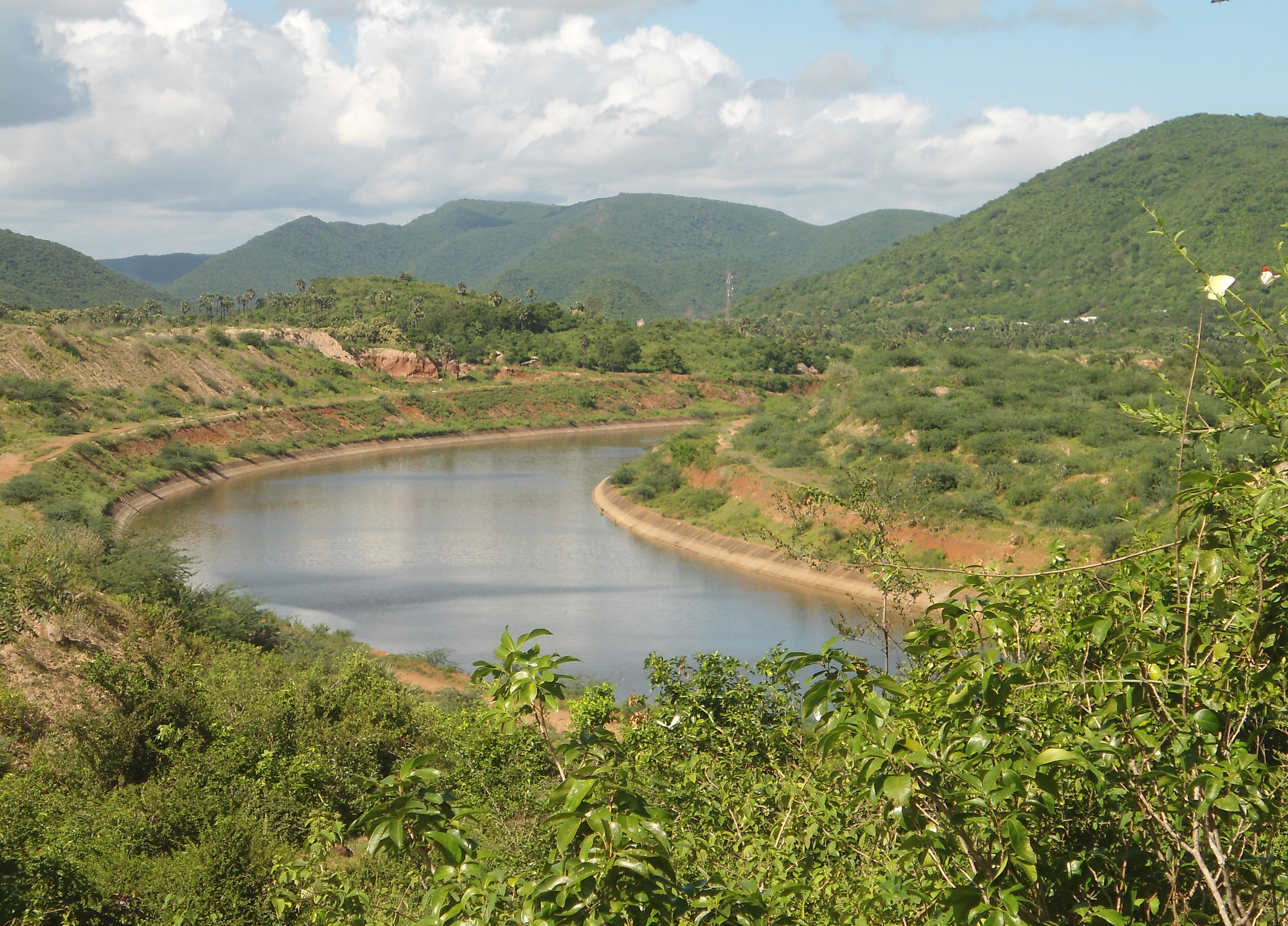
Polavaram Project
The idea was first sketched in 1941, when India was still a British colony and the Godavari River flowed unchecked through Andhra Pradesh's coastal plains. Diwan Bahadur L. Venkatakrishna Iyer, then Chief Engineer of the Madras Presidency's irrigation department, surveyed the site at Polavaram and envisioned a dam that would irrigate 350,000 acres over two crop seasons and generate 40 megawatts of hydroelectric power. More than eight decades later, the dam is still under construction. The Polavaram Project has outlasted empires, survived the birth and bifurcation of states, absorbed budget escalations that would make accountants weep, and displaced communities whose ancestors farmed this delta for centuries. It remains, despite everything, the centerpiece of Andhra Pradesh's water future.
A Dream Measured in Decades
Between Iyer's 1941 proposal and the actual start of construction, the project passed through a succession of governments, chief ministers, and political upheavals. In 1980, Chief Minister Tanguturi Anjaiah laid the foundation stone. In 2004, Y. S. Rajasekhara Reddy performed the bhoomi pooja and secured administrative sanction for the right and left canals. By that point, the estimated cost had ballooned from the original 129 crore rupees to over 8,200 crore. The Reddy government completed roughly a third of the project before 2014. Then came the bifurcation of Andhra Pradesh, which split the state and added new legal and political complications. The Polavaram Project Authority was constituted by the Union Cabinet in May 2014, and the project received National Project status from the Central Government, meaning the costs would be borne by the nation rather than the state alone.
Engineering at Scale
The dam sits on the Godavari River in the Eluru and East Godavari districts, 40 kilometers upstream of Sir Arthur Cotton Barrage. When complete, its reservoir backwater will extend approximately 150 kilometers upstream on the main river and 115 kilometers up the Sabari River tributary, reaching into the neighboring states of Chhattisgarh and Odisha. The hydroelectric component and National Waterway 4 are under construction on the left bank. The scale is staggering: this is a multi-purpose project designed to deliver irrigation, drinking water, hydroelectric power, and flood control simultaneously. The dam's spillway, spill channel, and stilling basin represent some of the largest concrete works in Indian dam construction. In 2018, the state government signed a new contract with Navayuga Engineering Company after the original contractor, Transstroy, sought deadline extensions and saw its loan turn non-performing.
The Human Cost of Progress
Behind the engineering statistics lie displaced lives. Over 90,000 acres of land have been acquired for the project, and the submergence zone has uprooted communities across multiple districts. Land acquisition disputes have filled courtrooms in West Godavari and Krishna districts, where farmers have fought for adequate compensation for agricultural land lost to the reservoir. Tribal communities in the hill areas upstream face the erasure of their ancestral landscapes beneath rising water. The project has also sparked interstate tensions: Odisha and Chhattisgarh have raised concerns about the backwater inundation reaching into their territories, challenging the dam's design parameters and submergence calculations. For the people who will benefit from the irrigation, the project promises transformation. For those who live in the path of the reservoir, it demands sacrifice that has been debated for decades.
Water Politics on the Godavari
The Polavaram Project is inseparable from the politics of water in southern India. The Interstate River Water Disputes Act governs how states share the Godavari's flow, and Polavaram has become a flashpoint in those negotiations. Telangana's government has studied the backwater effects, with concerns that the Bhadrachalam Temple, a major Hindu pilgrimage site, could be threatened by reservoir levels. The Pattiseema Lift Irrigation Project, completed to pump Godavari water into the Krishna River, has added another dimension: water from one river basin being diverted to another. These are not abstract policy debates. They determine who grows crops, who drinks clean water, and which communities survive drought. The Godavari carries more water than any other peninsular Indian river, and Polavaram is the instrument through which that abundance will be distributed, or contested, for generations.
From the Air
The Polavaram Project site is at 17.292N, 81.644E on the Godavari River in Andhra Pradesh's Eluru and East Godavari districts. From the air, the massive dam construction site and the wide Godavari River are prominent features. The reservoir, when filled, will extend 150 km upstream. Rajahmundry Airport (VORY) is approximately 25 km to the east. Best viewed at 3,000-8,000 feet to appreciate the scale of the construction. The Sir Arthur Cotton Barrage is visible 40 km downstream.