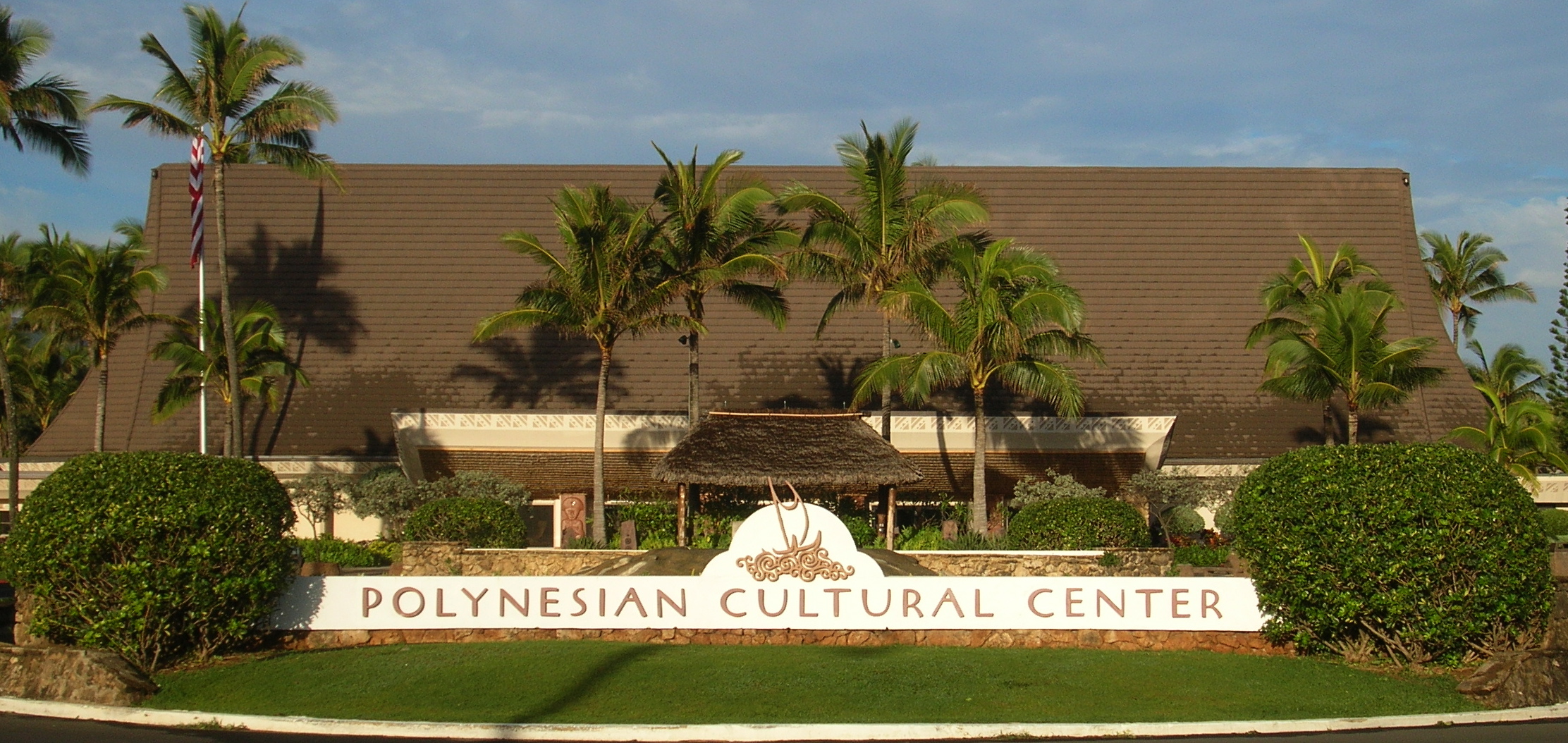
Polynesian Cultural Center
It started with a fish. In the 1940s and 1950s, members of the Latter-day Saints community in Laie, on Oahu's North Shore, hosted hukilau gatherings -- traditional communal fishing events followed by luaus on the beach -- to raise money to rebuild a local chapel destroyed by fire. These beachside celebrations drew such crowds that songwriter Jack Owens, visiting one of them, wrote "The Hukilau Song," later made famous by Hawaiian singer Alfred Apaka. The idea that Pacific Island culture could draw an audience, and that the audience could fund something lasting, took root right there on the sand.
From Beach Luaus to Living Museum
In early 1962, LDS Church president David O. McKay authorized construction of a nonprofit cultural center on 42 acres of land belonging to nearby Brigham Young University-Hawaii. The purpose was twofold: preserve Polynesian culture and provide employment and scholarships for BYU-Hawaii students, many of whom had traveled thousands of miles from island nations across the Pacific. The Polynesian Cultural Center opened on October 12, 1963, and in its early years struggled financially. Howard W. Hunter, a church leader who would later become the LDS Church's president, is credited with transforming the fledgling center from an unprofitable venture into one of Hawaii's signature destinations. Since opening, the PCC has provided financial assistance to more than 12,000 students.
Eight Villages, One Lagoon
The center is organized around eight simulated villages, each representing a major Polynesian culture: Hawaii, Samoa, Aotearoa (New Zealand), Fiji, Tahiti, Tonga, and the Marquesas Islands, along with a special exhibit dedicated to Rapa Nui -- Easter Island. Hourly performances bring each village alive with demonstrations of weaving, carving, cooking, and dance. A lagoon winds through the grounds, and canoe pageants parade past with performers showcasing the signature dances of each island culture. The current canoe show, Huki: A Canoe Celebration, premiered in August 2018. Visitors can paddle canoes themselves, attend a traditional Alii Luau where pork is cooked in an imu -- an underground oven -- or simply wander from village to village as Samoan fire-knife dancers, Maori haka performers, and Tahitian tamure dancers fill the tropical air with movement and sound.
Students Behind the Spectacle
What distinguishes the PCC from a typical theme park is its workforce. Roughly seventy percent of its approximately 1,300 employees are students at BYU-Hawaii, many from the very Pacific Island nations represented in the villages. They work up to 20 hours per week during school terms and 40 hours during breaks, performing the dances and demonstrating the crafts of cultures they grew up in. As a nonprofit, the center's revenue cycles back into operations and education. For a Tongan student performing the tauolunga or a Samoan demonstrating the siva, the work is not acting -- it is transmission, a way of keeping alive the traditions of home while earning a degree far from it.
Fire and Breath
Each evening, the center stages Ha -- Breath of Life, a large-scale production that The New York Times described as "a vivid, energetic production that highlights song and dance from the indigenous cultures of the South Pacific." With a cast of roughly 100 performers appearing six nights a week, the show weaves together hula, haka, meke, otea, and other forms into a single narrative. The PCC also hosts the annual World Fire Knife Dance Competition, where competitors from across the Pacific spin blazing swords in displays of athleticism and nerve. Over 32 million people have visited the center since 1963, making it one of the most-visited attractions in Hawaii, drawing some 700,000 visitors each year to this quiet stretch of the North Shore.
From the Air
Located at 21.639N, 157.920W in Laie on Oahu's North Shore. The center's 42-acre campus with its lagoon and village structures is visible from low altitude along the coast. The adjacent BYU-Hawaii campus and the Laie Hawaii Temple provide visual references. Nearest airport: Dillingham Airfield (PHDH), approximately 16 nm west along the North Shore. Honolulu International (PHNL) is roughly 25 nm south. Best viewed on approach from the ocean side.