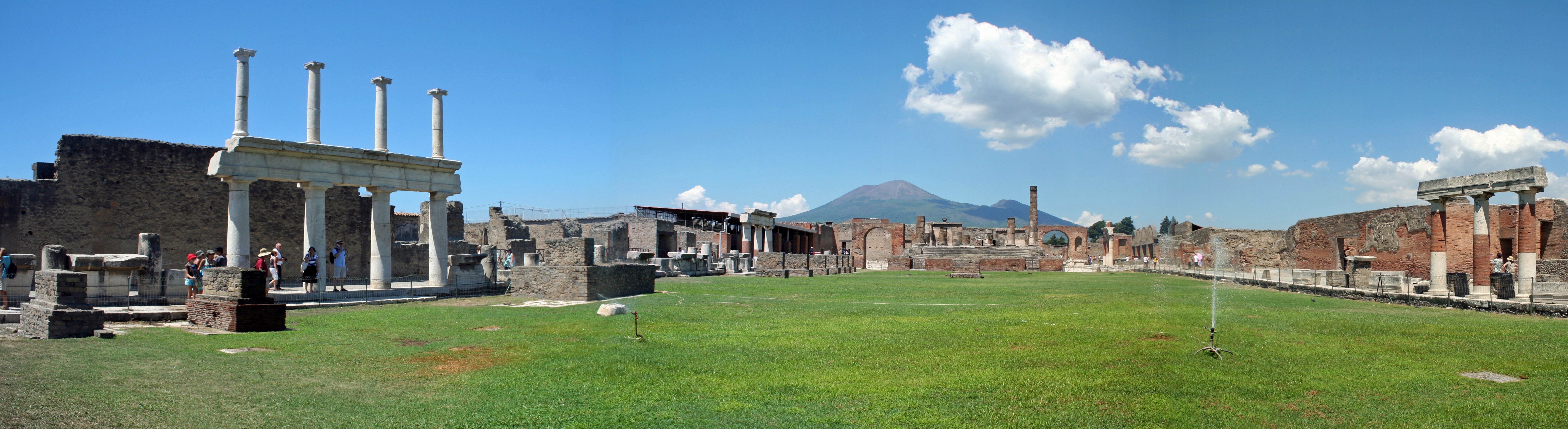
Pompeii: The Day a City Was Frozen in Time
The morning of August 24, 79 AD began normally in Pompeii. Bakers were baking bread. Merchants were opening shops. A dog strained at its chain. By nightfall, the city of 11,000 would be buried under 20 feet of volcanic ash and pumice, its people frozen in their final moments by the pyroclastic surge that killed them where they stood, crouched, or ran. Pompeii would remain hidden for nearly 1,700 years, a time capsule of Roman life so perfectly preserved that archaeologists would find food still on tables, graffiti still on walls, and the spaces where bodies had decomposed still holding the shapes of the dead.
The Warning Signs
Vesuvius had been quiet for centuries - so long that Romans didn't recognize it as a volcano. But the mountain had been restless. A major earthquake in 62 AD had damaged Pompeii severely; repairs were still ongoing seventeen years later. Smaller tremors shook the region in the days before the eruption. Springs and wells dried up. The ground itself seemed uneasy.
On the morning of August 24, Vesuvius erupted with a force that modern volcanologists estimate at 100,000 times that of the Hiroshima bomb. A column of ash and pumice rose 20 miles into the sky. The elder Pliny, commanding the Roman fleet at nearby Misenum, sailed toward the disaster to investigate and rescue survivors. He would die in the attempt, leaving his nephew - Pliny the Younger - to record the only eyewitness account.
The Burial
The eruption unfolded in phases. First came a rain of pumice stones, accumulating several feet per hour. Buildings began to collapse under the weight. Many residents fled, but others stayed, sheltering indoors, hoping the worst would pass. It didn't.
In the early morning of August 25, the eruption column collapsed, sending pyroclastic surges - superheated gas and ash moving at 450 miles per hour at temperatures of 500 degrees Fahrenheit - rolling down the mountain. These surges killed everyone remaining in their path instantly. The victims didn't suffocate; they died from thermal shock, their soft tissues vaporizing. Within hours, Pompeii was buried. Within decades, its location was forgotten.
The Rediscovery
Pompeii was rediscovered in 1748 when workers digging a water channel struck ancient walls. Systematic excavation began under the Spanish king of Naples, Charles III. What they found astonished Europe: a complete Roman city, its streets and buildings intact, its frescoes still bright, its mosaics still glittering.
The most haunting discoveries were the voids - spaces in the ash where bodies had decomposed, leaving perfect negatives of the dead. In 1863, archaeologist Giuseppe Fiorelli began filling these voids with plaster, creating casts of the victims in their death poses. A man covering his face. A dog straining at its chain. A mother sheltering her child. The casts made the ancient dead human again.
Life Before Death
Pompeii reveals Roman life in extraordinary detail. We know what Pompeiians ate because carbonized food survives - bread still in ovens, olives in jars, fish sauce in amphorae. We know their political opinions because campaign slogans are painted on walls. We know their sexual appetites because erotic frescoes decorated their brothels. We know their private thoughts because graffiti - 'I screwed the barmaid' - still marks the walls.
The city had theaters, temples, an amphitheater, public baths, a forum, restaurants, shops. Its streets are grooved by ancient cart wheels. Its stepping stones still cross the roadways, raised above the runoff that served as sewers. Walking through Pompeii is walking through a Roman city, not a reconstruction but the thing itself.
Pompeii Today
Four million visitors walk Pompeii's streets each year, making it one of Italy's most visited sites. About two-thirds of the city has been excavated; the rest remains buried, deliberately preserved for future archaeologists with better techniques. New discoveries continue - in 2018, a perfectly preserved 'fast food' shop was uncovered, complete with painted menu and food residue.
Vesuvius still looms over the site, still active, still dangerous. Three million people now live in its potential blast zone. The volcano that created this archaeological treasure could create another disaster. Pompeii reminds us that civilizations end, that the ordinary morning can become the last morning, that time can stop - and leave everything frozen exactly as it was.
From the Air
Pompeii (40.75N, 14.48E) lies at the base of Mount Vesuvius near the Bay of Naples in southern Italy. Naples International Airport (LIRN/NAP) is 25km northwest. Vesuvius (1,281m) dominates the landscape - an active volcano visible from above. The excavated city covers 66 hectares. The unexcavated portion is visible as a forested mound adjacent to the exposed ruins. Weather is Mediterranean - hot dry summers, mild wet winters. Haze from Naples can affect visibility.