Pope House Museum
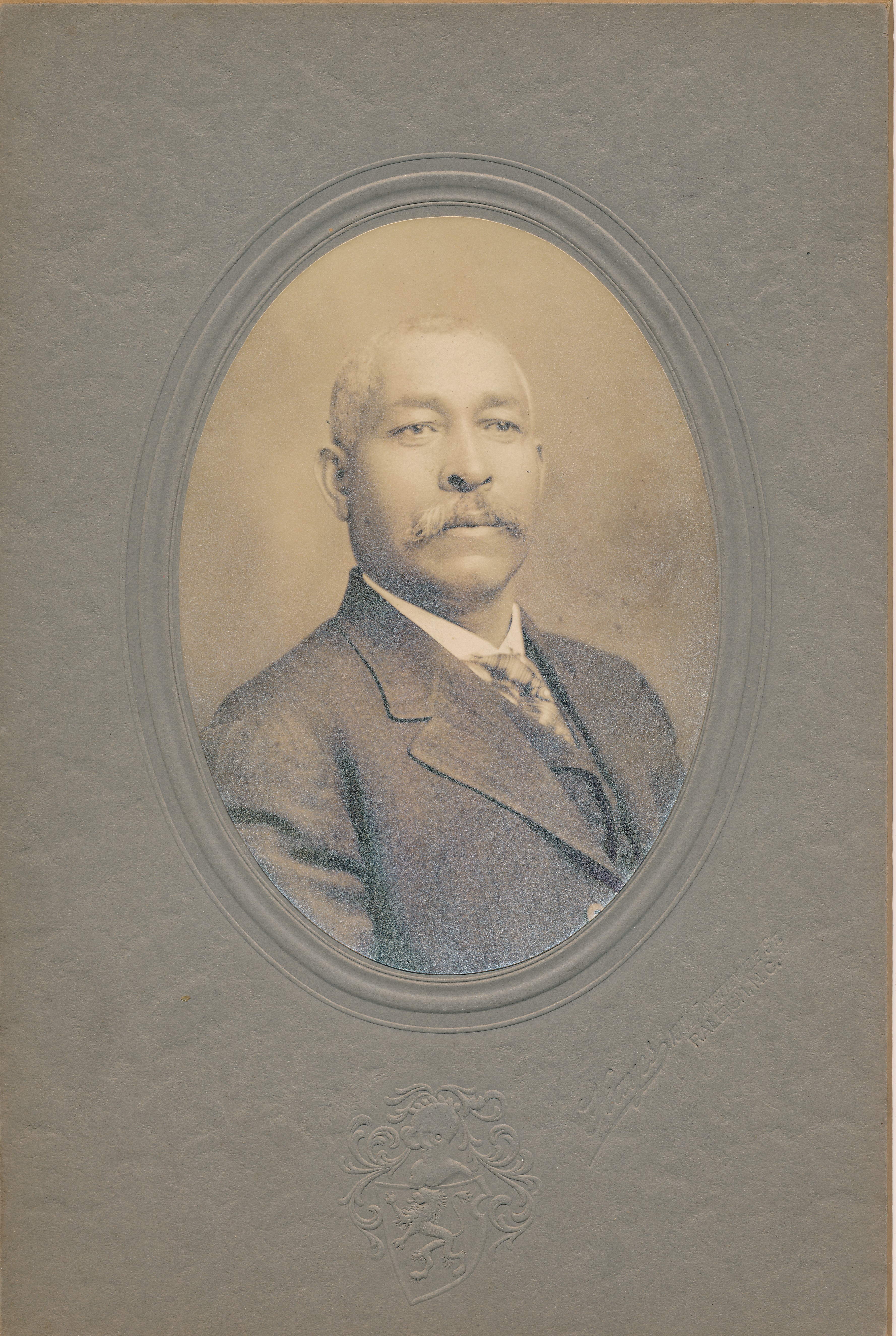
Every room in the house had a call bell button. Press one, and an annunciator in the back hall would signal which room needed attention -- a small luxury that, in 1901, announced something larger: Dr. Manassa Thomas Pope had arrived. A Black physician in Raleigh, North Carolina, Pope built his home on the 500 block of South Wilmington Street with combination gas and electric fixtures, running water in the kitchen, a full second-floor bathroom, coal-burning heating stoves, and a telephone. In the Third Ward, at the turn of the twentieth century, this house was a declaration of professional achievement and permanence.
The Third Ward's Quiet Rise
The neighborhood's transformation began decades earlier. When Reverend Henry Martin Tupper moved Shaw University to the area in 1870, African Americans drawn to Raleigh after the Civil War began settling nearby. The original governor's mansion had been built at the end of Fayetteville Street, and planners once imagined fashionable white residences filling the surrounding blocks. Instead, a different community took root. Black professionals -- doctors, pharmacists, educators -- built homes in what became known as the Third Ward. Pope studied medicine at Leonard Medical Center at Shaw University, then established his practice with an office on East Hargett Street, the heart of Raleigh's Black business district. When he chose to build his home just steps away, he was planting himself at the center of a thriving community.
A House Wired for the Future
Pope's home was a showcase of turn-of-the-century technology. The combination gas and electric light fixtures hedged against the new technology's reliability -- if the electricity failed, gaslight would carry on. The call bell system, with buttons in every room feeding an annunciator panel, was the kind of feature found in the finest houses of the era. After Pope married Delia Haywood Phillips in 1907, the couple added a garage and completed the home's wiring for full electricity. Over the decades, the house evolved: the original front porch gave way to a sleeping porch on brick piers in the 1920s, and in the 1940s the northern half of the first-floor space beneath it was enclosed with brick. As Pope's health declined in the 1920s and 1930s, he began seeing patients in the house itself, converting a small area at the rear of the back hall into an examination space with a hand sink and built-in instrument cabinet.
Shadows of Skyscrapers
The world around the Pope House changed dramatically. Older homes and businesses gave way to office buildings and parking lots. The most striking transformation came when the Raleigh Convention Center rose directly across the street. By the 1980s and 1990s, skyscrapers towered over the modest residence. Pope and his wife had two children, Evelyn and Ruth, who maintained the family home after their parents' deaths even as they lived in Durham and Chapel Hill. The house endured as a quiet artifact of a vanished streetscape -- a solitary frame dwelling amid glass and concrete, holding the memory of a neighborhood that no longer existed around it.
From Family Home to Public Trust
On November 22, 1999, the Pope House was officially listed on the National Register of Historic Places. Within a month, the trustees of the Pope Charitable Foundation decided to turn the home into a museum, and the Pope House Museum Foundation was incorporated as a nonprofit. The family's extensive papers were sorted, catalogued, and donated to the Southern Historical Collection at the University of North Carolina at Chapel Hill. The house also became an official project of the Save America's Treasures Program. But by 2011, financial pressures forced the foundation to approach the city of Raleigh about purchasing the property. The city acquired the Pope House, and Raleigh Parks and Recreation took over management, opening it for regular public tours for the first time in 2012.
What the Walls Remember
Today the Pope House Museum stands as one of the few surviving physical links to Raleigh's early twentieth-century Black professional class. The call bells still mark the walls. The annunciator still hangs in the back hall. The examination nook where Pope treated patients in his final working years remains configured with its small sink and cabinet. The house tells a story that extends beyond one physician's life -- it maps the arc of a community that flourished in the Third Ward, produced leaders and institutions, and was eventually displaced by the forces of urban development. Surrounded by the convention center and downtown towers, the Pope House is a stubbornly present reminder that this ground belonged to someone, that these rooms held purpose, and that the neighborhood's history did not begin with the parking lots.
From the Air
Located at 35.773N, 78.639W in downtown Raleigh, North Carolina, on South Wilmington Street. The house is a small residential structure dwarfed by the Raleigh Convention Center directly across the street and surrounding downtown office buildings. Not individually visible from altitude, but the Convention Center and nearby downtown grid provide orientation. Nearest airport is Raleigh-Durham International (KRDU), approximately 11 nm northwest. The NC State Capitol dome is a useful visual reference roughly 3 blocks north. Recommend 1,500-2,500 ft AGL to appreciate the contrast between the small historic home and surrounding urban development.