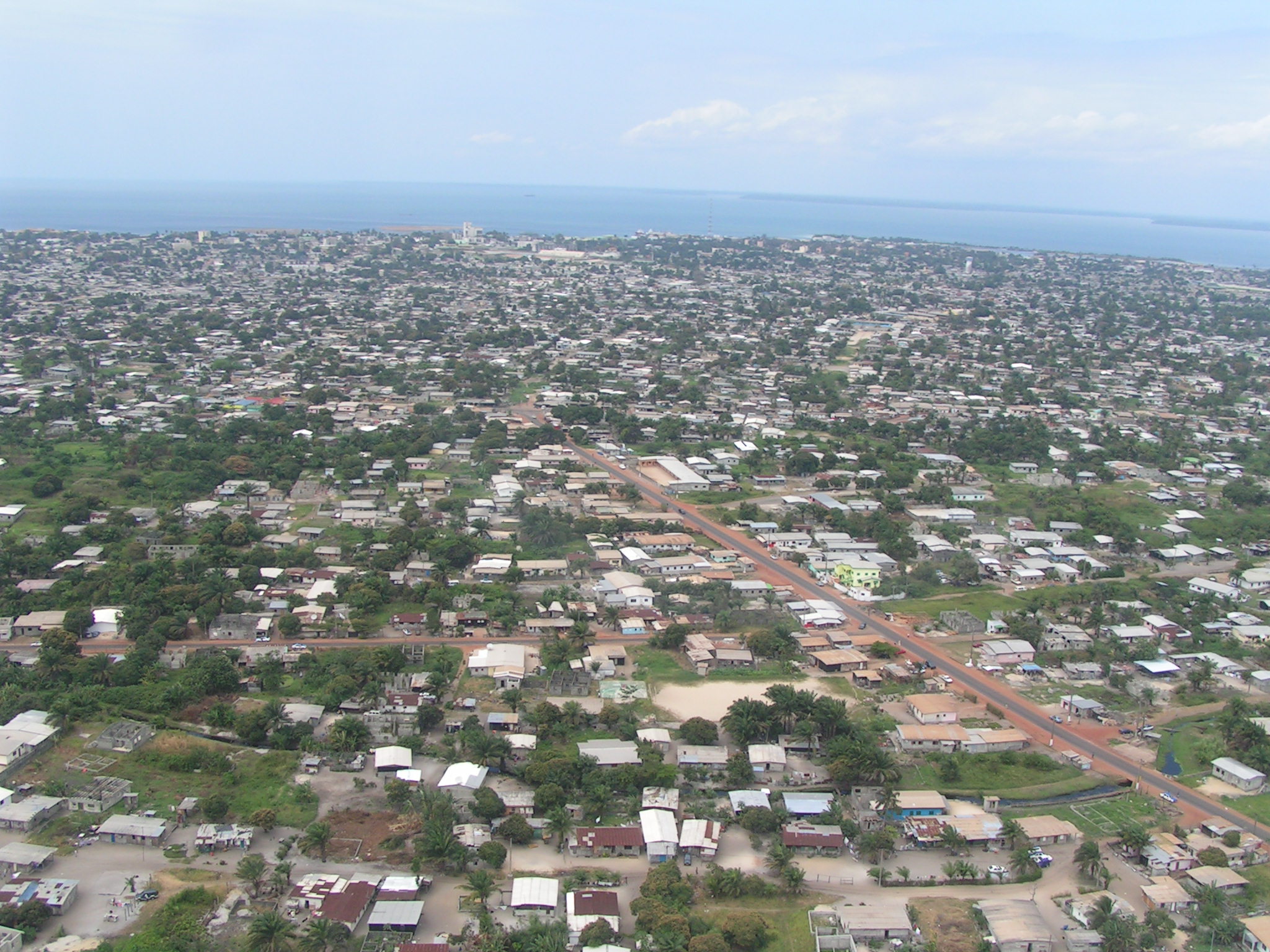
Port-Gentil
In 2007, Time Magazine called Port-Gentil the most expensive city in the world. Not London, not Tokyo, not New York -- a city of roughly 150,000 people on the coast of Gabon, where a head of lettuce could cost ten dollars and a modest apartment rented for more than one in Manhattan. The reason was petroleum. Oil wealth had flooded into Port-Gentil without the infrastructure to absorb it, creating a place where international oil workers lived alongside communities navigating sandy, unpaved roads. The contrast defines the city to this day.
The Island That Oil Built
Port-Gentil sits on Mandji Island, separated from the Gabonese mainland by the channels and mangrove swamps of the Ogooue River delta. For most of the twentieth century, it was effectively an island city with no road connection to the rest of the country. That isolation ended with the construction of a 93-kilometer series of roads and bridges stretching southward along the coast to the town of Omboue, a project funded by a loan from the Export-Import Bank of China and built by the China Road and Bridge Corporation alongside GAUFF Engineering. The city's Port-Gentil International Airport provides regular flights to Libreville, the national capital, and remains the primary link for business travelers and oil industry workers commuting to offshore platforms in the Gulf of Guinea.
Streets of Sand and Diesel
Beyond the paved inner city, Port-Gentil dissolves into sandy paths and rutted tracks. The residential districts of N'Tchengue mark the frontier where asphalt gives way to dirt, where potholes swallow taxi wheels and streetlights disappear. Traffic jams choke junctions like Carrefour Tobia and the Leon Mba roundabout near downtown. Shared taxis negotiate the city for fares starting at 400 CFA francs -- roughly 65 U.S. cents -- though prices double after dark and double again when the destination lies beyond paved roads. Most vehicles on the road are aging models, kept running through improvised repairs because spare parts must be imported from Europe, a process that is both expensive and slow. The city's infrastructure tells the story of a place where resource wealth has not translated into the kind of urban investment its residents need.
Faith, Learning, and the Fiftieth
Port-Gentil's cultural life reflects its layers of colonial history and contemporary identity. Christian churches predominate, including the Roman Catholic Diocese of Port-Gentil, Assemblies of God congregations, and the Evangelical Church of Gabon. Muslim mosques also serve the community. The city's French colonial legacy persists in its educational institutions: the Ecole primaire Leopold Sedar Senghor, named for the Senegalese poet-president, serves younger students, while the Lycee Francais Victor Hugo de Port-Gentil provides secondary education in the French system. A fiftieth anniversary monument downtown commemorates Gabon's independence, a reminder that this oil capital's modern history is still young -- Gabon gained sovereignty from France only in 1960.
Lives Shaped by the Atlantic
Port-Gentil has produced notable figures who carried the city's name beyond Gabon's borders. Stephane Lasme became a professional basketball player who competed internationally, while Alexander N'Doumbou pursued a career in professional football. Their paths out of Port-Gentil trace the routes that connect this coastal city to the wider world -- through sport, through the oil industry, through the flights that shuttle between the island and the mainland. The city's beach stretches along the Atlantic, offering a glimpse of the natural beauty that exists alongside the industrial infrastructure. Port-Gentil remains a city of contradictions: wealthy yet underbuilt, connected to global energy markets yet difficult to reach by road, a place where the twenty-first century and an older, slower Gabon exist side by side on the same sandy streets.
From the Air
Port-Gentil is located at approximately 0.72S, 8.78E on Mandji Island along Gabon's Atlantic coast. From altitude, the city is identifiable as the main urban area on the island, with the Ogooue River delta and mangrove channels visible to the east. Port-Gentil International Airport (FOOG) serves the city with regular flights to Libreville. The surrounding terrain is flat coastal lowland. Expect tropical weather with high humidity; the dry season runs from June to September.