Port of Boulogne-sur-Mer
Before dawn most mornings, the trawlers come back. Around 150 boats work out of Boulogne-sur-Mer - the most active fishing fleet in France - and when they reach the entrance channel between the jetties, they navigate the largest tidal range in the region. On an average day the difference between high and low water here is eight metres. Dunkirk, only sixty kilometres up the coast, sees just over five. The Pas de Calais funnels the Atlantic into the English Channel, and Boulogne sits at the squeezed end of the funnel, where the water has nowhere to go but up and down. The herring built this port. The cephalopods sustain it. The ferries to England have come and gone, and may yet come again.
Cro-Magnon to Roman
Skulls from the prehistoric era have been pulled out of the harbour silt - their nineteenth-century discoverers identified them as Cro-Magnon, evidence that humans have used this estuary of the Liane for tens of thousands of years. The Romans called the port Gesoriacum (and later Bononia) and made it the principal embarkation point for the legions of the British conquest. Legend traces another arrival to the year 633 or 636: a ship without oars or sailors, drifting into the harbour bearing a wooden Virgin Mary that became the focus of medieval pilgrimage. By the eighteenth century the port had a less reverent reputation: maritime smugglers called smogglage moved tea, wine and brandy across the Channel in commercial quantities. The pattern - sacred, profane, commercial, military - has held for two thousand years.
The Herring Century
Industrial fishing came to Boulogne in the 1850s, organised around a handful of shipowning families - the Vidors, Huret-Dupuis, Ancel-Joly - who by 1868 owned more than half of the local drifter fleet. They studied English methods and brought back steam. In 1894, Bouclet and then Vidor put steam-powered herring boats to sea. By the early twentieth century Boulogne was France's leading port for tonnage landed. Herring made the fortune: more than 30,000 tonnes were landed in 1921, worth fifty million francs of the day. The fleets followed the schools - drifters worked the English Channel and North Sea from July through January, while trawlers ranged out to the southwest of Ireland and the Bristol Channel. Salting and curing plants worked year-round. By 1924, when the local catch was off, Boulogne was importing nearly 9,000 tonnes of salted herring from Norway just to keep the curing yards busy.
Decline and Reinvention
The herring did not last. Tonnage peaked in the mid-1960s at around 145,000 tonnes annually and fell almost without interruption for the next four decades - 50,000 tonnes by 2001, just 27,859 tonnes by 2020. Overfishing in the European Channel, then global warming and pollution, then EU quotas reshaped the entire industry. But the port adapted. The Capecure complex grew into Europe's largest seafood-processing zone: today some 85 percent of the 380,000 tonnes of seafood that flow through Boulogne every year arrive by road from elsewhere, get processed locally, and leave again by road. The boats still go out, but the wholesale auction is now plugged into a continental supply chain. In 2023 the port set a twenty-year value record - 89.1 million euros - and the volume of fish landed crossed the symbolic 30,000-tonne line again, lifted by squid, cuttlefish, red mullet and scallops. Boulogne remains France's first fishing port by tonnage and by value.
The Channel Ferry Years
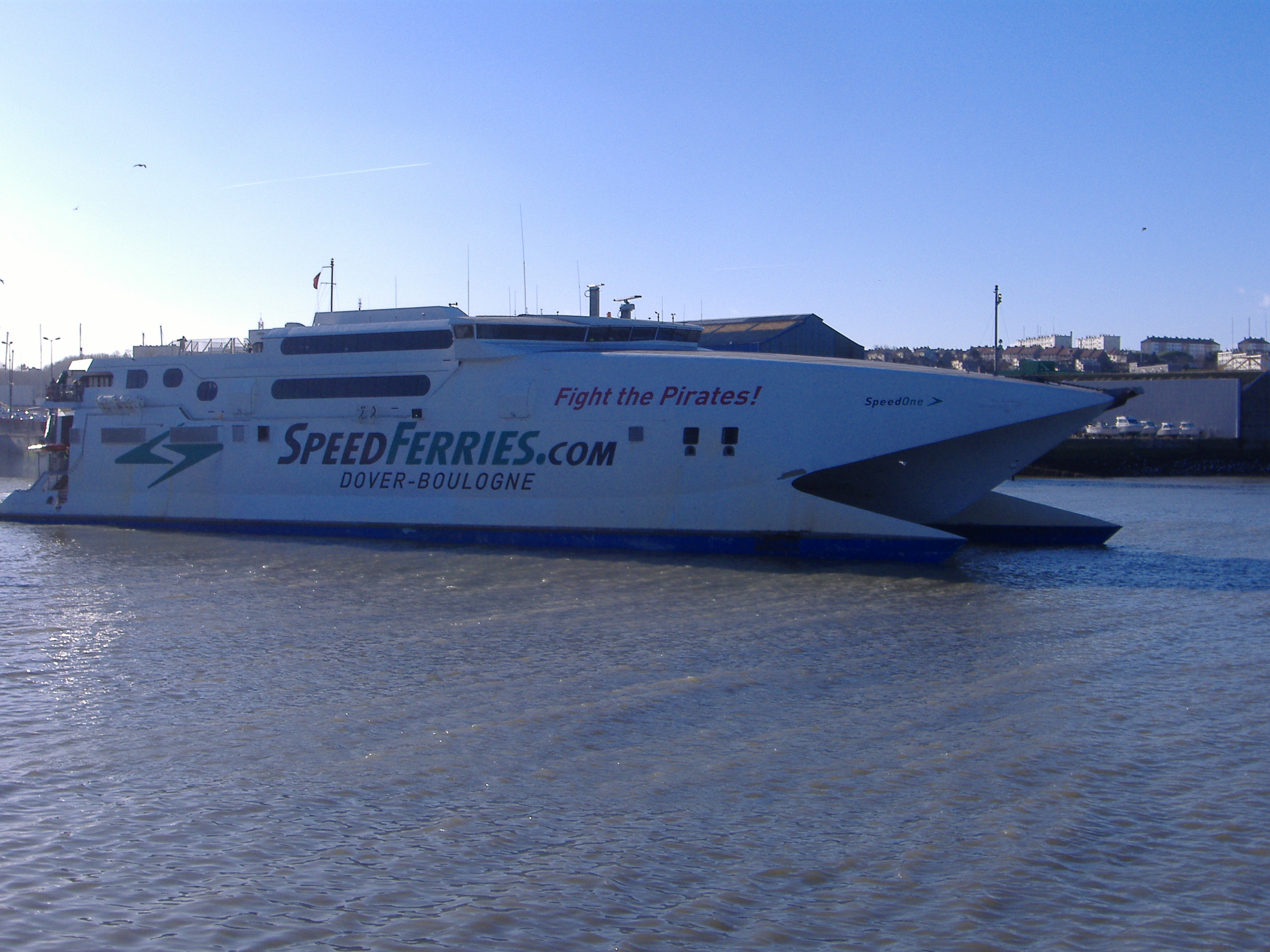
Boulogne ran ferries across to England starting in the eighteenth century. By 1913 it had a monopoly on cross-Channel passenger trade over Calais. Through the twentieth century it was France's second-busiest passenger port. Hoverports opened in 1968 - SR.N4 hovercraft crossed to Dover in twenty-five minutes - and closed again in the early 1990s, undone by the Channel Tunnel and the development of Calais. The Gare Maritime worked from 1875 to 2009. SpeedFerries' fast-ferry service brought 710,000 passengers through in 2007 before collapsing in 2008. LD Lines reactivated the Boulogne-Dover line in 2009, juggling vessels (Cote d'Albatre, Norman Arrow, Norman Spirit), and abandoned it again in September 2010. A new freight-passenger terminal stood almost unused. Then in 2024, after fourteen years of silence, cross-Channel ferry traffic resumed - tentative, freight-led, but real - and the slow possibility of a revival began.
The Marguet Dam and the Lighthouse
Two engineering pieces define the modern port. The Marguet dam-bridge sits across the Liane in the Place Frederic-Sauvage, named for the engineer Pierre Joseph Marguet who, with Peyronnet, designed it in the mid-nineteenth century. Napoleon III inaugurated it on 28 September 1853. It regulates the river - holding water back during low flows to keep the marina basin usable, releasing it on the ebb to flush the harbour. The 800-metre Quai de l'Europe, opened in 1967, takes 230-metre ships at 11-metre berths and handles forestry products, cement and aggregates. The Boulogne lighthouse still works, one of the few in Europe that has not been automated and decommissioned. Above all of it, on the cliff to the west, sits Nausicaa - France's national sealife centre and one of the largest aquariums in Europe, opened in 1991. The port that landed thirty thousand tonnes of herring a year in the 1920s now also explains the ocean to its visitors.
From the Air
Coordinates 50.7253°N, 1.6133°E. View from 1,500-3,000 feet AGL to take in the full port: jetties, fishing basin, commercial quays along the Quai de l'Europe, Capecure processing zone, and the Marguet dam-bridge at the entrance to the inner Liane basin. Nearest airfield: Le Touquet-Cote d'Opale (LFAT) 30 km south. The Pas de Calais traffic - the world's busiest international shipping strait - is visible from cruise altitude offshore; Dover lies 34 km across the Channel.