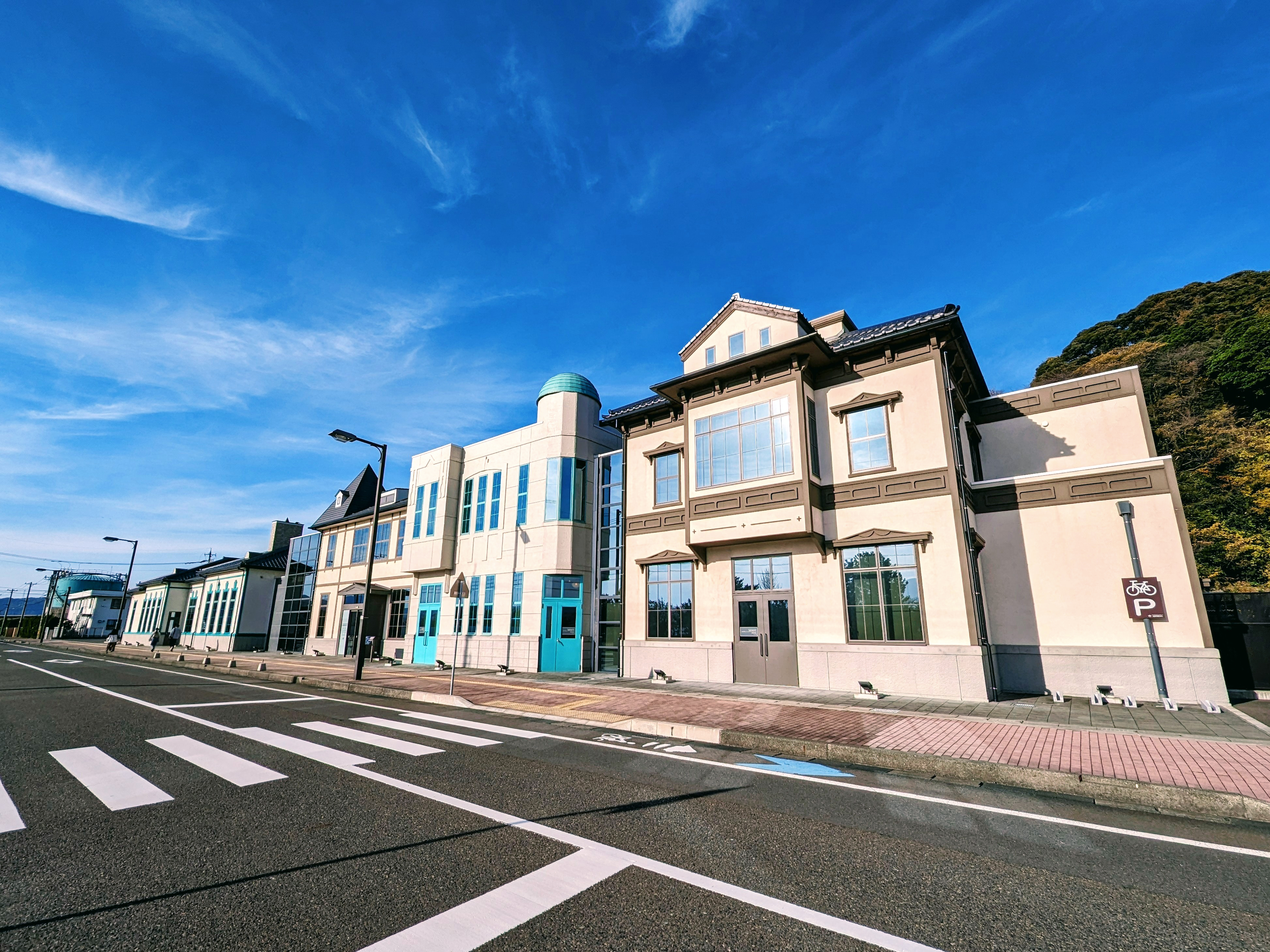
Port of Humanity Tsuruga Museum
In the summer of 1940, a Japanese diplomat in Kaunas, Lithuania, began signing his name to transit visas as fast as he could write. Chiune Sugihara -- acting consul at the Japanese consulate -- had been explicitly forbidden by the Ministry of Foreign Affairs from issuing the documents. He signed them anyway, hundreds upon hundreds, sometimes for eighteen hours a day. Over 2,000 visas poured from his desk in a single month, each one a lifeline for Jewish families fleeing Nazi persecution. The refugees who received those visas traveled east on the Trans-Siberian Railroad, crossed the sea, and stepped off their ships at Tsuruga Port on the coast of Fukui Prefecture. Today, the Port of Humanity Tsuruga Museum stands in Kanegasaki Park overlooking that same harbor, telling the story of the man who chose conscience over orders and the small Japanese city that opened its arms to strangers from the other side of the world.
The Crossroads of the Sea of Japan
Tsuruga Port has connected Japan to the Asian continent since ancient times, but it reached its golden age from the Meiji period through the early Showa era as the departure point linking Japan to the terminus of the Trans-Siberian Railroad at Vladivostok. Ships shuttled between the two ports, making Tsuruga a cosmopolitan gateway long before the rest of Japan's Sea of Japan coast developed comparable connections. Mail, cargo, and passengers from across Europe and Russia arrived here, and Japanese travelers heading to the continent embarked from these docks. It was this established maritime corridor -- connecting Vladivostok to Tsuruga by sea, and Vladivostok to Europe by rail -- that would prove essential when thousands of desperate refugees needed an escape route out of a continent descending into genocide.
Sugihara's Impossible Choice
Chiune Sugihara -- sometimes called Senpo Sugihara -- faced a decision that most diplomats never confront. Stationed in Kaunas as acting consul, he watched Jewish refugees line up outside the consulate, begging for transit visas that would allow them to cross Japan on their way to final destinations abroad. Tokyo said no. Sugihara said yes. Working around the clock, he issued over 2,000 visas in roughly one month, each one stamped with his personal authority in defiance of explicit orders. The refugees clutching those documents boarded trains east across the Soviet Union, endured the grueling Trans-Siberian journey, reached Vladivostok, and crossed the Sea of Japan to Tsuruga. Over 6,000 lives were ultimately saved through Sugihara's actions -- the visas covered families, so each document often protected several people. He continued writing visas until the consulate closed, reportedly tossing his consul stamp to a refugee on the train platform as he departed.
A Town That Chose Kindness
What happened when the refugees arrived in Tsuruga is the part of the story the museum tells with particular care. The citizens of this small port city -- people who had never met a European Jew, who spoke no common language with the exhausted travelers stepping off the ships -- welcomed them. Through exhibitions and recorded interviews with survivors and their descendants, the museum documents the warmth of ordinary people who offered food, shelter, and basic human decency to strangers in crisis. The refugees' stay in Tsuruga was brief; most were in transit to their final destinations elsewhere. But the kindness they received during those few days left an impression that survivors carried for the rest of their lives. Even the museum's name encodes this connection: the Japanese word for museum in its title is rendered as "muzeum," a transliteration from Polish, honoring the fact that many of the refugees originated from Poland.
Remembering at the Water's Edge
The museum opened in 2008 in Kanegasaki Park, with views of the harbor where the refugee ships once docked. Its exhibits trace the full arc of the story -- from the geopolitics that created the crisis, through Sugihara's moral stand, across the Trans-Siberian escape route, to the moment of arrival at this very port. Photographs, documents, and first-person testimonies bring the history into sharp focus. The museum sits about a 30-minute walk from Tsuruga Station on the JR Hokuriku Main Line, or a quick eight-minute bus ride followed by a four-minute walk through the park. For visitors who have also seen the Chiune Sugihara Memorial Hall in Yaotsu, Gifu Prefecture, the Tsuruga museum completes the geography of the story -- from the desk where the visas were conceived in spirit, to the docks where their promise was fulfilled.
From the Air
Located at 35.663N, 136.073E in Kanegasaki Park on the northeastern edge of Tsuruga city, Fukui Prefecture, Japan, overlooking Tsuruga Bay. The museum sits near the waterfront in the park area adjacent to the Kanagasaki Castle ruins. Nearest airports: Komatsu Airport (RJNK) approximately 70 km northeast, Fukui Airport (RJNF) about 50 km north. Best viewed at 1,500-2,500 feet AGL to see the park setting relative to the harbor. The port itself is clearly visible from altitude along the Sea of Japan coast.