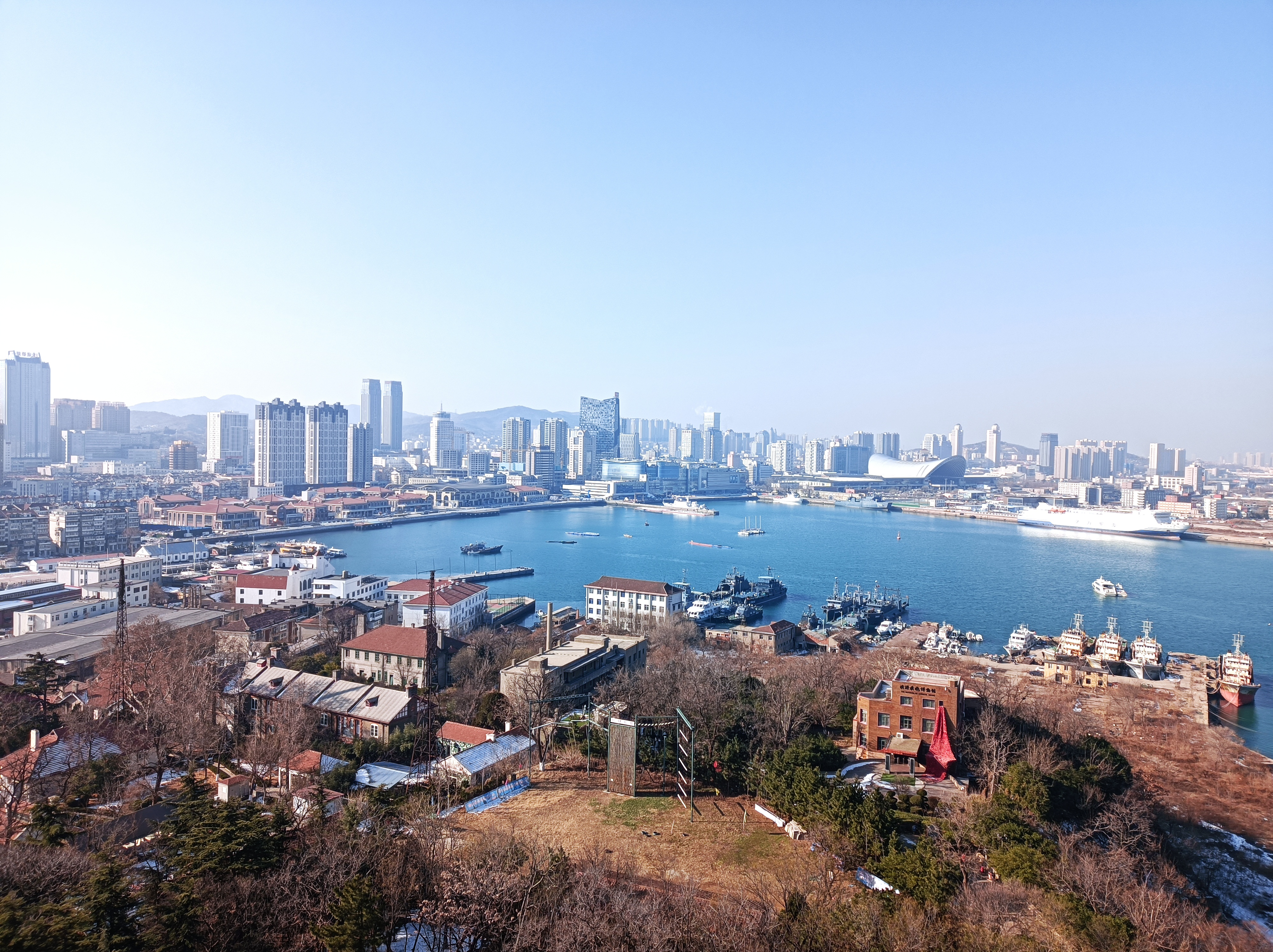
Port of Yantai
By December 2011, the Port of Yantai had handled its 200-millionth ton of cargo, making it the tenth port in China to cross that threshold. The milestone capped a decade of explosive growth: between 2001 and 2005 alone, the port absorbed $2 billion in construction investment, adding 40 new berths and raising the proportion of 10,000-ton-capable berths from just 27 percent at the turn of the millennium. Sitting on the Yellow Sea coast of the Shandong Peninsula, Yantai has leveraged its geography -- facing South Korea across 500 kilometers of open water -- into a position as one of Northeast Asia's critical shipping hubs.
A Port Remade in a Decade
The transformation of Yantai's port infrastructure in the early 2000s was deliberate and capital-intensive. The $2 billion investment between 2001 and 2005 was not simply about building more berths. It was about building bigger ones. Container ships, bulk carriers, and tankers had been growing steadily larger, and ports that could not accommodate vessels of 10,000 tons or more risked being bypassed entirely. Yantai's push to increase its deep-water capacity reflected a broader pattern across Chinese coastal cities, where port modernization became a form of economic competition. By 2015, the port's volume was projected to reach 300 million tons, an ambition that the surrounding industrial hinterland of Shandong province -- one of China's most economically productive regions -- was well positioned to feed.
The Five-Port Alliance
In 2011, the Port of Yantai joined three other Shandong ports -- Qingdao, Rizhao, and Weihai -- in a strategic alliance with the Port of Busan, South Korea's largest. The goal was ambitious: to build a shipping and logistics center for Northeast Asia, pooling resources and coordinating routes across the Yellow Sea. The alliance reflected the economic reality that the Yellow Sea is not a barrier between China and Korea but a corridor. Container traffic, automotive parts, electronics components, and raw materials flow across it in volumes that dwarf the cargo of any single port. By formalizing cooperation, the five ports positioned themselves to compete against larger rivals in Shanghai and Hong Kong for trans-Pacific feeder traffic.
Where Shandong Meets the Sea
Yantai's port advantages are fundamentally geographic. The city occupies the northern coast of the Shandong Peninsula, where the Yellow Sea meets the approach to the Bohai Strait. Ships bound for Tianjin, Dalian, or the inland ports of the Bohai Sea pass within sight of Yantai's waterfront. The port serves not only its own industrial base but the broader Shandong economy -- a province of over 100 million people with a GDP rivaling that of mid-sized European nations. The surrounding region produces everything from electronics and machinery to agricultural products and seafood, all of which flow through the port's expanding network of berths, cranes, and container yards. From the air, the port infrastructure stretches along the coastline, a ribbon of concrete and steel connecting Shandong's factories to the shipping lanes of the Pacific.
From the Air
The Port of Yantai is located at approximately 37.53N, 121.38E on the northern coast of the Shandong Peninsula along the Yellow Sea. Yantai Penglai International Airport (ZSYT) serves the city. The port's berths, container terminals, and shipping infrastructure are visible along the waterfront from cruising altitude. The Bohai Strait lies to the northeast, with Dalian (ZYTL) across the water on the Liaodong Peninsula.