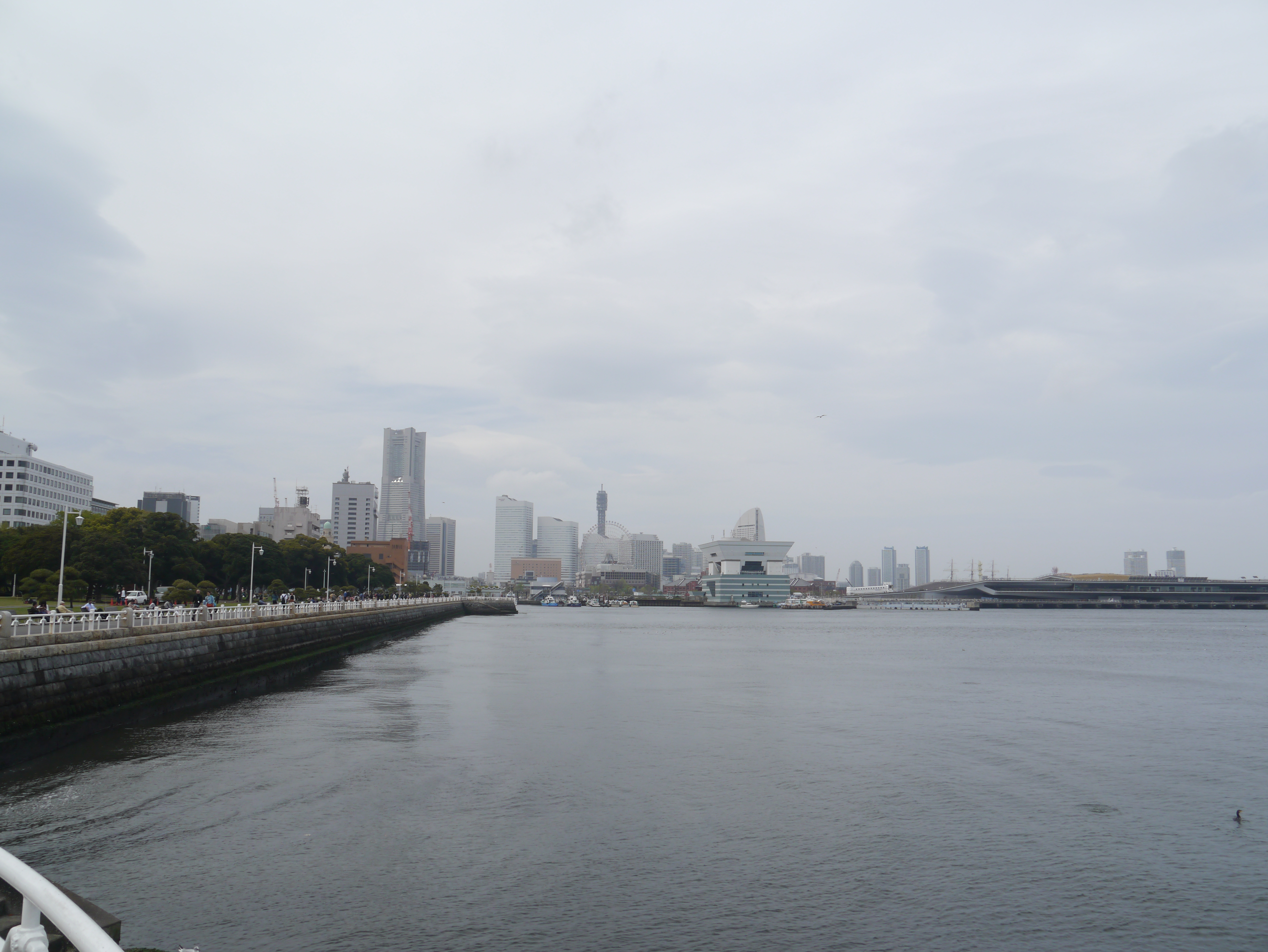
Port of Yokohama: The Gateway That Changed Japan
On June 2, 1859, a fishing village of perhaps 100 households opened for business as an international port, and nothing about Japan was ever quite the same. The Port of Yokohama did not exist by choice. It was a product of gunboat diplomacy -- the Treaty of Amity and Commerce of 1858, signed under pressure from Commodore Perry's earlier arrival, specified the opening of Kanagawa to foreign trade. The Tokugawa shogunate, wary of foreigners mingling with traffic on the Tokaido highway, quietly redirected commerce to the sleepy hamlet of Yokohama instead. Within a decade, that hamlet had become Japan's front door to the world. Silk and tea poured out through Yokohama's wharves -- together comprising 90 percent of Japan's exports. Western technology, ideas, and institutions poured in. By 1909, Japan had become the world's largest exporter of raw silk, and virtually every bale passed through Yokohama.
A Village Conscripted into History
The choice of Yokohama over Kanagawa was a calculated act of misdirection. The Treaty of 1858 named Kanagawa, a busy post station on the Tokaido road connecting Edo to Kyoto. But the shogunate feared the cultural disruption of foreign traders mixing with Japanese travelers on a major highway. So they built the foreign settlement at Yokohama, a marshy backwater across the bay. Western diplomats protested the bait-and-switch, but the harbor was deep, the anchorage protected, and commerce proved more persuasive than cartography. The Kannai settlement -- its name literally meaning 'inside the barrier' -- became a self-contained world of trading houses, consulates, and warehouses. Here, Japanese merchants met Western buyers, prices were set for silk and tea, and both sides learned to do business across a cultural divide that had stood for over two hundred years.
Silk Roads to the Sea
Yokohama's rise was built on silk thread. Japan's mulberry-fed silkworms produced a raw material that European and American textile mills craved, and Yokohama became the funnel through which it flowed. During the Meiji and Taisho periods, the port grew from a collection of wooden wharves into a modern harbor with stone piers and steamship lines connecting to San Francisco, London, and Shanghai. Silk and tea together accounted for 90 percent of exports. The wealth generated transformed Yokohama from a conscripted village into Japan's most cosmopolitan city -- a place where Western-style brick buildings lined the waterfront, gas lamps illuminated the Bund, and the first daily newspaper in Japan rolled off a Yokohama press. The port did not merely ship cargo; it imported an entirely new way of being Japanese.
Ten Piers and a Banana Wharf
Modern Yokohama Port operates ten major piers across Tokyo Bay. Honmoku Pier, the port's core facility, hosts 24 berths including 14 dedicated to container traffic. Daikoku Pier sits on a 321-hectare artificial island packed with container logistics and a million square meters of warehouse space. At Minami Honmoku, the newest facility, 350-meter berths with 16-meter depths handle post-Panamax container ships using six mega container cranes capable of spanning 22 container rows. In 2013, the APM Terminals facility at Minami Honmoku was recognized as the most productive container terminal in the world, averaging 163 crane moves per hour per ship. Then there is Detamachi, affectionately known as the 'banana pier,' dedicated to receiving fresh fruits and vegetables. Seven berths at Mizuho Pier remain under the control of United States Forces Japan -- a quiet reminder that the port's international entanglements did not end with the silk trade.
The Whale's Back
Osanbashi Pier, the port's international passenger terminal, is a piece of architecture as dramatic as any cargo statistic. Originally built in 1894, the pier was completely reimagined in 2002 after a global design competition drew 660 entries. The winning architects, Alejandro Zaera-Polo and Farshid Moussavi of Foreign Office Architects, created a 430-meter-long structure whose rooftop undulates like the surface of the ocean. Locals call it Kujira no Senaka -- the Whale's Back. The deck is a public park of grass and wooden boardwalks, open to anyone, offering panoramic views of Yokohama Bay, the Minato Mirai 21 skyline, and arriving cruise ships. It is the kind of space that only a port city could produce: a building that is also a pier that is also a park, welcoming visitors the same way Yokohama has since 1859 -- by turning toward the water.
Numbers and Continuity
In 2013, the Port of Yokohama served 37,706 ships, handled over 271 million tons of cargo, and processed 2.9 million TEU containers valued at nearly 11 trillion yen. Those numbers place Yokohama among the busiest ports in Asia and the world. To the south lies the Port of Yokosuka; to the north, the ports of Kawasaki and Tokyo. Together, they form a continuous band of maritime infrastructure ringing Tokyo Bay. But Yokohama remains distinct -- the port that started it all, the place where the fishing nets were pulled ashore and the trading houses went up. From the Kannai barrier gates of 1859 to the mega-cranes of Minami Honmoku, the story is one of continuous reinvention. The cargo has changed from silk bales to shipping containers. The fundamental act -- Japan meeting the world across a wharf -- has not.
From the Air
Located at 35.45N, 139.65E along the western shore of Tokyo Bay. From altitude, the Port of Yokohama stretches along the coastline with the distinctive Osanbashi Pier jutting into the bay like a whale's back, the Minato Mirai 21 skyline with Landmark Tower (296m) anchoring the northern waterfront, and the massive container facilities of Honmoku and Daikoku visible to the south. The artificial island of Daikoku Pier is clearly identifiable. Best viewed at 3,000-5,000 feet AGL approaching from the east over Tokyo Bay. Tokyo Haneda International Airport (RJTT) lies approximately 14 nautical miles to the north. Yokohama Bay Bridge crosses the harbor entrance and is a prominent visual landmark.