Port Royal: The Wickedest City on Earth, Swallowed by the Sea
God's judgment came at 11:43 AM on June 7, 1692. Port Royal, Jamaica - capital of Caribbean piracy, den of every vice, 'the wickedest city on Earth' according to the clergy who despised it - collapsed into the sea during an earthquake that liquefied the sand beneath its streets. Two-thirds of the city vanished. Two thousand people died in minutes. Survivors fled for higher ground as the harbor rushed in to claim the ruins. The preachers called it divine punishment. The pirates called it home. Today, Port Royal's sunken streets preserve the Pompeii of the Caribbean - shops, taverns, and warehouses frozen in 1692, the best-preserved archaeological window into the golden age of piracy.
The Rise
Port Royal grew on English tolerance of Spanish enemies. After seizing Jamaica in 1655, England licensed privateers to raid Spanish shipping, offering Port Royal as base. The arrangement was profitable for everyone: privateers plundered Spanish galleons, shared the spoils with the crown, and spent their loot in Port Royal's taverns and brothels. The town boomed. By 1690, Port Royal rivaled Boston as the largest English city in the Americas. One in four buildings was a drinking establishment. The population of 6,500 crammed onto a sandpit, building upward and outward over unstable ground. The wealth was tremendous. The foundation was sand.
The Pirates
Henry Morgan, the greatest privateer of his age, made Port Royal his headquarters. His raids on Panama and other Spanish possessions brought treasure fleets to the harbor, gold and silver and luxury goods that circulated through the town's economy. Morgan eventually became Lieutenant Governor of Jamaica - a pirate turned politician, defending the same laws he'd once ignored. Others followed: Blackbeard, Calico Jack, Anne Bonny and Mary Read all passed through Port Royal's waterfront. The town existed for their benefit, offering services other ports wouldn't: discreet fencing of stolen goods, no questions asked, and entertainment designed for men with short life expectancies.
The Earthquake
The earthquake struck without warning. Three tremors in quick succession liquefied the sandy soil beneath Port Royal, and buildings sank into the ground as streets collapsed. The sea rushed in, drowning people trapped in suddenly submerged structures. The town's most substantial buildings - brick rather than wood - sank deepest, their weight working against them. Within minutes, 33 acres of city had disappeared. Bodies floated in the new harbor. Survivors reported seeing buildings slide horizontally before dropping. Contemporary accounts described people swallowed to their waists, then necks, then gone. An additional 2,000 died of injuries and disease in the aftermath.
The Archaeology
Port Royal's underwater ruins are archaeology's richest Caribbean site. The rapid subsidence preserved everything: buildings, streets, artifacts in place. Underwater excavations since the 1960s have recovered everyday objects - pewter tankards still on tavern tables, tools in workshops, navigational instruments in ship chandleries. The preservation is extraordinary because nothing was prepared for abandonment; everything was left exactly as 1692 found it. Artifacts now fill the Museums of History and Ethnography in Kingston. The site continues to yield discoveries, though rising sea levels and harbor activity threaten the ruins that have survived three centuries.
Visiting Port Royal
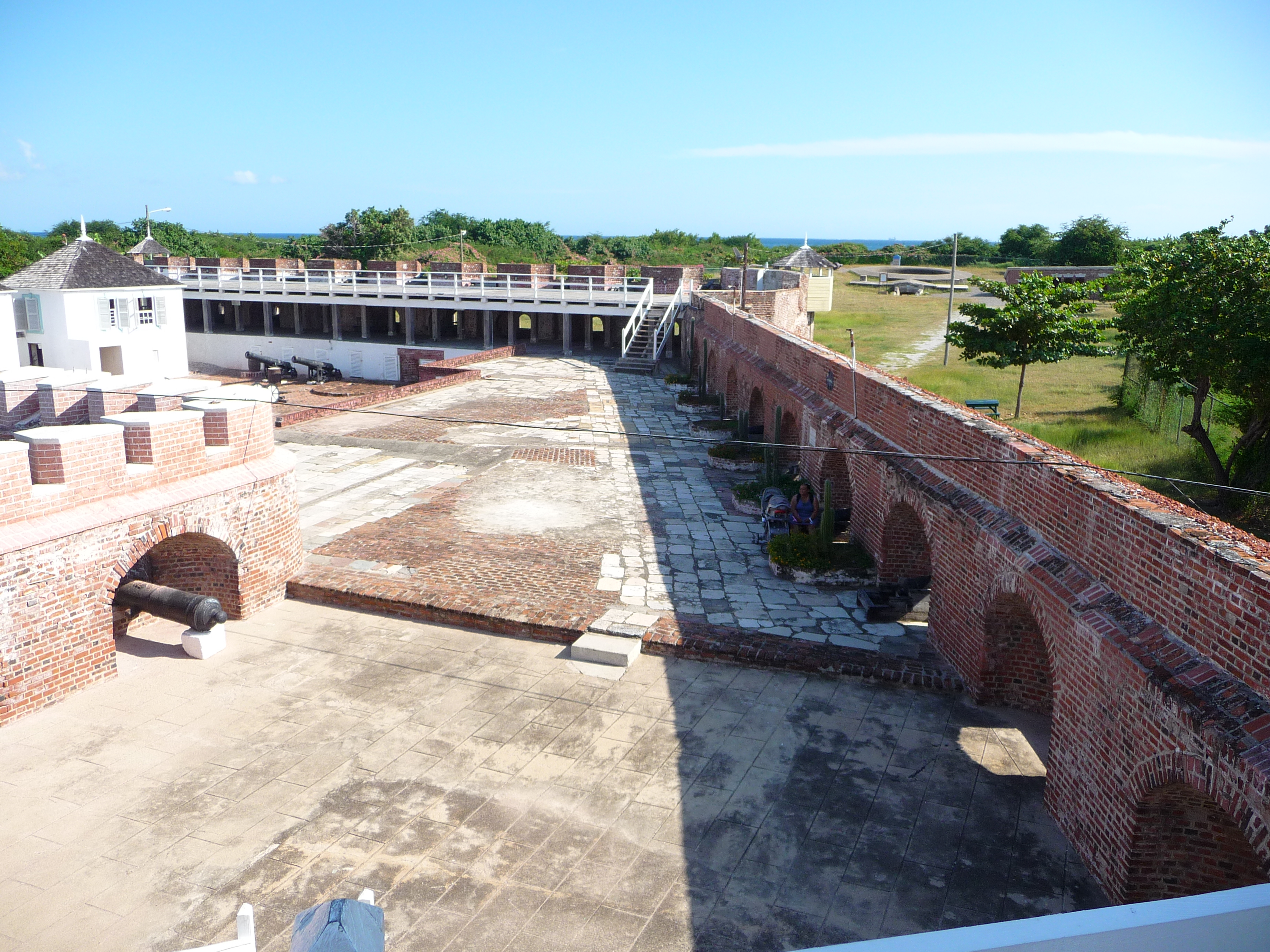
Port Royal is located at the tip of the Palisadoes, a sandpit extending into Kingston Harbour, roughly 30 minutes from downtown Kingston by taxi. The town that survived the earthquake is a small fishing village; Fort Charles, where Morgan once served, is the primary attraction. Gloria's Seafood Restaurant serves fresh fish with harbor views. The sunken city lies beneath the harbor, accessible only to archaeologists - diving is prohibited. The museums in Kingston display recovered artifacts. The drive across the Palisadoes passes Norman Manley International Airport and offers views of the harbor that swallowed 'the wickedest city on Earth.' What remains above water is modest; what lies below is extraordinary.
From the Air
Located at 17.94°N, 76.84°W at the tip of the Palisadoes, the narrow sandpit that forms Kingston Harbour's southern edge. From altitude, Port Royal appears as a small settlement at the end of a precarious strip of land - barely above sea level, extending into the Caribbean. The harbor is visible as protected water; the sunken city lies beneath its surface. Kingston sprawls along the mainland shore. Norman Manley International Airport occupies the Palisadoes between Kingston and Port Royal. The location's vulnerability is obvious from altitude: a sandpit in earthquake country, beside a harbor that claimed half the city in 1692 and waits for the rest.