Port Royal: When the Wickedest City on Earth Sank Into the Sea
At 11:43 AM on June 7, 1692, the earth beneath Port Royal, Jamaica began to shake. Within minutes, the city that had been called 'the wickedest place on Earth' - the pirate haven where rum flowed like water and brothels outnumbered churches - was sliding into the Caribbean Sea. Two-thirds of the city disappeared beneath the waves. Two thousand people died in moments. The survivors saw it as divine judgment. Scientists would later understand it as liquefaction - the sandy spit on which Port Royal was built turning to quicksand during the earthquake. Either way, the richest and most notorious city in the Americas was gone in the time it takes to pray.
The Pirate Capital
Before the earthquake, Port Royal was the jewel of English Caribbean colonization - and its most spectacular embarrassment. The city of 6,500 was larger than Boston, richer per capita than anywhere in the Americas, and famous for debauchery that shocked even the 17th century. Privateers like Henry Morgan made it their base, bringing Spanish plunder through its harbor. One account claimed the city had 'one drinking house for every ten residents.'
The wealth was real. Port Royal was the center of Caribbean trade, its harbor deep enough for the largest ships. Merchants and craftsmen grew rich supplying privateers and pirates. The buildings were substantial - brick and timber, multiple stories, warehouses packed with goods from across the world. The sin was also real. The city existed outside normal morality, a lawless capitalism where anything could be bought.
The Destruction
The earthquake struck without warning. The sandy soil that made Port Royal's harbor so useful also made it vulnerable. As the ground shook, the waterlogged sand liquefied, and buildings began to slide into the sea. Streets cracked open, swallowing people whole before closing again. Survivors reported seeing the earth ripple like waves.
Two-thirds of the city - the wharves, the warehouses, the streets closest to the water - slid into Kingston Harbour. The earthquake generated a tsunami that swept over the ruins. Bodies were left trapped in the mud, partially exposed, attracting the sharks and dogs that began feeding before rescuers could act. Contemporary accounts describe a scene of horror that even hardened privateers found unbearable.
Divine Judgment or Geology?
Survivors immediately declared the earthquake divine judgment for Port Royal's sins. The city's reputation made this interpretation irresistible. The Boston minister Cotton Mather wrote that the earthquake was 'speaking to all our English America.' The Anglican Rector Emmanuel Heath, who witnessed the disaster, preached that God would use 'this terrible Judgment' to 'make them reform their lives.' Similar sentiments were preached across the Protestant world.
The geology tells a more neutral story. Port Royal was built on a sandy spit extending into Kingston Harbour. The earthquake, estimated at magnitude 7.5, caused the saturated sand to liquefy, a process where solid ground behaves like liquid. Buildings sank not because of divine will but because their foundations had temporarily turned to quicksand. The city's location - its greatest commercial asset - was its fatal vulnerability.
The Underwater City
What sank remained remarkably preserved. The rapid burial in sand and the underwater environment protected buildings, artifacts, and even human remains from decay. Port Royal became a time capsule of 17th-century Caribbean life - the Pompeii of the Americas.
Archaeological excavations since the 1960s have recovered thousands of artifacts: pewter plates still holding the food being eaten at 11:43 AM, pocket watches stopped at the moment of the earthquake, building facades intact beneath the harbor mud. The underwater site covers 13 acres at depths of 10-40 feet. Much remains unexcavated, protected by Jamaican law but threatened by treasure hunters and development.
Port Royal Today
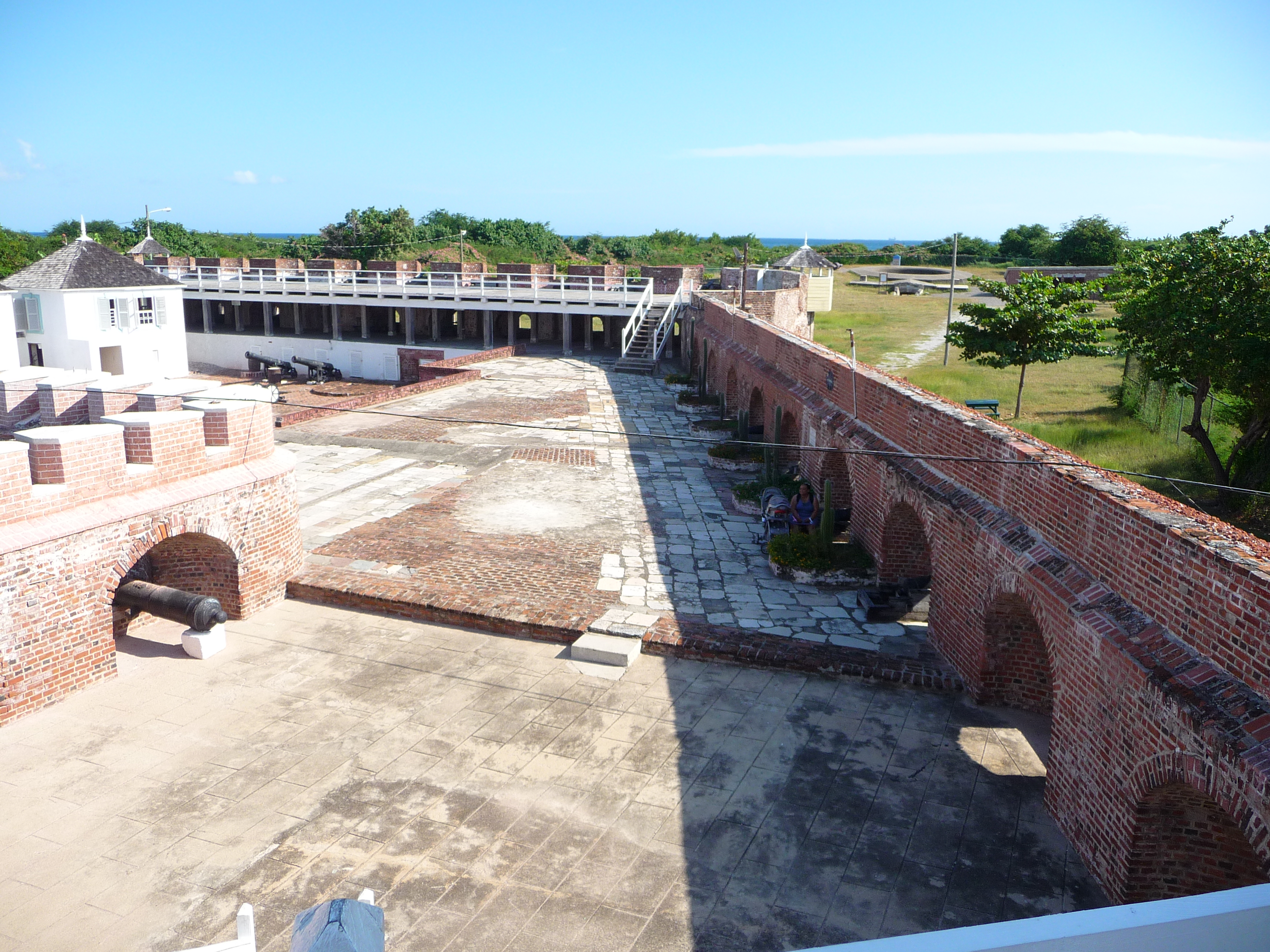
Modern Port Royal is a fishing village of a few hundred people at the end of the Palisadoes spit, a far cry from its pirate days. The Fort Charles, which survived the 1692 earthquake, still stands. The Giddy House, a former artillery store that tilted during a later 1907 earthquake, has become a tourist attraction. Much of what was once Port Royal remains underwater, visible to divers who explore streets that pirates once walked.
The sunken city continues to capture imagination. It represents both the transience of human ambition and the strangeness of history - a place so rich and so wicked that even its destruction became legendary. The pirates are gone. The brothels are gone. The earthquake took them all, leaving only artifacts in the mud and stories in the books.
From the Air
Port Royal (17.94N, 76.84W) sits at the end of the Palisadoes, a 10-mile sandy spit protecting Kingston Harbour. Norman Manley International Airport (MKJP/KIN) is located on the Palisadoes, 8km from Port Royal. The sunken city lies in the shallow waters of Kingston Harbour. Fort Charles and the Giddy House are visible landmarks. The narrow spit and harbor relationship are clear from above. Weather is tropical - hot year-round with hurricane risk June-November.