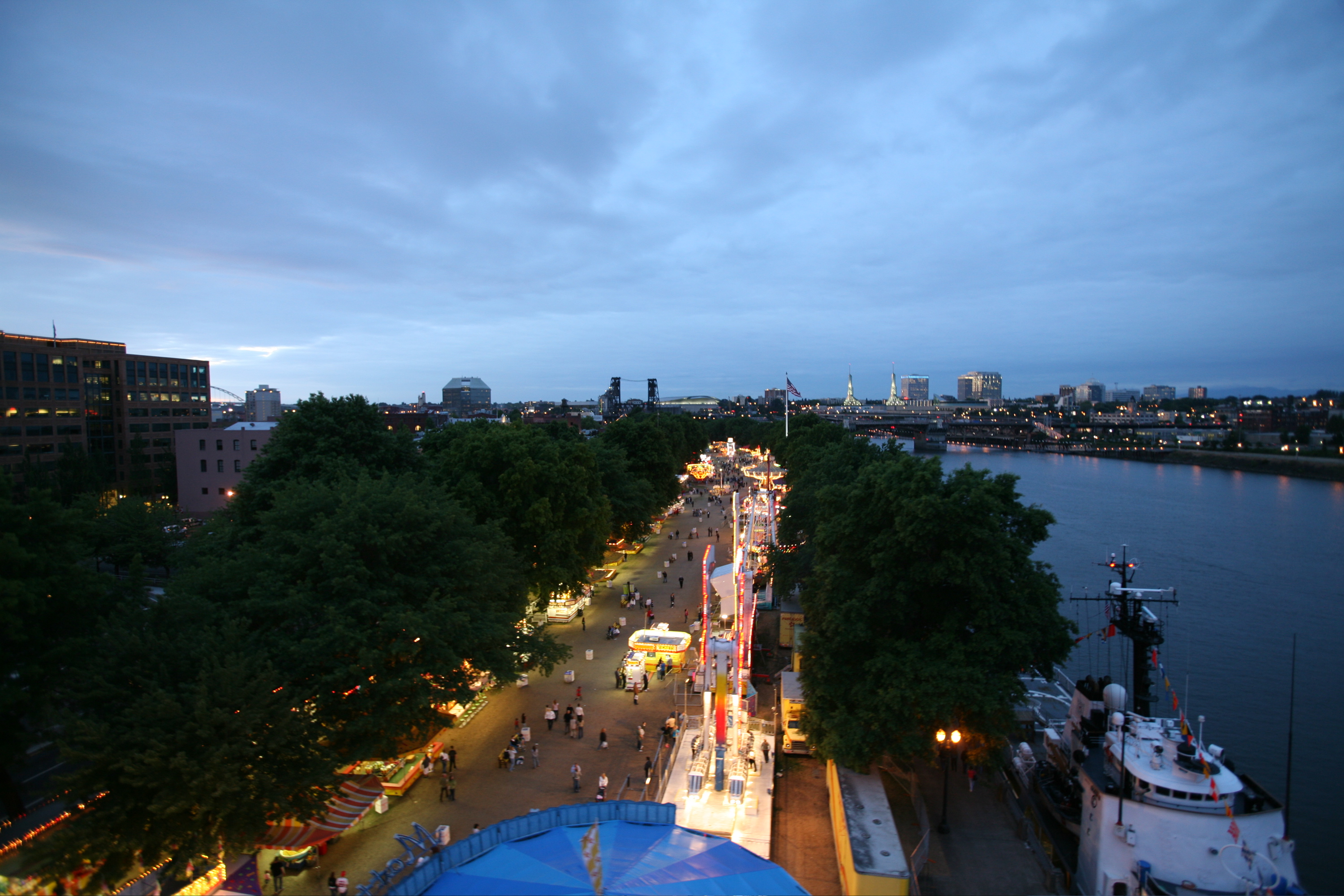
Portland: The City Where Weirdness Became Municipal Policy
Portland decided to be weird on purpose. In the 1970s, while other cities were building freeways and sprawl, Portland tore out a highway and built a waterfront park. The city established an urban growth boundary that forced development inward. The light rail opened when other cities were cutting transit. The result was a city that attracted people who wanted something different - artists, environmentalists, food obsessives, the independently minded. 'Keep Portland Weird' started as a bumper sticker; it became municipal identity. The weirdness is cultivated now, sometimes self-consciously so, but the underlying commitment to doing things differently remains. Portland is what happens when counterculture captures a city government.
The Weirdness
Portland's weirdness is quantifiable: more strip clubs per capita than any American city, more microbreweries per capita, more food carts (over 500), a doughnut shop that puts Froot Loops and bacon on top. The Unipiper rides a unicycle in a Darth Vader costume playing flaming bagpipes; no one finds this unusual. Powell's City of Books occupies an entire city block, the world's largest independent bookstore. The Saturday Market sells handmade goods; the food trucks cluster in 'pods' throughout the city. The weirdness is Portland's brand, the thing that distinguishes it from Seattle (richer), San Francisco (more expensive), and the conservative Oregon that surrounds it.
The Growth Boundary
In 1979, Oregon established the nation's first urban growth boundary around Portland - a line beyond which development was prohibited. The goal was to preserve farmland and prevent sprawl; the result was a denser, more transit-oriented city than most American metros. The boundary forced development inward, created walkable neighborhoods, and kept the farms and forests visible from the city. Critics argue it raised housing prices by limiting supply; supporters argue it created the urban character that makes Portland distinctive. The experiment influenced planning worldwide; Portland became the model for controlled urban growth.
The Beer
Portland has more breweries than any American city - over 70 within city limits, many more in the metro area. The craft beer movement started here in the 1980s; the cluster of brewpubs created a culture that treats beer the way wine country treats wine. The 'Beervana' nickname is earned. Every neighborhood has its local brewery; serious drinkers make pilgrimage circuits. Widmer, Bridgeport, Deschutes - the names that established craft beer nationally started here. The beer culture connects to Portland's DIY ethos, the belief that local and small-batch is inherently superior to mass-produced. The breweries are Portland's factories.
The Protests
Portland has a protest culture unlike most American cities - demonstrations are frequent, sometimes violent, often strange. The 2020 Black Lives Matter protests continued for over 100 consecutive nights; federal forces in unmarked vans became international news. The protest tradition runs deeper: environmental activists, anarchist contingents, and various cause-driven groups take to the streets regularly. The city's progressive politics make it a target for right-wing demonstrations; counter-protests follow. The conflict has become part of Portland's identity, the weird city where political expression happens in the streets, sometimes peacefully, sometimes not.
Visiting Portland
Portland is served by Portland International Airport (PDX), consistently rated America's best. Powell's Books on Burnside is essential; plan for hours. The food carts cluster in pods downtown and along Hawthorne and Division. The Pearl District offers galleries and restaurants in converted warehouses. The International Rose Test Garden provides city views and thousands of rose varieties. The Lan Su Chinese Garden is an authentic Suzhou-style garden. The light rail (MAX) connects the airport to downtown cheaply. The weather is mild but wet; summer is best but crowded. Bring an umbrella November through May.
From the Air
Located at 45.52°N, 122.68°W where the Willamette River joins the Columbia. From altitude, Portland appears as urban development constrained by the visible growth boundary - the city gives way abruptly to farmland rather than fading into sprawl. Mount Hood rises to the east; Mount St. Helens is visible to the north. The downtown bridges crossing the Willamette are distinctive. What appears from altitude as a mid-sized Pacific Northwest city is the city that chose to be weird - where the growth boundary preserved the farms, where the food carts multiplied, and where counterculture became the establishment.