Portland, Maine: The Working Waterfront That Became Foodie Heaven
Portland, Maine has been destroyed four times - burned by Native American raids in 1675 and 1690, leveled by British naval bombardment in 1775, and devastated by the Great Fire of 1866. Each time, Portland rebuilt on its narrow peninsula, stubborn as the granite beneath it. The working waterfront that survived - lobster boats, fish processing, ferries to the islands - gave Portland authenticity that gentrification couldn't erase. When food writers discovered that this small city (population 68,000) had more restaurants per capita than San Francisco, Portland became a destination. The Old Port district, its Victorian brick warehouses converted to restaurants and shops, is the prettiest urban neighborhood in New England. Portland earned it the hard way, through destruction and reconstruction, fishing and resilience.
Four Destructions
Portland's location made it valuable and vulnerable. The Wabanaki burned it in King Philip's War (1675) and again in King William's War (1690). The British bombarded and burned it in October 1775, destroying 130 buildings in retaliation for colonial resistance. Finally, on July 4, 1866, a firecracker started a blaze that destroyed 1,800 buildings and left 10,000 homeless - half the city gone in 15 hours. Each destruction brought reconstruction. The brick Victorian buildings of today's Old Port date from after 1866; fire codes mandated masonry instead of wood. Portland learned from its disasters, building back more solidly each time, the architecture itself a monument to resilience.
The Working Harbor
Commercial Street still functions as a working waterfront - not a museum piece or a tourist attraction that performs authenticity, but an actual harbor where lobstermen offload their catch. Portland Fish Exchange holds daily auctions where boats sell directly to buyers. The ferries to Peaks Island and the other Casco Bay islands depart from the waterfront. Cruise ships dock here too, and the tourism industry has grown, but the fishing boats haven't been displaced. This coexistence - tourists photographing lobster boats that are actually fishing, restaurants serving seafood caught that morning - gives Portland its credibility. The harbor works; the city just figured out how to share it.
Restaurant Row
Portland's restaurant density became national news in the 2010s - more than 300 restaurants in a city of 68,000, with James Beard Award nominees and casual lobster shacks equally acclaimed. Fore Street, opened in 1996 with its wood-fired kitchen visible from every table, pioneered the scene. Eventide Oyster Co. reimagined the lobster roll with brown butter. Hugo's pushed the boundaries of New England cuisine. The food success drew more restaurants, more chefs, more attention, until Portland became shorthand for the small-city food revolution. Critics wonder if the city can sustain this density; restaurant turnover is high. But Portland's food moment continues, built on the same waterfront access that supplies its lobster.
Longfellow's City
Henry Wadsworth Longfellow was born in Portland in 1807 and grew up in the house that's now a museum on Congress Street. His poems - 'Paul Revere's Ride,' 'The Song of Hiawatha,' 'Evangeline' - made him the most popular American poet of the 19th century. Portland claims him proudly; Longfellow Square features his statue. The city's cultural life extends beyond poetry: the Portland Museum of Art contains works by Winslow Homer, who painted at nearby Prouts Neck, plus Andrew Wyeth and other Maine-connected artists. The Victoria Mansion, a Italianate brownstone surviving from before the 1866 fire, showcases opulent pre-Civil War interiors. Portland punches above its cultural weight.
The Peninsula City
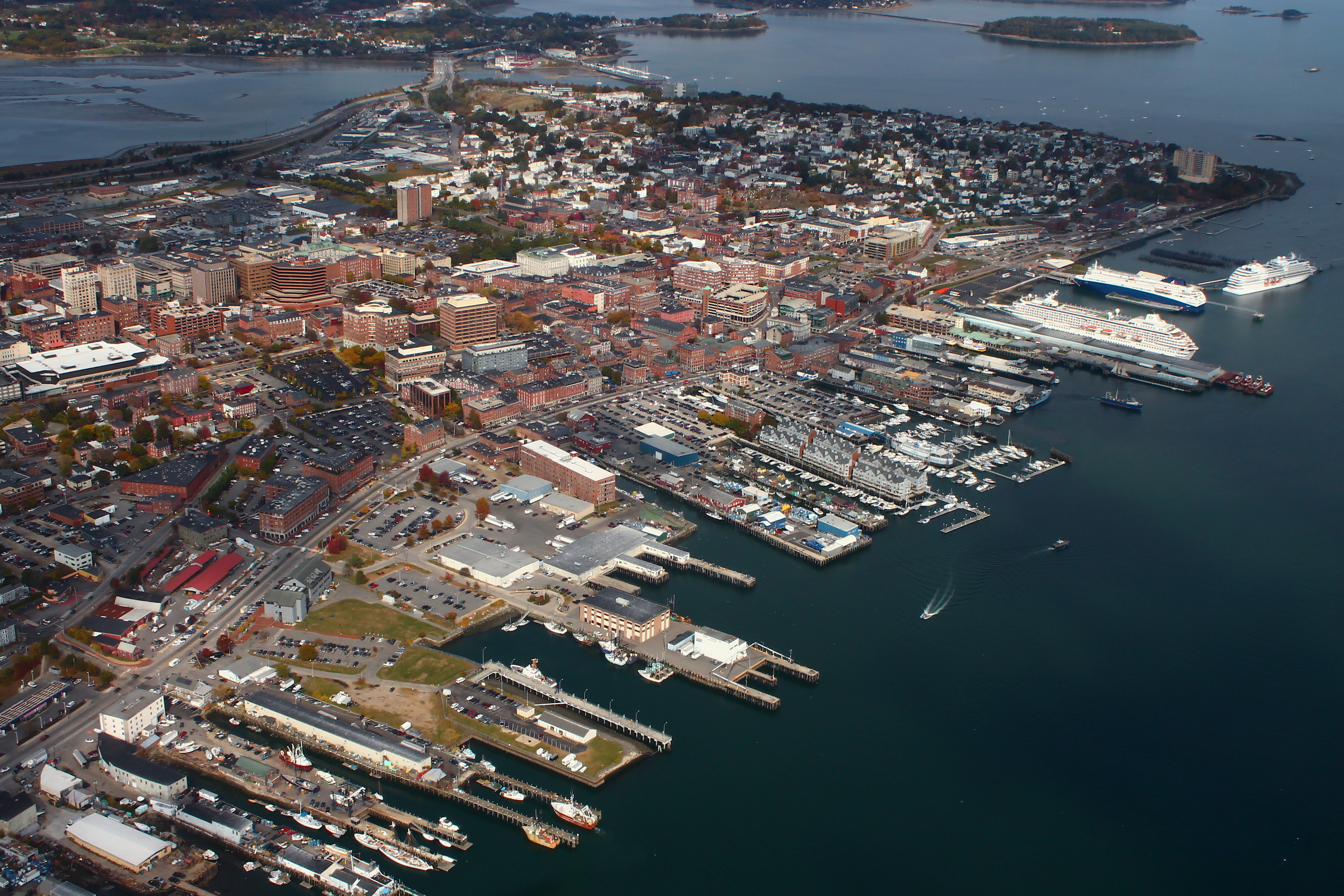
Portland International Jetport (PWM) lies minutes from downtown, a small airport with increasing service. The city occupies a peninsula in Casco Bay; the Old Port district, between Commercial Street and Congress Street, is entirely walkable. The East End offers Munjoy Hill views and the Eastern Promenade shoreline path. Ferries depart for Peaks Island (20-minute ride, bike-friendly) and longer trips to other bay islands. Lighthouses dot the coastline - Portland Head Light, commissioned by George Washington, is the most photographed. From altitude, Portland appears as dense development on a peninsula jutting into island-dotted Casco Bay, the working harbor visible, the Old Port's brick buildings defining the waterfront - the city that burned four times and rebuilt, where lobster boats supply the restaurants that made it famous.
From the Air
Located at 43.66°N, 70.26°W on a peninsula in Casco Bay on the southern Maine coast. From altitude, Portland appears as urban development on a narrow peninsula, islands dotting the bay, the working waterfront visible along Commercial Street. PWM airport lies to the west. The bay islands spread seaward. What appears from the air as a compact coastal city on a peninsula is Portland, Maine - destroyed four times and rebuilt four times, where the waterfront still works, and where the restaurants made it the unexpected food capital of America.