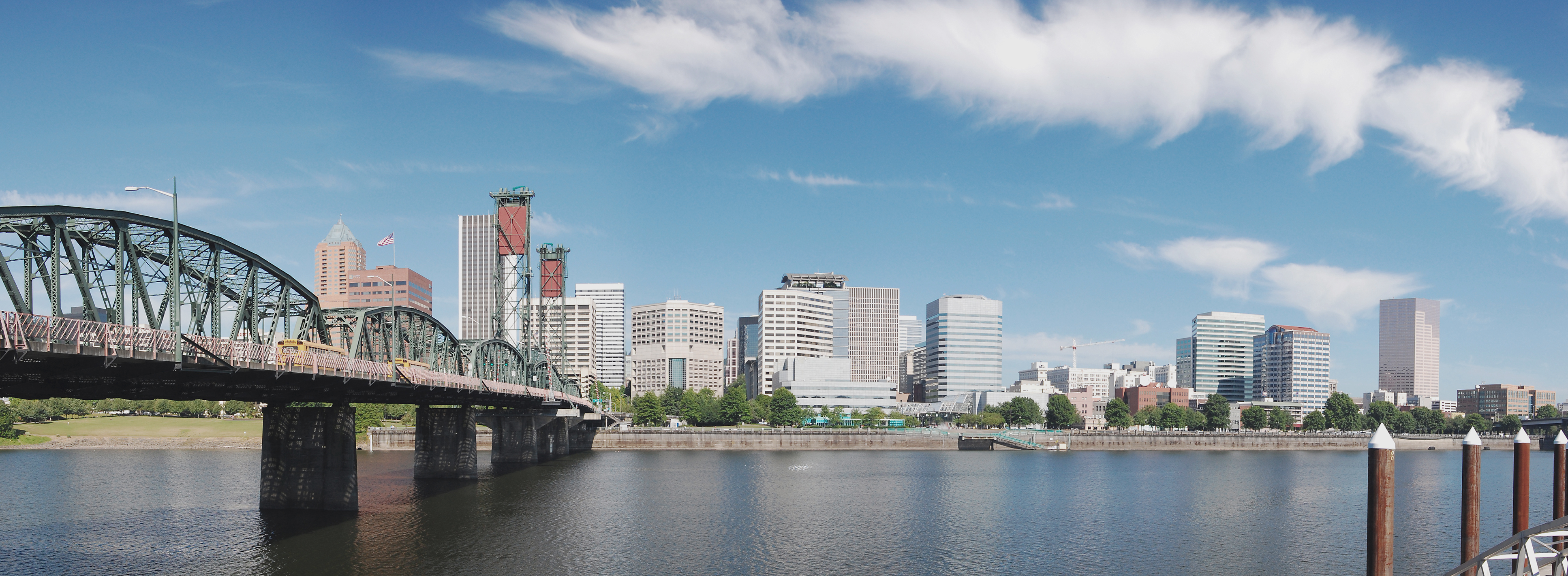
Portland: Where Weird Became Municipal Policy
Portland was weird before weird was marketing. The strip clubs are more numerous per capita than anywhere else in America, protected by an Oregon constitution that interprets nudity as free expression. Voodoo Doughnut sells bacon-topped maple bars at 3 AM. Powell's City of Books fills an entire city block with over a million volumes. The city banned self-service gas stations in 1951 and never changed the law; attendants still pump your fuel. The naked bike ride draws thousands annually. 'Portlandia,' the satirical show, barely exaggerated. The city collected misfits from everywhere, built a culture of tolerance and absurdity, and then watched as growth threatened to normalize what had been delightfully abnormal.
The Culture
Portland developed differently from other Western cities. The urban growth boundary, established in 1979, prevented sprawl and concentrated development. Public transit was prioritized when other cities built freeways. The result was a dense, walkable, transit-served city that attracted precisely the creative types who couldn't afford San Francisco. The culture that emerged was aggressively alternative: food carts before they were trendy, craft beer before craft beer existed as a category, thrift stores as lifestyle rather than necessity. The cheapness that allowed experimentation is gone now - Portland's cost of living caught up - but the culture persists in forms that have become self-conscious where they once were spontaneous.
The Food
Portland's food scene developed outside restaurants. The food cart pods - clusters of mobile vendors gathered in parking lots - created opportunities for cooks who couldn't afford brick-and-mortar. The cuisine became global by accident: Thai, Ethiopian, Korean, Mexican, all within steps of each other, all priced for the broke. The restaurant scene that followed built on the same principles: seasonal, local, inventive, and slightly weird. The farm-to-table movement found its most complete expression here, where the farms were close and the ethos was genuine. The James Beard Awards now regularly go to Portland restaurants; the carts remain, though many successful ones have graduated to permanent locations.
The Books
Powell's City of Books opened in 1971, growing to fill a city block: 68,000 square feet, over a million volumes, nine color-coded rooms. The store buys used books at volume, shelving new and used together by subject, creating browsing that encourages discovery. The Portland phenomenon of used bookstores extended throughout the city - Cameron's, Looking Glass, countless others - but Powell's became the flagship, the destination, the reason people planned Portland trips around a single bookstore. In an age of online retail, Powell's persists, its physical presence irreplaceable, its aisles full of exactly the books you didn't know you needed.
The Contradiction
Portland's weirdness was built on cheapness: affordable rents allowed experimentation. Success ended the cheapness. The city that attracted creative outsiders now prices them out. The food carts move to make room for condos. The music venues close. The growth boundary that created Portland's walkability also constrained supply, driving prices upward. The homelessness crisis visible on Portland streets reflects the same dynamics that made the city attractive. The weird can't survive when weird is profitable; Portland wrestles with becoming what its success required it to leave behind.
Visiting Portland
Portland is located at the confluence of the Willamette and Columbia Rivers in northwestern Oregon, accessible via Portland International Airport. The city is organized into quadrants (and one sextant - North Portland); understanding the grid helps navigation. Powell's Books anchors the Pearl District. Voodoo Doughnut operates multiple locations; the original on SW 3rd has the lines. Alberta Street and Hawthorne Boulevard offer concentrated weird. Forest Park provides 5,200 acres of urban wilderness. Mount Hood is visible on clear days; the Columbia Gorge is an hour east. Public transit is comprehensive; driving is unnecessary for most attractions. The rain is real; bring layers September through June. The experience rewards wandering - the weird reveals itself to those who look.
From the Air
Located at 45.52°N, 122.68°W at the confluence of the Willamette and Columbia Rivers in northwestern Oregon. From altitude, Portland appears as a city wrapped around a river junction, the downtown core on the west bank, neighborhoods spreading east across multiple bridges. Forest Park's green expanse dominates the west side hills. Mount Hood rises to the east on clear days, the volcano visible from throughout the city. The Columbia Gorge cuts east toward the Cascades. The urban growth boundary is visible as the sharp edge where development ends and farms begin. What appears from altitude as a modest Pacific Northwest city has been, for decades, one of America's most intentionally unusual urban experiments - the weird made municipal, now wrestling with the consequences of its own success.