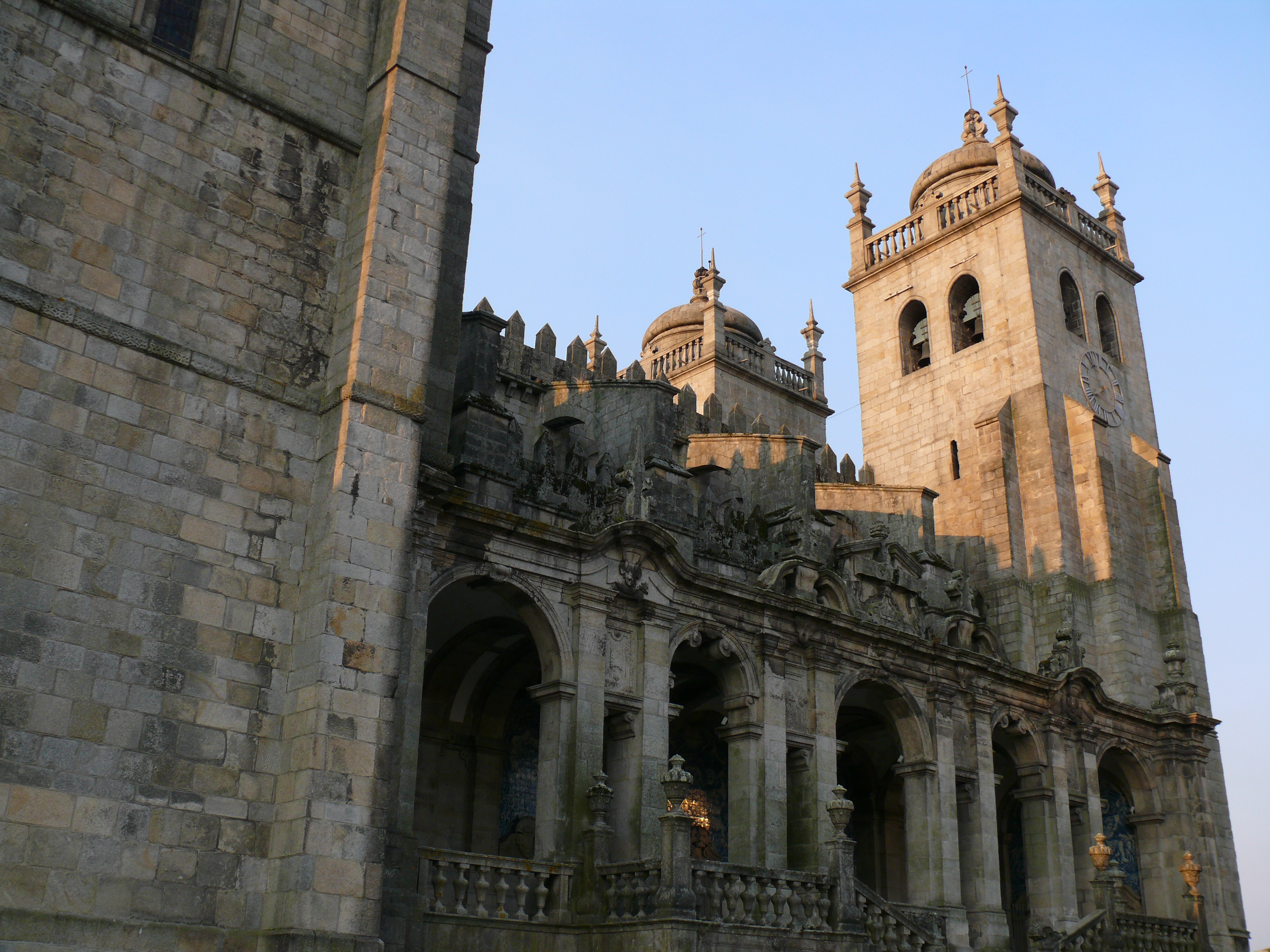
Porto Cathedral
Behind the altar of Porto Cathedral hangs a marble plaque with a magnetite backing. The magnetic stone was chosen deliberately: it interferes with the compasses of anyone passing nearby, a permanent physical reminder of disorientation and loss. The plaque commemorates locals who died retaking the cathedral from Spanish soldiers during the War of the Oranges. It is a strange, almost mischievous memorial -- using a natural phenomenon as an act of remembrance -- and it captures something essential about the Sé do Porto itself. This is a building that has accumulated nearly nine centuries of history, conflict, and artistic reinvention, each era leaving its mark without fully erasing what came before.
Romanesque Bones
The cathedral sits on the highest ground in Porto's historic center, built on the site of a chapel founded by Henry of Burgundy, Count of Portugal, and his wife in 1108. A pre-Romanesque church already stood here when crusaders passed through in 1147, as recorded in the chronicle De Expugnatione Lyxbonensi. Construction of the present building began in the second half of the 12th century and continued into the 16th. The result is a fortress-church: two square towers flanking a facade under crenellated arches, giving the building the look of a castle as much as a cathedral. The Romanesque rose window survives between later Baroque additions, a circle of medieval stonework framed by 18th-century elaboration. Inside, the narrow nave is covered by barrel vaulting, its stone roof supported by flying buttresses -- one of the earliest uses of this technique in Portugal.
A Royal Wedding and a Knight's Tomb
Around 1333, a Gothic funerary chapel was added for Joao Gordo, a Knight Hospitaller who served King Dinis I. His tomb bears a recumbent figure surrounded by relief carvings of the Apostles, a quiet masterpiece of medieval Portuguese sculpture. The Gothic cloister, built between the 14th and 15th centuries, witnessed one of Porto's most consequential events: in 1387, King John I married the English Princess Philippa of Lancaster here, an alliance that would produce a remarkable generation of sons including Prince Henry the Navigator. The marriage cemented the Anglo-Portuguese alliance, the oldest in the world still in force, and the cathedral where it took place remained the spiritual heart of a city that would help launch the Age of Discovery.
Baroque Transformation
The cathedral's exterior changed dramatically in the Baroque era. In 1736, the Italian architect Nicolau Nasoni added an elegant loggia to the lateral facade, introducing curves and ornamentation to a building originally designed for austerity. By 1772, the main Romanesque portal had been replaced and the tower cupolas altered. Inside, the transformation was even more thorough. A magnificent silver altarpiece, crafted by Portuguese artists in the second half of the 17th century, fills one chapel. The original Romanesque apse with its ambulatory was demolished and rebuilt in Baroque style, then decorated with wall paintings by Nasoni and new choir stalls. Between 1727 and 1729, Santos Pacheco designed and Miguel Francisco da Silva executed the main chapel's altarpiece, depicting scenes from the Song of Songs. The terrace cloisters received azulejo tile panels by Antonio Vidal, while Pachini painted allegories of moral values on the coffered ceiling of the chapter house in 1737.
Nine Centuries Standing
Walk through Porto Cathedral and you walk through Portugal's architectural history in compressed form. Romanesque severity gives way to Gothic delicacy, which yields to Baroque excess, which coexists with 20th-century restorations. The few sarcophagi in the remnants of the Early-Romanesque ambulatory are the oldest survivors, their stone darkened by centuries. Mass is still celebrated daily at eleven in the morning, the liturgy continuing in a space that has hosted worship since before Portugal existed as an independent nation. The cathedral is not Porto's most beautiful building -- it is too architecturally heterogeneous for that, a word the guidebooks use diplomatically -- but it is the most layered, each era of the city visible in its stones and tiles and gilding.
From the Air
Located at 41.143N, 8.611W on the highest point in Porto's historic center. The cathedral's twin towers and Baroque dome are visible from the air, positioned on the ridgeline above the Ribeira waterfront. Francisco Sa Carneiro Airport (LPPR/OPO) is 11km northwest. The Douro River and its bridges lie directly south. Best viewed at 1,500-2,500 feet where the cathedral's hilltop position relative to the Ribeira and river is apparent. Oceanic climate; frequent overcast but mild year-round.