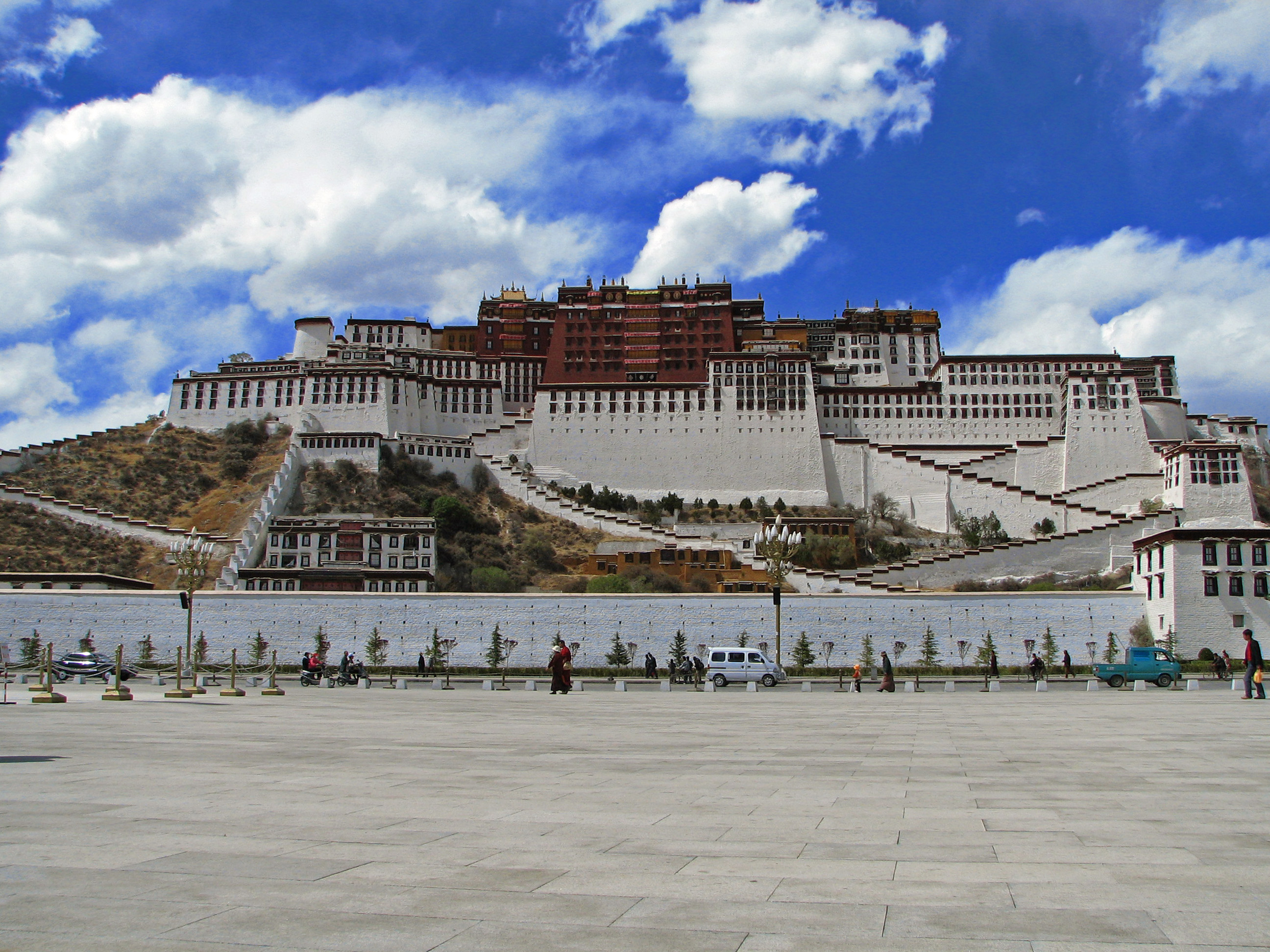
Potala Palace: The Himalayan Fortress Where Dalai Lamas Ruled for 300 Years
The Potala Palace rises from a hill in the center of Lhasa like a vision from another world. Thirteen stories, 1,000 rooms, and over 10,000 shrines climb the Red Hill at 12,100 feet above sea level - the highest palace on Earth. For 300 years, it was home to the Dalai Lamas, the spiritual leaders of Tibetan Buddhism, who ruled a theocratic kingdom from these walls. In 1959, the 14th Dalai Lama fled to India as Chinese troops entered Tibet. The palace became a museum. Today, it stands as a monument to a civilization that still exists in exile, waiting to return.
The Building
The 5th Dalai Lama began construction in 1645 on the site of a 7th-century fortress. The White Palace, containing administrative offices and living quarters, was completed in 1648. The Red Palace, containing temples and the tombs of past Dalai Lamas, was added after his death (which his regent concealed for 15 years to complete the work).
The statistics are staggering: 1,000 rooms, 10,000 shrines, 200,000 statues. The walls, up to 16 feet thick, are anchored into the bedrock of Red Hill with molten copper. The building contains enough timber to deforest mountains. Construction employed thousands of workers for decades. Nothing like it exists anywhere else.
The Dalai Lamas
The Dalai Lama is believed by Tibetan Buddhists to be the reincarnation of Avalokiteśvara, the bodhisattva of compassion. When a Dalai Lama dies, search parties seek his reincarnation - a child showing signs of his predecessor's identity. The child is brought to Potala, educated, and eventually assumes spiritual and temporal power.
This system produced a remarkable succession. The 5th Dalai Lama unified Tibet. The 13th modernized the country. The 14th - Tenzin Gyatso, born 1935 - won the Nobel Peace Prize. Each lived in the Potala Palace, walking the same corridors, praying in the same chapels, sleeping in the same quarters as their past selves.
The Tombs
The Red Palace contains the funeral stupas of eight Dalai Lamas - massive structures covered in gold leaf and studded with precious stones. The stupa of the 5th Dalai Lama rises 49 feet and is covered with 3,727 kilograms of gold. The 13th Dalai Lama's stupa contains a ton of gold and thousands of pearls and gems.
The bodies of the Dalai Lamas are preserved within, seated in meditation posture. Monks performed rituals for centuries, believing the spiritual presence remained. The tombs represent not just death but continuity - the promise that the Dalai Lama would return.
The Exile
In 1950, China invaded Tibet. The young 14th Dalai Lama, just 15, attempted to negotiate. By 1959, a popular uprising in Lhasa was brutally suppressed. The Dalai Lama escaped to India disguised as a soldier, walking over Himalayan passes to Dharamsala, where he remains.
The Potala Palace was spared during the Cultural Revolution - reportedly on Zhou Enlai's personal orders - though many other Tibetan monasteries were destroyed. It became a museum. The living quarters of the Dalai Lamas are preserved as he left them. His government-in-exile continues to function from India, waiting for a return that may never come.
The Symbol
Today, the Potala Palace is a UNESCO World Heritage Site and China's most potent symbol in Tibet. Tourists visit in controlled numbers. Tibetan pilgrims prostrate themselves outside its walls. The building appears on Chinese currency, a deliberate claim of sovereignty.
For Tibetans, the Potala represents both what they've lost and what they hope to regain. The palace is still there; the Dalai Lama is not. The golden roofs gleam. The prayer flags flutter. The highest palace on Earth waits, like its exiled owner, for history to change.
From the Air
The Potala Palace (29.66N, 91.12E) dominates Lhasa, Tibet (China). Lhasa Gonggar Airport (ZULS) is 60km southwest. The palace is unmistakable from the air - a massive white and red structure on a hill in the city center, with golden roofs gleaming. The elevation is 12,100 feet - pilots need to account for altitude effects. The Himalayas rise to the south. Weather is high-altitude semi-arid - intense sun, cold nights, thin air year-round.