Powell River, British Columbia
Getting to Powell River requires commitment. Two ferries from Vancouver, threading through fjords that plunge hundreds of meters into the Coast Mountains, or a 25-minute floatplane skip across the Georgia Strait. The city sits on the mainland but lives like an island, hemmed by ocean on one side and mountains on the other, with no road connecting it to the rest of British Columbia without a water crossing. That isolation shaped everything about the place: the mill that once made it a global industrial powerhouse, the tight-knit community that survived the mill's decline, and the creative reinvention that followed.
Paper That Printed the World
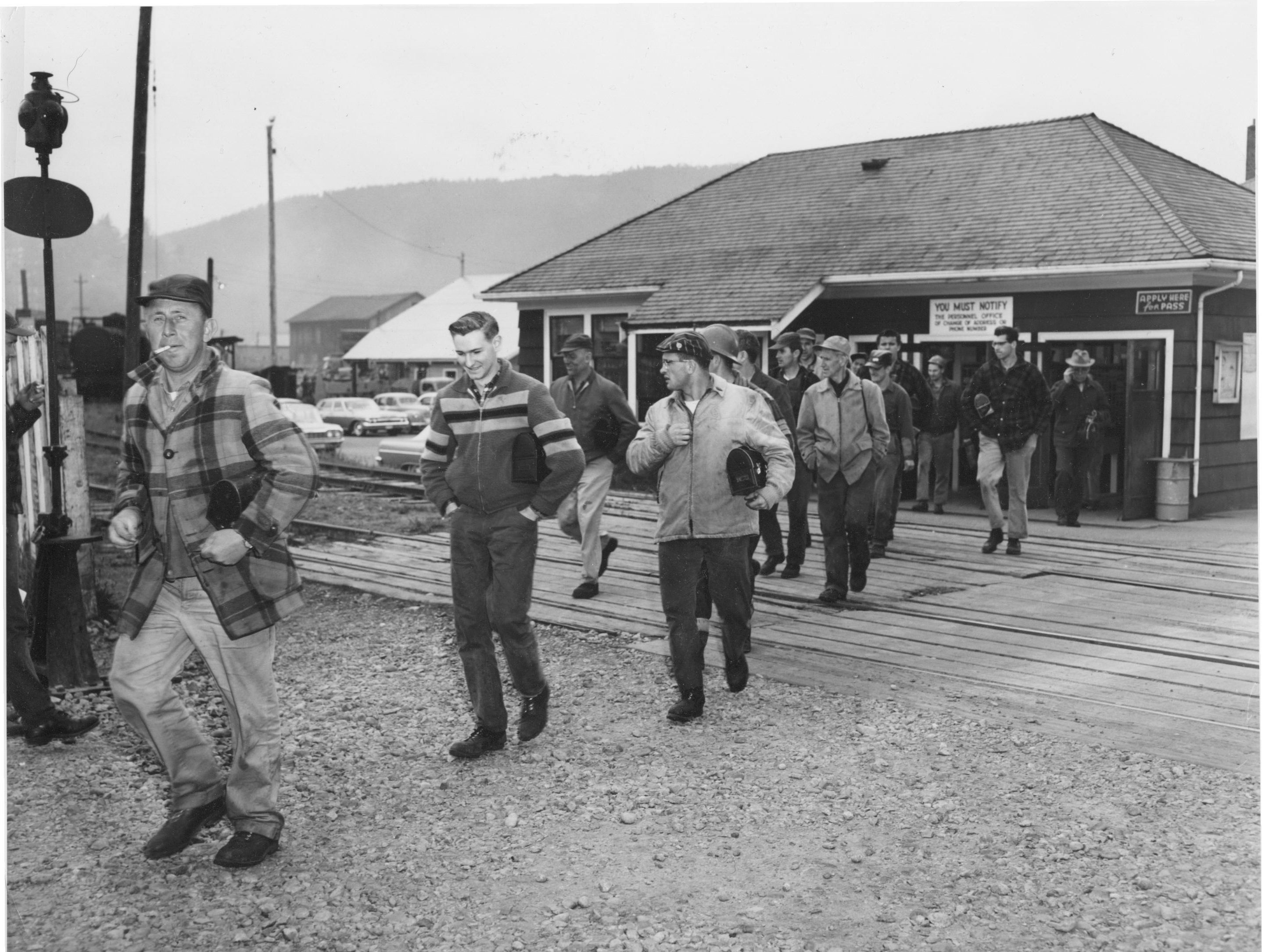
Construction of the pulp mill began in 1908, and the first roll of paper came off the line in 1912. By mid-century, Powell River Mill had grown into the largest pulp and paper operation on Earth. At its peak, one in every 25 newspapers in the world was printed on Powell River paper. The company town that grew around it was so meticulously planned that its Townsite earned designation as a National Historic District in 1995, one of only seven in Canada. Millworkers here were pioneers in another way too: when British Columbia passed its Credit Unions Act in 1939, local mill employees secured the first charter with a deposit of just $48.30. By 1955 their credit union had over 3,000 members and a million dollars in assets.
Tla'amin Homeland
Long before the mill, the Tla'amin Nation of the Coast Salish peoples called this coast home. Their village, known in English as Sliammon, sits at the heart of the region. The city itself bears the name of Israel Wood Powell, B.C.'s first superintendent of Indian Affairs, who oversaw colonial policies including the establishment of residential schools and the banning of the potlatch. In May 2021, the Tla'amin Nation formally asked the city council to change its name, citing Powell's role in the forced removal of children and the suppression of Indigenous customs. The request opened a community conversation about who gets remembered and why. In 2025, the Tla'amin Nation and Domtar reached an agreement to reclaim a large portion of the former mill land, a tangible step toward restitution.
Reinvention on the Sunshine Coast
When the mill permanently curtailed operations in 2023, Powell River had already been diversifying for years. The city was named a Cultural Capital of Canada in 2004, a recognition of its festivals, galleries, and performing arts scene. The Patricia Theatre, built in 1913 and rebuilt in 1928 in Spanish Renaissance style, is Canada's oldest continuously operating cinema. Summer brings the International Choral Kathaumixw, the Townsite Jazz Festival, and the Blackberry Festival. The Sunshine Coast Trail, at 180 kilometres Canada's longest hut-to-hut hiking path, threads through old-growth forest, coastal shoreline, and mountaintop panoramas. Over 400 kilometres of cycling trails wind through the surrounding landscape. Powell River traded the smell of pulp for something harder to quantify but no less sustaining.
A Breakwater of Ghost Ships
The harbor shelters one of the coast's strangest landmarks: a floating breakwater assembled from decommissioned ships. The concrete hull of the SS Peralta, a 128-meter oil tanker launched in 1921, anchors the line alongside the remains of old warships and lumber schooners. In 1944, the five-masted schooner Malahat, a former rum runner, was towed here after taking on water in Barkley Sound and added to the barrier. These ghost ships, sitting low in the water, still protect the old log storage pond from Malaspina Strait's chop. They are visible from the air as a dark, angular line just offshore, an unmistakable signature of a town that wastes nothing.
Island Mentality, Mainland Address
With a population of about 14,000, Powell River occupies a peculiar geographic niche. Highway 101 runs through town, but driving its full length to Vancouver requires two ferry crossings. A proposed road tunnel to Highway 99 near Squamish was studied and rejected at an estimated cost of five billion dollars. Pacific Coastal Airlines offers the quickest link to the outside world, a 25-minute flight to Vancouver's South Terminal. From the air, the city resolves into distinct neighborhoods: the historic Townsite near the old mill, the more populous Westview around the ferry terminal, and the residential clusters of Cranberry and Wildwood. Texada Island sits just across the strait, a weekend escape for locals who already live in what most Canadians would consider an escape.
From the Air
Powell River sits at 49.84°N, 124.52°W on the east shore of Malaspina Strait. The old mill site and breakwater are prominent landmarks along the waterfront. Powell River Airport (CYPW) has a single 1,200m runway; Pacific Coastal Airlines serves it from Vancouver. Approach from the southeast over the Georgia Strait for views of the Townsite and harbor. The floating breakwater of decommissioned ships is visible just offshore. Comox (CYQQ) on Vancouver Island is approximately 30 nm to the southwest.