Predjama Castle
The castle appears to grow out of the rock face like something from a fever dream. Halfway up a 123-meter limestone cliff in Slovenia's Inner Carniola, a Renaissance facade presses itself against the cave mouth behind it, the architecture and geology so entangled that it is hard to say where one ends and the other begins. Predjama Castle has occupied this improbable position since at least 1274, when the Patriarch of Aquileia built the first fortification here in Gothic style. The logic was military: a castle embedded in a cliff, with a cave network at its back, is very nearly impossible to take by force. One 15th-century knight proved the point so spectacularly that his story has outlived him by five centuries.
The Robber Baron's Gambit
Erasmus of Lueg -- knight, son of the imperial governor of Trieste, and eventually one of the Habsburgs' most wanted men -- made Predjama famous. According to legend, Erasmus killed Marshal Pappenheim, commander of the imperial army, to avenge an insult against his deceased friend, the condottiere Andrej Baumkircher of Vipava. Fleeing the wrath of Holy Roman Emperor Frederick III, Erasmus retreated to his family's fortress at Predjama and began a second career as a robber baron, raiding Habsburg estates and towns across Carniola. He allied himself with the Hungarian King Matthias Corvinus, turning a personal vendetta into a geopolitical nuisance. Emperor Frederick commissioned the governor of Trieste, Andrej Ravbar, to capture or kill him. What followed was one of the most unusual sieges in medieval European history.
The Tunnel in the Mountain
Ravbar's forces surrounded the castle, but they could not starve it out. Behind the castle, a vertical natural shaft -- which Erasmus had ordered enlarged -- led through the cliff to an exit at the top, roughly 25 meters from the cliff's edge. While the Habsburgs camped below, Erasmus used this passage to resupply the castle and, with characteristic audacity, to continue his robberies. Fresh cherries reportedly appeared on Erasmus's table while the besiegers ate hardtack, a detail that infuriated the imperial forces. The siege dragged on. In the end, according to a popular but historically unverified legend, a servant betrayed Erasmus, signaling to the attackers when the knight was in the castle's most vulnerable room -- the lavatory. A cannonball found its mark. The robber baron died in the one place his fortress could not protect him.
Rebuilt from Ruins
After Erasmus's death and the destruction of the original castle, the ruins passed to the Oberburg family. The Purgstall family built a replacement in the early 16th century, but a devastating earthquake in 1511 leveled it. In 1567, Archduke Charles of Austria leased the site to Baron Philipp von Cobenzl, who purchased it outright after 20 years. The current castle was built in 1570 in the Renaissance style, its facade pressed flat against the vertical cliff beneath the remains of the medieval fortification above. It has remained virtually unchanged since. In the 18th century, the Cobenzl family used it as a summer residence. The Austrian statesman and art collector Philipp von Cobenzl and the diplomat Count Ludwig von Cobenzl both spent time here. The castle changed hands several more times -- to the Coronini von Cronberg family in 1810, then the Windischgratz family in 1846 -- before being nationalized after World War II and converted into a museum.
Stone and Shadow
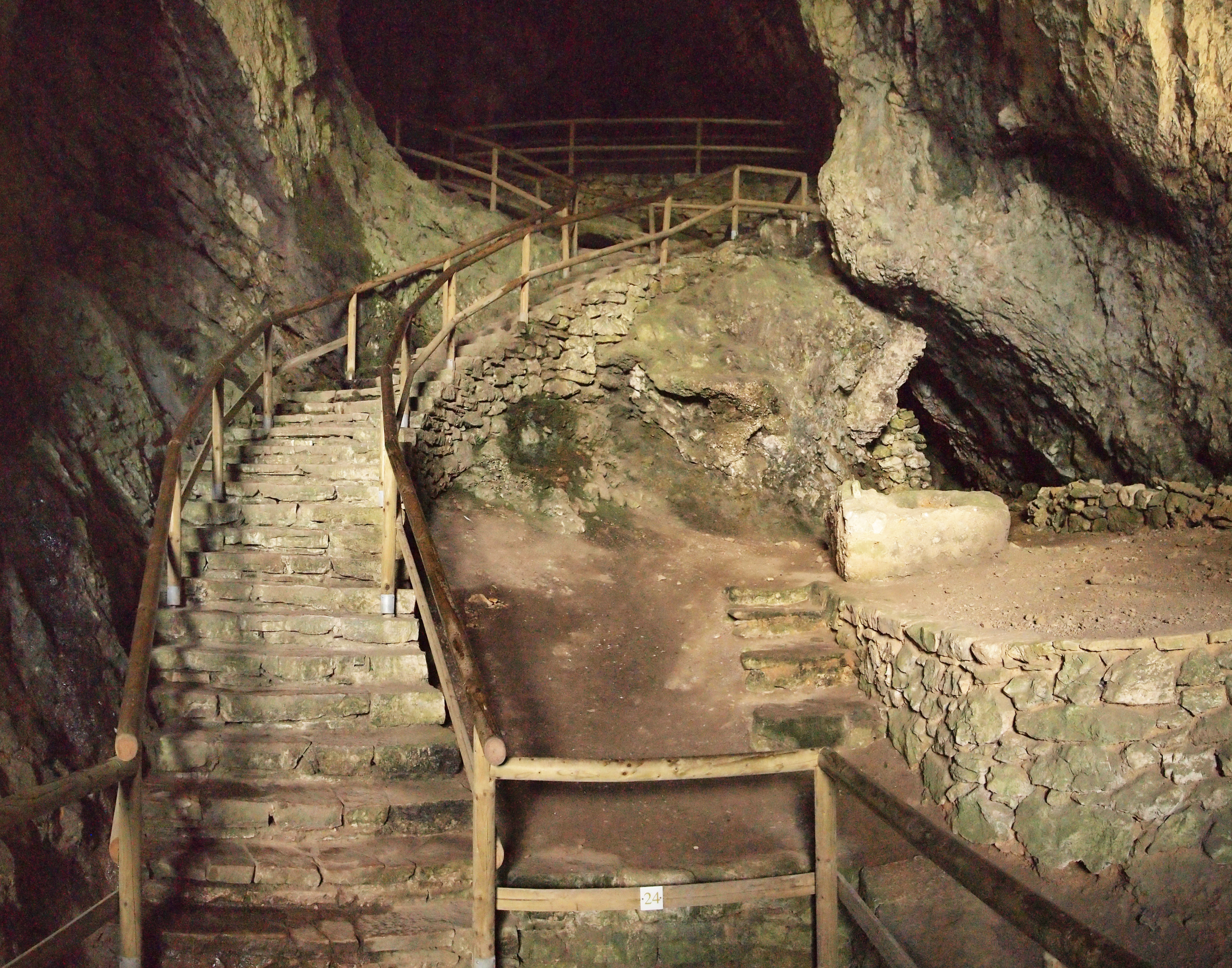
Today Predjama Castle sits 11 kilometers from the town of Postojna and nine kilometers from the entrance to Postojna Cave, making the two a natural pair for visitors. The cave behind the castle extends deep into the hillside, accessible on guided tours that trace some of the same passages Erasmus used during his siege. The castle's rooms are furnished to evoke different periods of its long history, from the medieval armory to the Renaissance living quarters. From the outside, the view is the thing -- the pale stone walls set against the dark void of the cave mouth, the cliff rising sheer above and below. It has attracted filmmakers, appearing in the Jackie Chan film Armour of God and in Season 3 of The Witcher. The castle even became a playable map in Counter-Strike: Global Offensive. Five centuries after a robber baron made it infamous, the castle still draws people who want to see a place where defiance was built into the very rock.
From the Air
Located at 45.815N, 14.128E in southwestern Slovenia, approximately 11 km northwest of Postojna. The castle is built into a cliff face and is difficult to spot from high altitude, but the limestone cliff band along the valley is identifiable. Best viewed from 2,000-3,000 feet AGL approaching from the west, where the cliff face is most visible. Nearest airport: Ljubljana Joze Pucnik Airport (LJLJ), approximately 45 nm northeast. Portoroz Airport (LJPZ) is roughly 50 nm southwest.