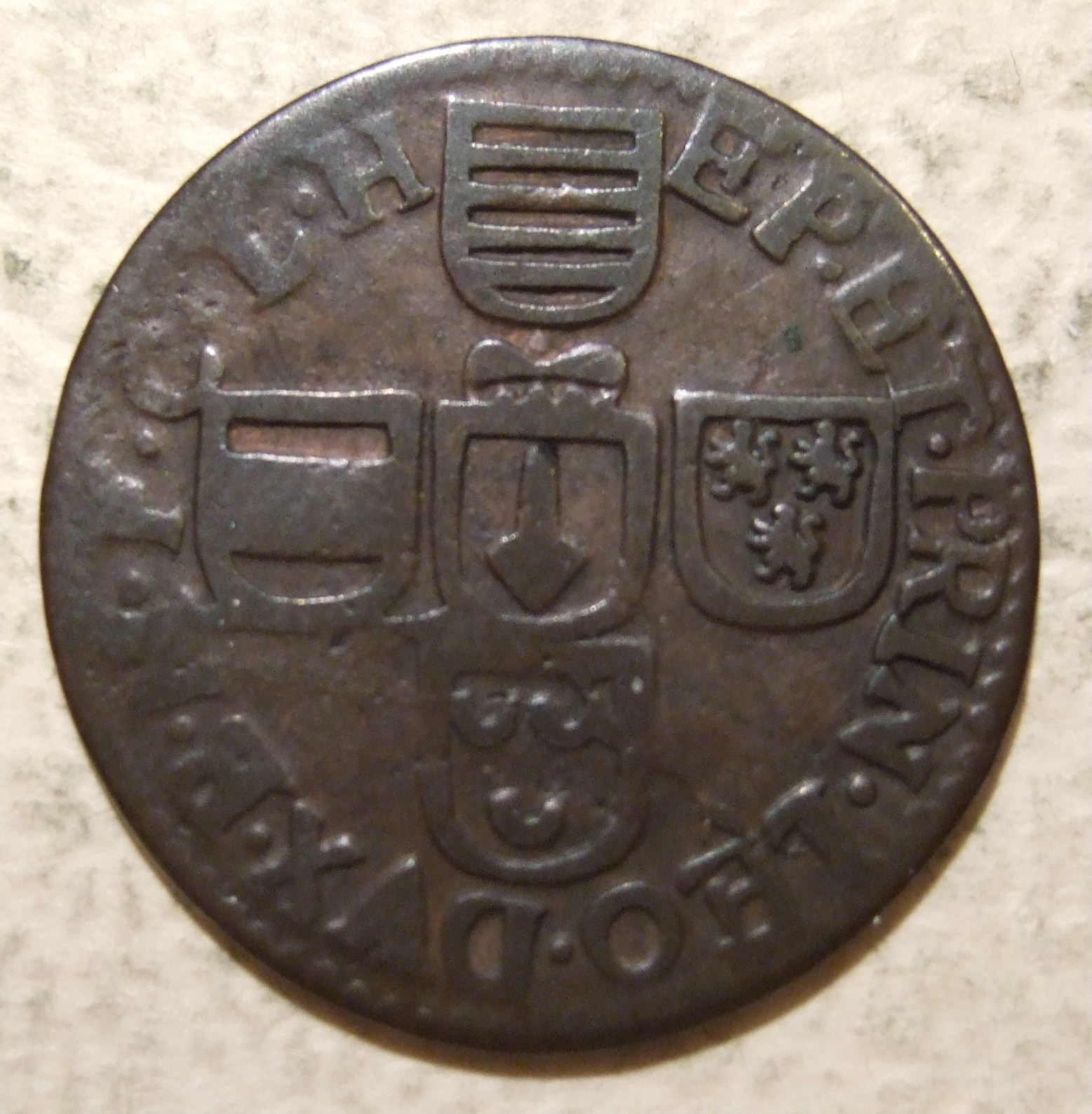
Prince-Bishopric of Liège
Between roughly 985 and 1795, there was a country in what is now Belgium that had no king, no duke, and no count. Its ruler was a Catholic bishop who happened also to be a prince. He sat in the Imperial Diet of the Holy Roman Empire alongside the dukes of Bavaria and the electors of Saxony. He raised taxes and minted coins. He led armies, signed treaties, and named the judges who hanged criminals in his name. He owed his throne not to inheritance but to election by the canons of his cathedral. And when one bishop died, another bishop was chosen, by men who answered to no one outside the church and could not, by the rules of their order, found a dynasty. The Prince-Bishopric of Liege ran on this peculiar arrangement for eight hundred and ten years.
The bishop who became a prince
The transition happened sometime between 980 and 985. The man who made it was Notker of Liege, who had been the city's bishop since 972, and the favor came from Emperor Otto II. Otto granted Notker secular control of the County of Huy, a small territory on the Meuse downstream from Liege, and that grant turned a churchman into a prince of the empire. Notker proceeded to use his new powers to remake his city. He rebuilt the cathedral of Saint Lambert and the episcopal palace. He oversaw the construction of churches of Saint Paul, Saint John the Evangelist, Sainte-Croix, and Saint Denis. He strengthened the parish organization. He was one of the first churchmen to spread the feast of All Souls' Day. And he founded the schools that made Liege known across Europe as the Athens of the North in the eleventh century. Among the names those schools produced were two popes, Stephen IX and Nicholas II.
Loon, Bouillon, Horn
The principality grew slowly over the centuries by acquisition. In 1096 the prince-bishopric purchased the lordship of Bouillon, the ancestral lands of Godfrey of Bouillon, who had just left to lead the First Crusade and would not be coming back. (Liege held Bouillon until ceding it to France in 1678.) In 1366 the County of Loon was annexed. In 1568 the County of Horn followed. By the late Middle Ages the territory of the principality included most of the modern Belgian provinces of Liege and Limburg, plus exclaves scattered across present-day Belgium and the Netherlands. In 1559 its 1,636 parishes were grouped into eight archdeaconries and 28 deaneries. The principal cities, the bonnes villes, were Liege, Tongeren, Hasselt, Sint-Truiden, Verviers, Dinant, Huy, and Maastricht, though Maastricht shared its jurisdiction with the Duke of Brabant in one of the strangest condominium arrangements in European law.
Independent because everyone needed it that way
The principality survived as long as it did because it was useful to neighbors. Strategically positioned between France and the Holy Roman Empire, it could act as a buffer that nobody really wanted to absorb. From the sixteenth century the Habsburgs of Spain depended on Liege's neutrality to keep open the Spanish Road, the military corridor between Spanish-controlled Lombardy and the Spanish Netherlands. The treaties allowed Spanish troops to pass through the prince-bishop's territory provided that they spent no more than two nights in one place. In 1595, when the Dutch tried to invade Liege, Spanish troops drove them out to preserve the corridor. The seventeenth-century prince-bishops were mostly foreigners, often holding multiple bishoprics at once, including Ernest, Ferdinand, and Maximilian Henry of Bavaria, who ruled Liege together with Cologne and Munster for over a hundred years.
Two saints and a feast
Among the more remarkable side-products of the prince-bishopric was the worldwide feast of Corpus Christi. In the 1240s a nun of the Cornillon Abbey in Liege named Juliana had visions calling for a feast to honor the Eucharist. The bishop Robert of Thourotte gave her his approval but died before the feast could be instituted. His former archdeacon Hugh of Saint-Cher returned to Liege as papal legate and in 1252 made the feast obligatory throughout his diocese. A different former archdeacon of Liege then became pope as Urban IV and extended the feast to the entire Church. The principality also gave rise to the Beguines, the lay religious women's movement founded under Bishop Raoul of Zachringen by the preacher Lambert le Begue. And it gave Liege its 1316 Peace of Fexhe, an early constitutional document that regulated the relations between the prince-bishop and his subjects.
What ended it
The end came in two stages. The first was the Liege Revolution of August 1789, in which the citizens stormed the citadel of Sainte-Walburge five weeks after the Bastille fell and abolished the principality outright. The republic that replaced it lasted barely two years before the Austrians restored the prince-bishop by force in January 1791. The final dissolution came after the French general Dumouriez crushed the Austrians at Jemappes in November 1792 and entered Liege to popular acclaim. The last prince-bishop, Francois-Antoine-Marie de Mean, fled. After a brief Austrian restoration ended at Fleurus in June 1794, France annexed the principality in 1795 and split its territories into three departments. The medieval cathedral of Saint Lambert, founded by Notker himself, was demolished by the revolutionaries. After the Congress of Vienna gave the area to the Netherlands, and the Belgian Revolution of 1830 made it Belgian, the prince-bishop was never restored. But the Palace of the Prince-Bishops still stands on the Place Saint-Lambert, repurposed as a courthouse, looking out over the empty square where the cathedral used to be.
From the Air
The historical heart of the Prince-Bishopric of Liege lies at 50.67 N, 5.50 E, centered on the modern city of Liege in eastern Belgium. The principality once stretched across the present Belgian provinces of Liege and Limburg, with exclaves scattered into the Netherlands. Best viewed from 4,000 to 8,000 feet to take in the broader territorial sweep along the Meuse valley. Nearest airport is Liege (EBLG), 8 km west of the city center. Brussels (EBBR) is 80 km west, Maastricht Aachen (EHBK) 25 km north, and Cologne Bonn (EDDK) 95 km east. The Place Saint-Lambert in central Liege marks the site of the demolished cathedral and the surviving Palace of the Prince-Bishops.