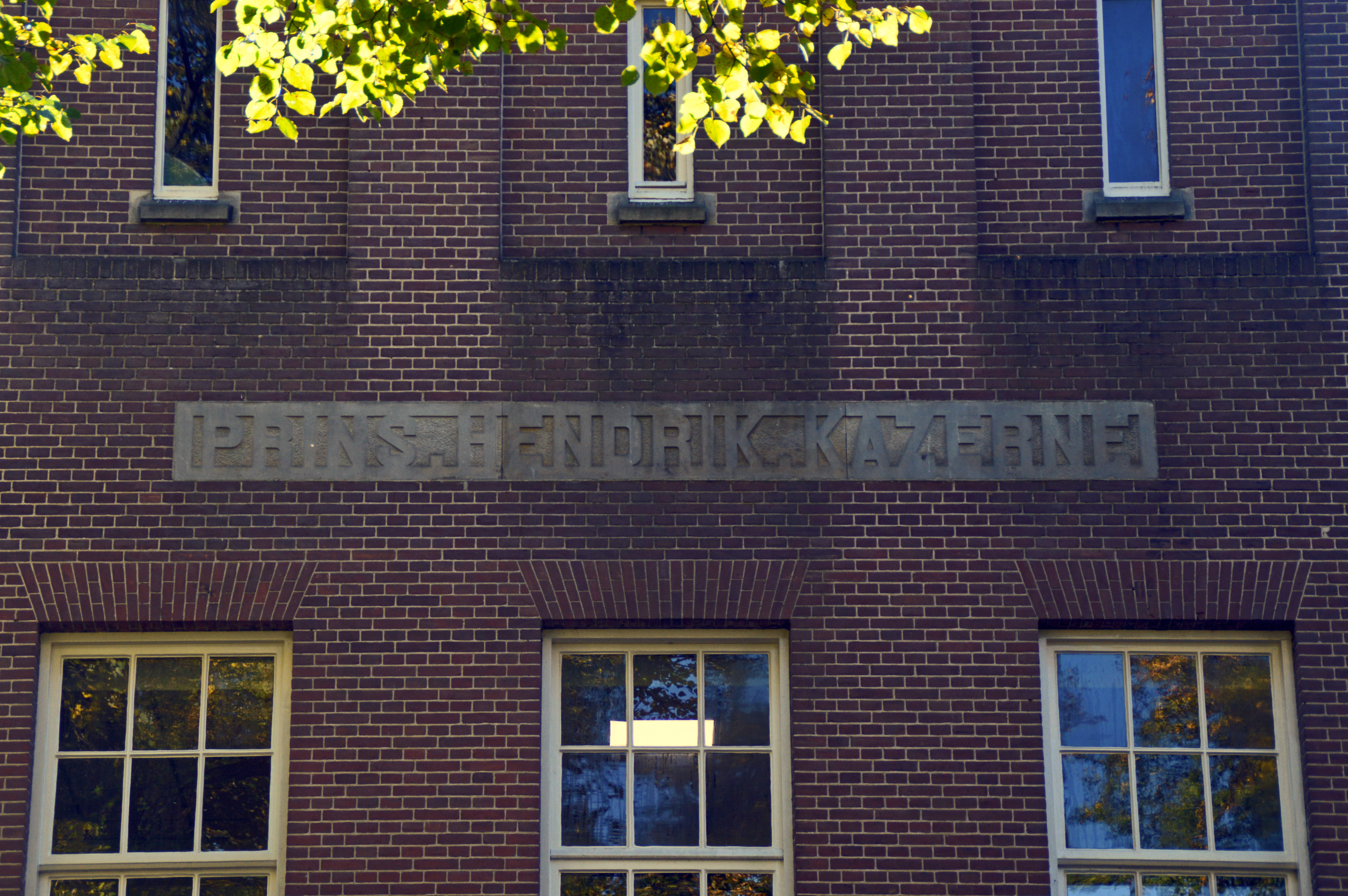
Prins Hendrik Barracks
In 1912, an officer at a brand-new barracks on the eastern edge of Nijmegen had a small, practical idea. The men of the Colonial Reserve trained constantly for long distance marches, because the Dutch East Indies army they were preparing to join did its work on foot. A four-day walking event was passing through the city. Why not open the barracks gates and let the marchers sleep there? The decision became a tradition, the tradition became an institution, and the institution became the Vierdaagse, the largest multi-day walking event in the world. The barracks that incubated it were called the Prins Hendrikkazerne, and the dome on their main building has been quietly visible from the rooftops of Nijmegen-Oost for over a century.
Built for an Empire
The Prins Hendrik Barracks were built between 1909 and 1911 by order of the Dutch Ministry of Colonies. They were not a regular Dutch army facility. They were a training school for soldiers and petty officers of the KNIL, the Royal Netherlands East Indies Army, which existed to project Dutch power across what is now Indonesia. The architect, Jos Limburg, worked in a stripped-down style called rationalism: brick, symmetry, clean planes, a central tower crowned with a hemispherical dome. The first stone was laid by Duke Henry of Mecklenburg-Schwerin, husband of Queen Wilhelmina, in person. The duke gave the buildings his name. Everything else about the place was practical. Recruitment, selection, training, troop transport handling, and care of the sick and wounded all converged here. Disabled veterans were sent to Bronbeek in Arnhem; everyone else moved through these courtyards.
The Walking Event That Wandered In
From 1925 to 1946 the Prins Hendrikkazerne was the official start and finish line of the Four Days Marches of Nijmegen. From 1928 to 1938 the Flag Parade, the formal opening ceremony, took place in the barracks courtyard and the adjacent Molenveld field. The connection made sense. The men billeted here trained for long marches as part of their job. Walkers arrived from across the Netherlands and, increasingly, from across the world. The first event in 1909 drew a few hundred. By the late twentieth century registration had to be capped at roughly forty-seven thousand. Today, on the last day of the marches, the population of Nijmegen briefly multiplies by roughly ten. The whole thing started in a barracks courtyard, with bunks made available for walkers because the soldiers were already walking anyway.
After the Empire
The KNIL was officially dissolved on 26 July 1950, months after the Netherlands formally recognized Indonesian sovereignty on 27 December 1949. The barracks that had recruited and trained for the empire suddenly had no empire to serve. A handling office for KNIL demobilization administration, the KNIL Centrum Nederland, operated here briefly and shut its doors in March 1951. Colonial military paperwork was still being processed in these buildings until 1953. In 1951 the complex was repurposed by the Dutch Air Force as part of LIMOS, an instruction and military training school, alongside the nearby Krayenhoff and Snijders barracks. In 1995 the military left for good. The complex became an asylum seekers' reception center. The military hospital, a separate building on the site, was demolished in 1992. The smaller buildings remain. The barracks today carry national monument status.
The Dome That Influenced Architects
Limburg's central dome turned out to matter beyond Nijmegen. The architect Willem Dudok, who began his career in military engineering before becoming one of the defining figures of Dutch modernism, called the Prins Hendrik Barracks a rational and modern expression of military architecture. The design is widely credited as a source of inspiration for several major Dutch buildings of the early twentieth century: the main post office in Maastricht by Marinus Jan Granpré Molière, G.W. van Heukelom's Hoofdadministratie III for the Dutch Railways in Utrecht (the so-called Inktpot, or Inkpot, completed in 1921), and a competition design by G.C. Bremer and J.R. Print for a new lower house of parliament in The Hague. The Nieuwe Badkapel in Scheveningen shows clear echoes too. From an airplane window, the dome still announces itself: a hemispherical hat above the brick courtyards of Nijmegen-Oost, a piece of colonial architecture that quietly seeded a Dutch architectural lineage.
From the Air
The Prins Hendrik Barracks sit at 51.83°N, 5.88°E on the corner of Dommer van Poldersveldtweg and Daalseweg in the Hengstdal neighborhood of Nijmegen-Oost. Recommended viewing altitude 1,500 to 2,500 feet AGL; the distinctive central dome and symmetrical courtyards are clearly visible against the surrounding residential blocks. Nearest airports: Niederrhein/Weeze (EDLV) approximately 40 km east; Eindhoven (EHEH) 60 km southwest. Best photography light is morning eastbound or late afternoon westbound, when the dome casts a clean shadow across the parade ground.