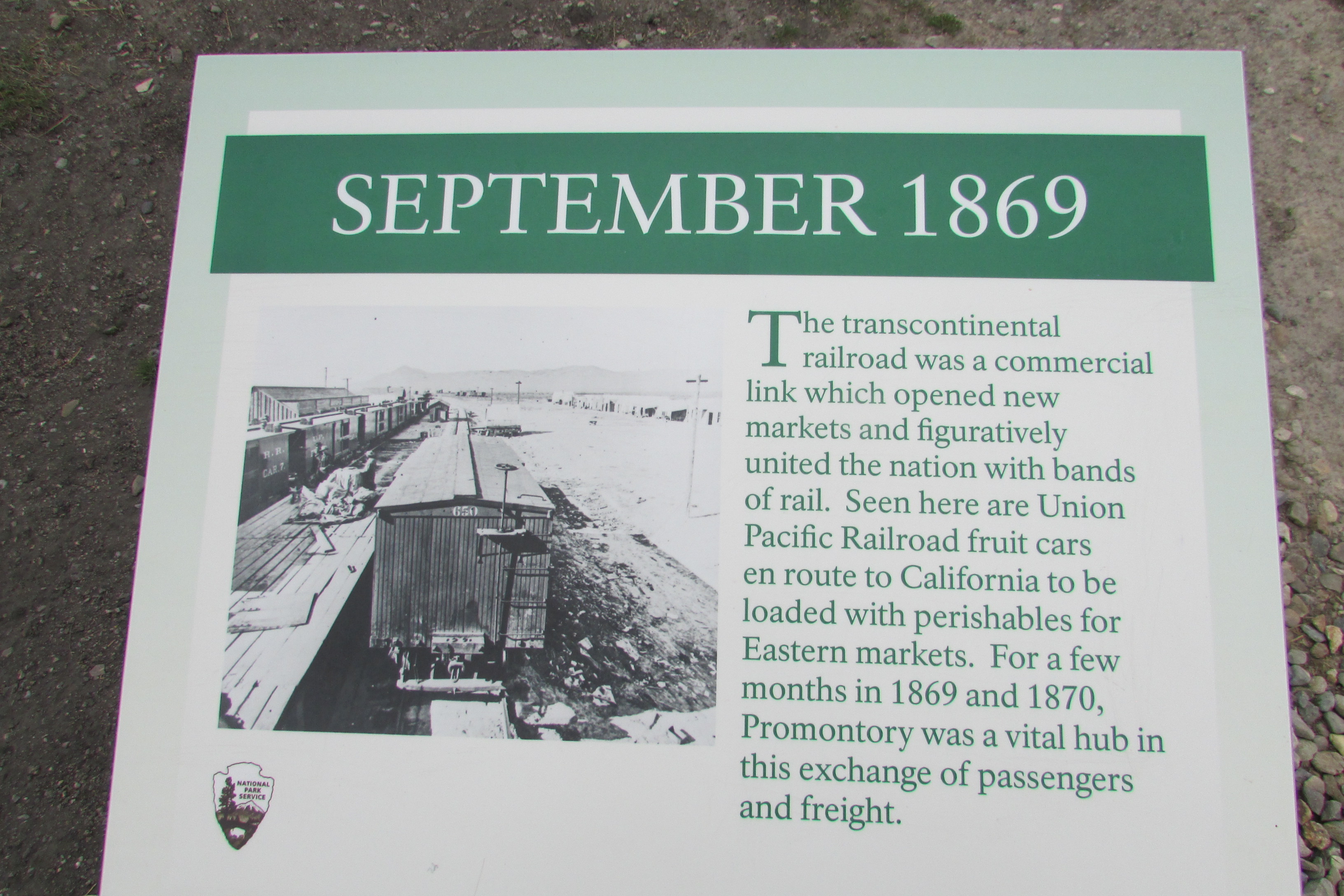
Promontory Summit
At 12:47 PM on May 10, 1869, at a remote spot in the Utah Territory, two locomotives stood pilot to pilot while dignitaries drove ceremonial spikes into a laurelwood tie. The last spike was gold, donated by California; when Leland Stanford swung his hammer and missed, a telegrapher sent the word 'DONE' across the nation anyway. Church bells rang in cities across America. Cannons fired hundred-gun salutes. The transcontinental railroad was complete. What had taken months by wagon now took six days by train. East and West were connected by iron rails across nearly 1,800 miles of prairie, desert, and mountain. The achievement was stunning - and stunningly costly. Thousands of workers had died. The Central Pacific had exploited Chinese immigrants; the Union Pacific had built on land stolen from Native Americans whose resistance would continue for another two decades. But at Promontory Summit that afternoon, a fragmented nation allowed itself to celebrate union, at least for a day.
The Race
The Pacific Railroad Act of 1862, signed by Abraham Lincoln during the Civil War, authorized two companies to build the transcontinental line. The Central Pacific would build east from Sacramento; the Union Pacific would build west from Omaha. Each received land grants and government loans based on miles of track laid, creating a race that pushed both companies to build as fast as possible, sometimes at the expense of quality. The Central Pacific, led by the 'Big Four' California businessmen including Leland Stanford and Collis Huntington, faced the immediate challenge of the Sierra Nevada. They recruited thousands of Chinese workers, who bored tunnels through granite with hand drills and black powder. The Union Pacific, facing easier terrain but shorter construction seasons, hired Irish immigrants, Civil War veterans, and formerly enslaved people. By 1868, both companies were laying miles of track per day.
The Meeting Point
The Pacific Railroad Act hadn't specified where the two lines would meet - an oversight that led to absurdity. By early 1869, the companies' grading crews were working past each other, building parallel roadbeds a few hundred feet apart. Each wanted to claim as many government-subsidized miles as possible. Congress finally intervened, designating Promontory Summit, Utah Territory, as the meeting point. The Central Pacific would build to there from the west; the Union Pacific from the east. The final miles were a sprint. On April 28, 1869, Central Pacific workers laid ten miles of track in a single day - a record that has never been broken. Both lines reached Promontory Summit within days of each other, setting the stage for the ceremony.
The Ceremony
May 10, 1869, was a day of spectacle and anticlimax. The locomotives - Central Pacific's Jupiter and Union Pacific's No. 119 - faced each other on the newly laid track. Dignitaries gave speeches. A photographer arranged the scene. Then came the spike-driving. The golden spike had been pre-drilled to make driving easier; even so, Leland Stanford missed his first swing. The telegraph operator, connected to wires running to both coasts, sent 'DONE' regardless. The nation celebrated while at Promontory Summit, workers unceremoniously replaced the ceremonial spikes with iron ones so trains could actually run. The golden spike went to Stanford's museum. The laurelwood tie was destroyed by souvenir hunters within days. The locomotives backed away from each other to let the first scheduled train pass through.
The Consequences
The transcontinental railroad transformed America. Travel from coast to coast dropped from months to days. Goods moved across the continent cheaply for the first time. Settlement of the West accelerated. Buffalo herds that had numbered in the millions were slaughtered almost to extinction within two decades, their hides shipped east on the rails. Native American resistance intensified and was ultimately crushed by armies that could now be moved and supplied by train. Chinese workers, essential to building the Central Pacific, faced the Chinese Exclusion Act of 1882. The railroad barons became some of the richest and most powerful men in America. Promontory Summit itself became a backwater - the main line was soon rerouted around the Great Salt Lake, and the original route was eventually abandoned. The meeting point that had unified a nation was nearly forgotten.
Visiting Promontory Summit
Golden Spike National Historical Park preserves the site where the rails met. The original rails were removed during World War II for scrap metal, but the park has recreated the scene with replica locomotives. Jupiter and No. 119, working steam engines built to original specifications, operate seasonally (typically May through early October) and are brought together for reenactments of the last spike ceremony. The visitor center explains the railroad's construction through exhibits and films, including the stories of the Chinese and Irish workers whose labor made it possible. Walking and driving tours explore the remaining grade, including the parallel roadbeds that resulted from the companies' refusal to stop building. The park lies in remote Box Elder County, Utah, about 30 miles west of Brigham City. There are no services at the site. Salt Lake City International Airport (SLC) is 90 miles southeast. The reenactments on May 10 and during the summer season draw the largest crowds.
From the Air
Located at 41.62°N, 112.55°W on Promontory Summit in Box Elder County, Utah. From altitude, the site appears in the flat terrain north of the Great Salt Lake, with the original railroad grade visible as a faint line across the landscape. The modern railroad bypasses the site to the south. Brigham City lies 30 miles to the east. The Great Salt Lake dominates the view to the south.