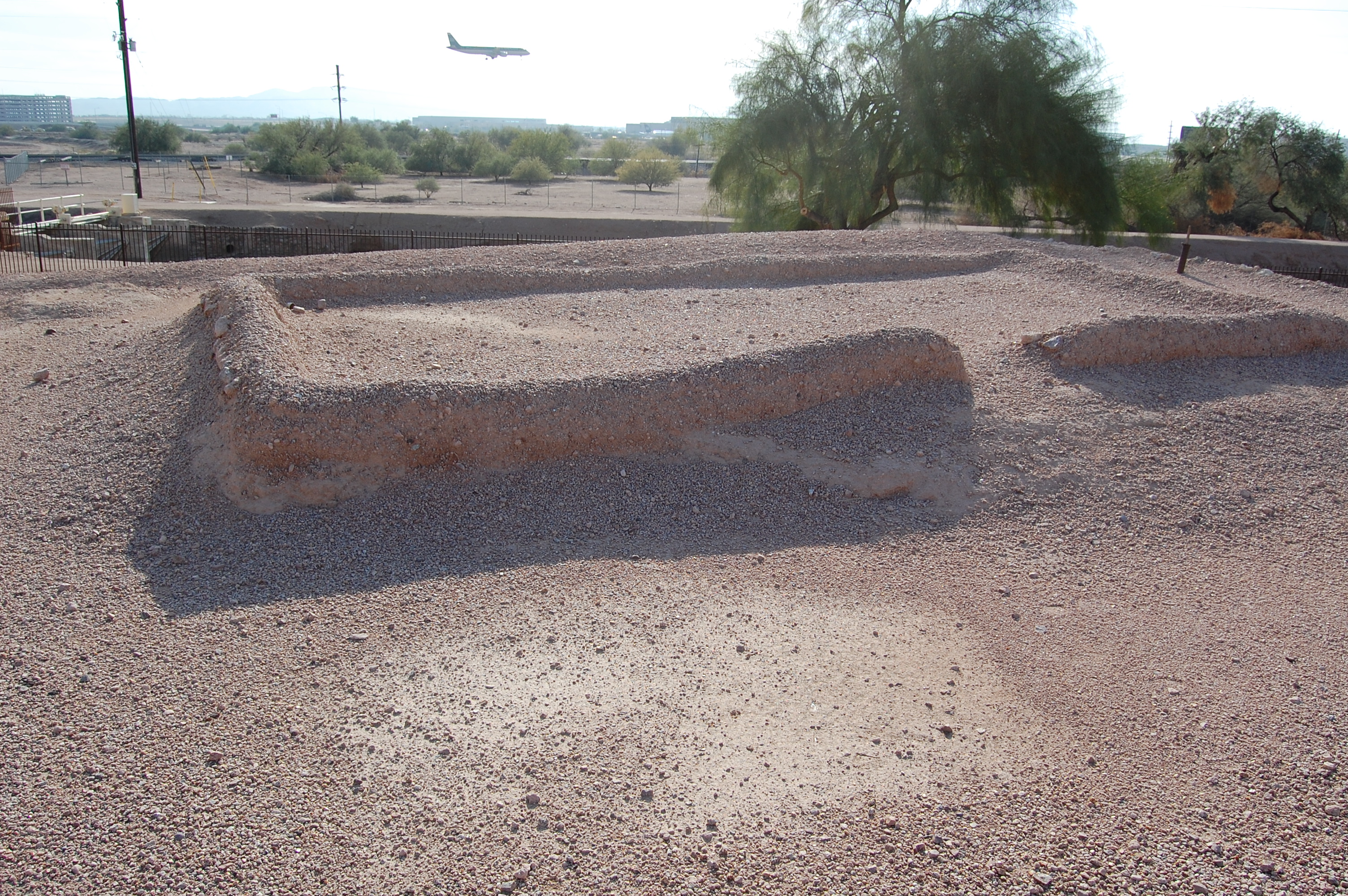
Pueblo Grande Ruin and Irrigation Sites
The O'odham people called it S'edav Va'aki, meaning "Central Platform Mound." For a thousand years, this massive earthen structure dominated the landscape where the Salt River bent north, pushing water to the surface at the exact spot where ancient engineers could divert it into canals stretching sixteen miles across the desert. Long before European contact, the Hohokam civilization built here what archaeologists now recognize as the most advanced irrigation system in pre-Columbian North America. Modern Phoenix owes its existence to these same waterways, some of which still follow the routes the Hohokam carved into the desert floor over a millennium ago.
Masters of Desert Water
The Hohokam understood something fundamental about the Sonoran Desert: water was power. At S'edav Va'aki, a bedrock outcropping and a bend in the Salt River created a natural pressure point that pushed groundwater toward the surface. The Hohokam recognized this hydrological gift and built their capital city at its headgates. From here, they constructed canals that carried water for over sixteen miles, reaching as far as modern-day Glendale. For almost a thousand years, from roughly AD 450 to 1450, they maintained, expanded, and occasionally abandoned these waterways as conditions changed. No other pre-Columbian civilization in North America achieved anything comparable in scale or sophistication.
The Platform Mound Rises
Around AD 800, the Hohokam began building what would become one of their largest monuments. Two low circular mounds grew over centuries, expanded with stone-walled cells filled with refuse and capped with caliche plaster to create elevated platforms. Workers moved over 20,000 cubic meters of fill to construct the final structure. A compound wall, standing six to seven feet high, surrounded the mound and restricted access. Archaeologists debate whether the platform served ceremonial purposes, administrative functions, or both. What remains clear is that S'edav Va'aki held a prominent position among Hohokam settlements, likely due to its control over the critical canal headgates.
Ball Games and Trade Networks
The site contained at least three ball courts, arenas where teams played games that may have had religious significance. These courts bear architectural similarities to Mesoamerican ball courts far to the south, hinting at cultural connections across vast distances. Ball games likely drew crowds from surrounding villages, creating opportunities for market activities and regional trade. After AD 1100, the Hohokam stopped using their ball courts. Many were filled with trash as platform mounds grew more prominent. The shift suggests profound changes in Hohokam society, though the exact nature of those changes remains debated among archaeologists.
The Great Abandonment
Around AD 1450, the residents of S'edav Va'aki walked away, joining a mass abandonment that emptied Hohokam villages throughout the Phoenix basin. Archaeologists have proposed floods, droughts, warfare, and disease as possible causes, but no single explanation has gained consensus. The O'odham people, who consider themselves descendants of the Hohokam, call their ancestors Huhugam. Their oral histories preserve knowledge of these ancient places that European-American archaeologists would only rediscover centuries later. The canals fell silent. Desert winds scattered debris across the platform mound. The greatest irrigation society in North American history had vanished.
A Name Restored
For decades, the site was known as Pueblo Grande, a Spanish name meaning "Large Village" that erased its indigenous identity. On March 23, 2023, the City of Phoenix officially renamed both the museum and the archaeological site S'edav Va'aki, restoring the O'odham name preserved in oral tradition. Today, the S'edav Va'aki Museum manages the site and serves as a repository for archaeological collections from across Phoenix. Visitors walk among the ruins of the platform mound, following paths where Hohokam farmers once carried water to fields that fed thousands. The canals that made it all possible still trace their ancient routes beneath Phoenix streets, a reminder that this desert city was not the first to solve the riddle of water in a land without rain.
From the Air
Located at 33.4464N, 111.9842W on the north bank of the Salt River in east Phoenix, Arizona. The platform mound is visible as an elevated earthen structure surrounded by urban development. Phoenix Sky Harbor International Airport (KPHX) lies approximately 2 miles to the southwest, with the site positioned just north of the runway approaches. Papago Park and its distinctive red buttes provide a landmark 1.5 miles to the northeast. Best viewed at 1,000-2,000 feet AGL. The museum building and parking area are adjacent to the archaeological site on the south side.