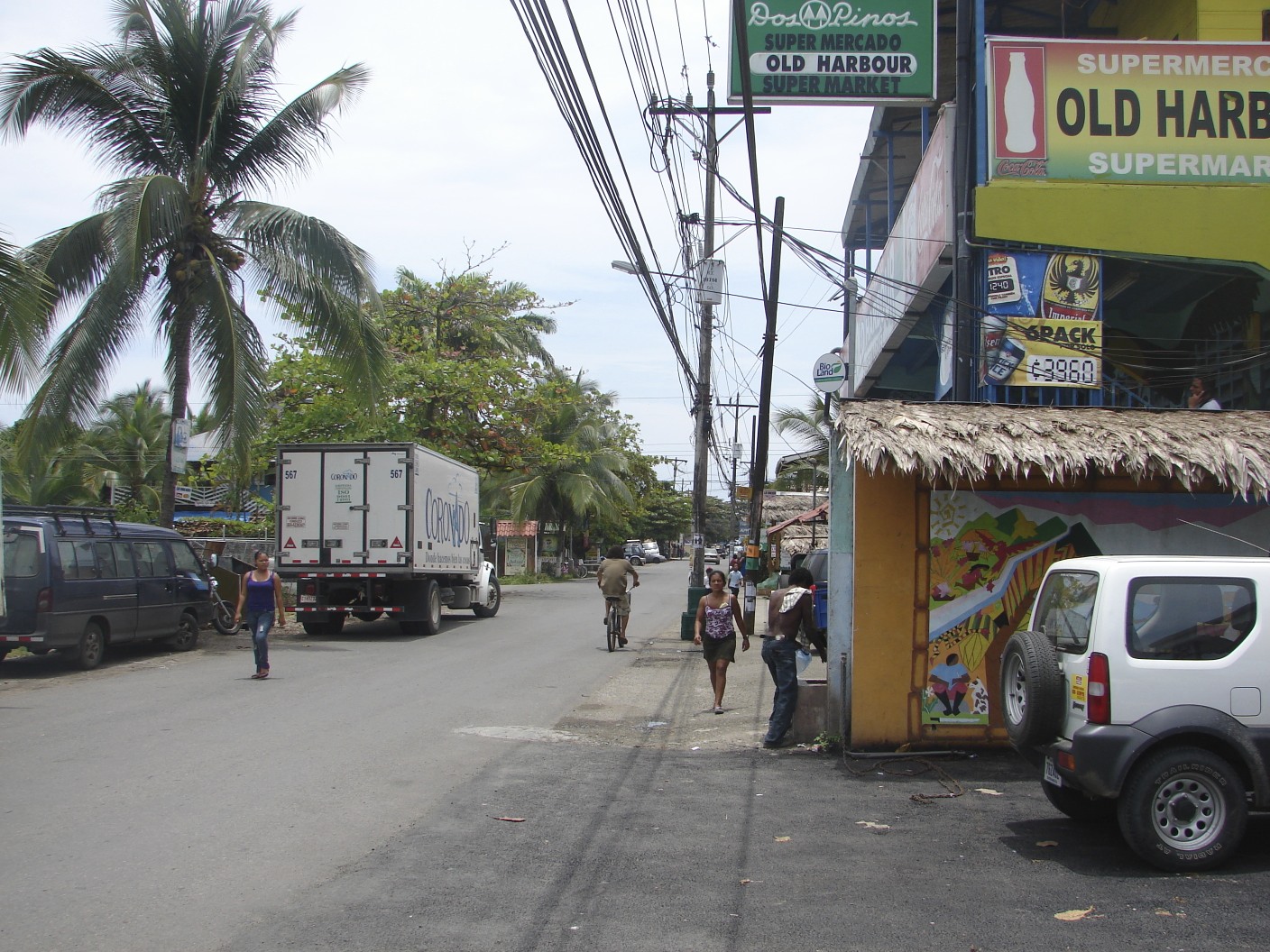
Puerto Viejo de Talamanca
Electricity arrived in 1986. Private phone lines came a decade later. Until 1979, no road connected Puerto Viejo de Talamanca to the rest of Costa Rica at all, and the isolation shaped everything about the place -- its Afro-Caribbean patois, its Bribri neighbors in the Talamanca highlands, its unhurried relationship with time. The road changed the village's accessibility but not its character. Reggae still drifts from beachfront bars, surfers still chase the punishing barrels of Salsa Brava, and sloths still hang in the trees that line the coastal road to Manzanillo. Puerto Viejo got connected to the modern world without quite joining it.
Three Cultures, One Coast
Before the Spanish arrived, the Bribri, Kekoldi, and Cabecar peoples inhabited Costa Rica's southern Caribbean. They are still here. Further inland, in the Talamanca highlands, Bribri communities maintain traditions that predate European contact by centuries. Along the coast, Afro-Caribbean families -- many descended from Jamaican immigrants who settled the shore in the 19th century -- established the fishing villages of Puerto Viejo, Punta Uva, Manzanillo, and Monkey Point. Their influence runs deep: many Puerto Viejo natives speak English as their first language, and the local cuisine leans toward coconut rice, jerk seasoning, and Caribbean spice rather than the gallo pinto of the Central Valley. Layer onto this the European expats and the Rastafari community selling handmade jewelry along the roadside, and Puerto Viejo becomes one of the most culturally layered small towns in Central America.
The Wave That Named a Town
Salsa Brava -- "angry sauce" -- breaks over a shallow coral reef just offshore, producing fast, hollow barrels that have drawn surfers since the 1970s. It is widely considered the heaviest wave in Costa Rica, a reef break where the takeoff is steep, the margin for error is thin, and a wipeout can mean contact with what surfers call the "cheese grater" reef. The best swells arrive between January and March, generated by storms far out in the Caribbean. Salsa Brava is not a beginner's wave, and it is not the reason most visitors come. But it is the reason the first outsiders came, and it set the tone for everything that followed: the surf shops, the beachfront hostels, the barefoot economy of a town that runs on waves and word of mouth. Beyond Salsa Brava, the beaches stretch south through Playa Cocles, Playa Chiquita, and Punta Uva -- black and white sand, often nearly deserted, backed by jungle.
Between Two Parks
Puerto Viejo sits between two protected areas that bracket its coast. To the north, Cahuita National Park shelters one of Costa Rica's most important coral reefs. To the south, the Gandoca-Manzanillo Wildlife Refuge -- now named for the murdered conservationist Jairo Mora Sandoval -- protects 15 kilometers of coastline where leatherback turtles nest and manatees still swim. The road connecting the villages has been paved but remains a shared surface of cars, bicycles, pedestrians, buses, dogs, and the occasional motorcycle, creating what locals describe as a dangerous yet social experience. Beachfront cabins, restaurants, and shops line the route nearly all the way to Manzanillo. Snorkeling is excellent when the water is calm, with living coral reefs at both Cahuita and Manzanillo offering some of the best underwater viewing in the country.
Pedaling the Caribbean
Cars exist in Puerto Viejo, but they do not define it. Bicycles dominate the flat coastal roads -- rentals run about five dollars a day, and the locals recommend getting one with a front basket for groceries, beach gear, or children. The roads follow the shoreline, passing through stretches where the rainforest canopy meets the sand and the only sounds are birdsong, surf, and the occasional reggae beat from a roadside bar. Ecolodges have replaced the fishing shacks, ranging from backpacker hammock setups to boutique jungle retreats, but the scale stays small. There are no high-rise hotels. The sunsets come in shades of purple, orange, and red, sinking into a Caribbean horizon while calypso and birdsong fill the twilight. Puerto Viejo was built for people willing to slow down.
From the Air
Located at approximately 9.66N, 82.75W on Costa Rica's southern Caribbean coast, in Limon Province. The town sits between Cahuita National Park to the north and Gandoca-Manzanillo Wildlife Refuge to the south, near the Panama border. Nearest airports are Limon Airport (MRLM) about an hour north and Juan Santamaria International Airport (MROC) in San Jose, roughly 4 hours by road. From the air, look for the narrow coastal road running along turquoise Caribbean waters, backed by dense green forest. The reef break at Salsa Brava is visible as white water off the point. Best viewed at 2,000-4,000 feet for coastline detail.