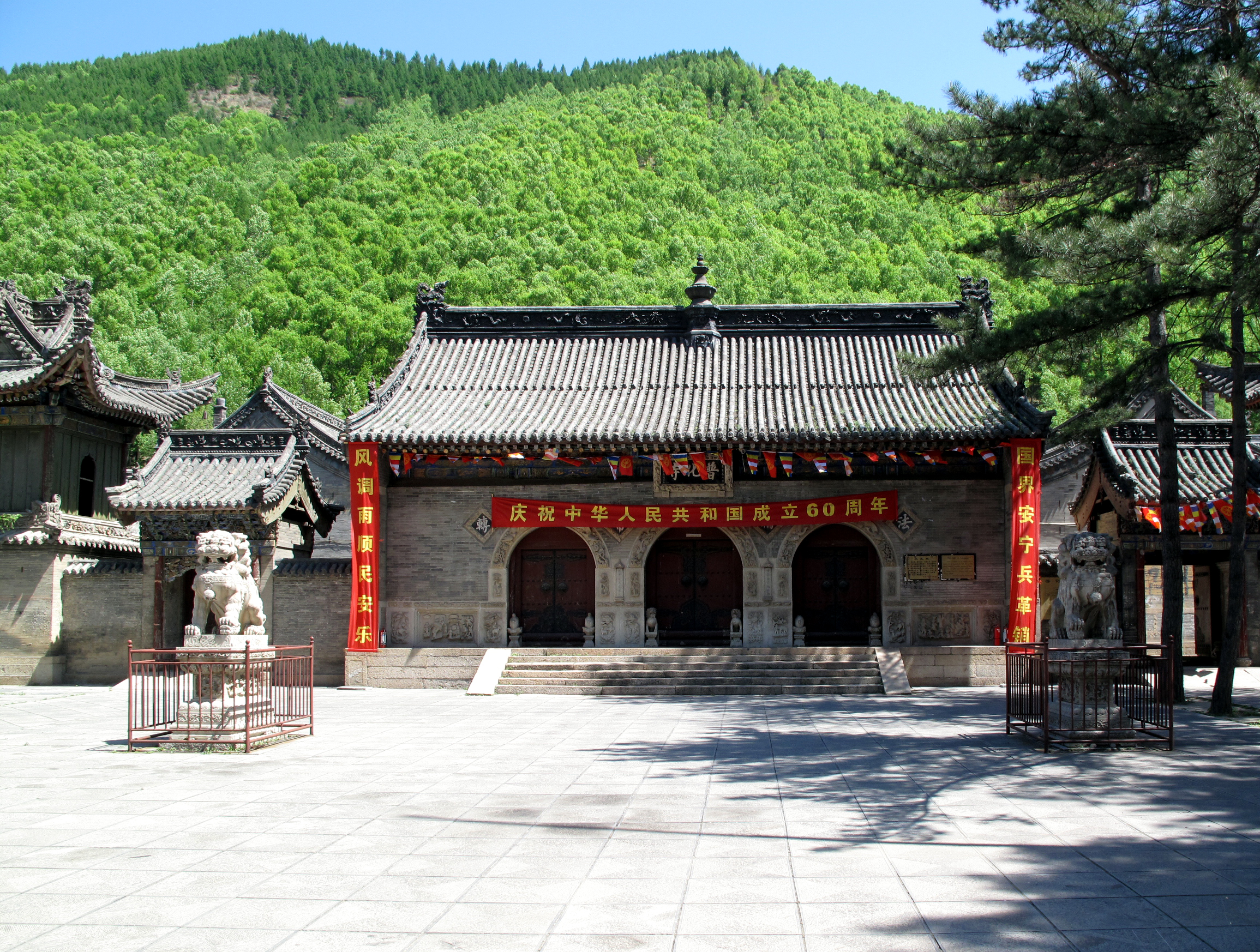
Puhua Temple
Walk through Puhua Temple and you encounter something unusual for a Buddhist monastery: a Hall of the Jade Emperor and a Hall of Lu Dongbin, the Taoist immortal and legendary swordsman. Buddhism and Taoism share these grounds as comfortably as neighbors who long ago stopped noticing the fence between them. The arrangement says something important about how Chinese religion actually works at the local level -- less as competing orthodoxies and more as overlapping traditions drawn from the same deep well of spiritual practice.
A Temple Without a Birthday
No one knows when Puhua Temple was founded. Its establishment date has been, in the words of its own records, "unable to be verified." What is known is that the temple carries three names: Puhua Temple, the Temple of the Jade Emperor, and the Palace of Indra. Each name points to a different devotional tradition -- Buddhist, Taoist, and Hindu-Buddhist respectively -- and all three have coexisted here for as long as anyone can remember. The present temple buildings were completed in 1925, during the Republic of China era, making Puhua one of the more recently rebuilt compounds on Mount Wutai. But the site's spiritual identity, rooted in this unusual blend of traditions, likely stretches back much further.
Gods of Fortune, Goddess of Mercy
The temple's zhaobi -- a spirit wall at the entrance designed to block evil influences -- offers a preview of the eclecticism inside. The front face is engraved with the Sanxing, the three Taoist deities of Fortune, Prosperity, and Longevity. On the reverse side, the Buddhist figures of Guanyin (the bodhisattva of compassion), Sudhana (a pilgrim from Buddhist scripture), and Longnu (the dragon princess) are carved into the stone. This juxtaposition on a single wall captures the temple's essential character. Inside, the Mahavira Hall follows a more conventional Buddhist arrangement, with Sakyamuni at the center flanked by Manjushri and Samantabhadra, and the Eighteen Arhats standing along both walls.
Layers of Devotion
Behind the Mahavira Hall, the Three Buddhas Hall adds further depth to the devotional landscape. Sakyamuni presides again, this time alongside Amitabha and Bhaisajyaguru (the Medicine Buddha). Two of the Buddha's foremost disciples -- the elder Kashyapa and the younger Ananda -- stand before him. Statues of Indra and Brahma, Hindu deities absorbed into the Buddhist pantheon, flank the trio of Buddhas. The four interior pillars of the hall are engraved with kalavinka -- mythical bird-human figures from Buddhist tradition whose voices are said to be the most beautiful sound in the universe. Puhua Temple covers 15,800 square meters and faces west, an orientation that sets it apart from most Chinese temples, which traditionally face south. The eastern placement looking westward may be a deliberate reference to the Western Pure Land of Amitabha Buddha.
From the Air
Located at 39.00N, 113.60E in the Taihuai Town temple complex on Mount Wutai, Shanxi Province, China. The 15,800 square meter compound is sizable. Elevation approximately 1,700 meters. Nearest airports: Wutai Mountain Airport (ZBWT) at roughly 50 km and Taiyuan Wusu International Airport (ZBYN) at approximately 230 km southwest. Recommend 3,000-5,000 feet AGL for viewing the temple cluster. Note the temple's east-facing orientation, unusual among the surrounding compounds.