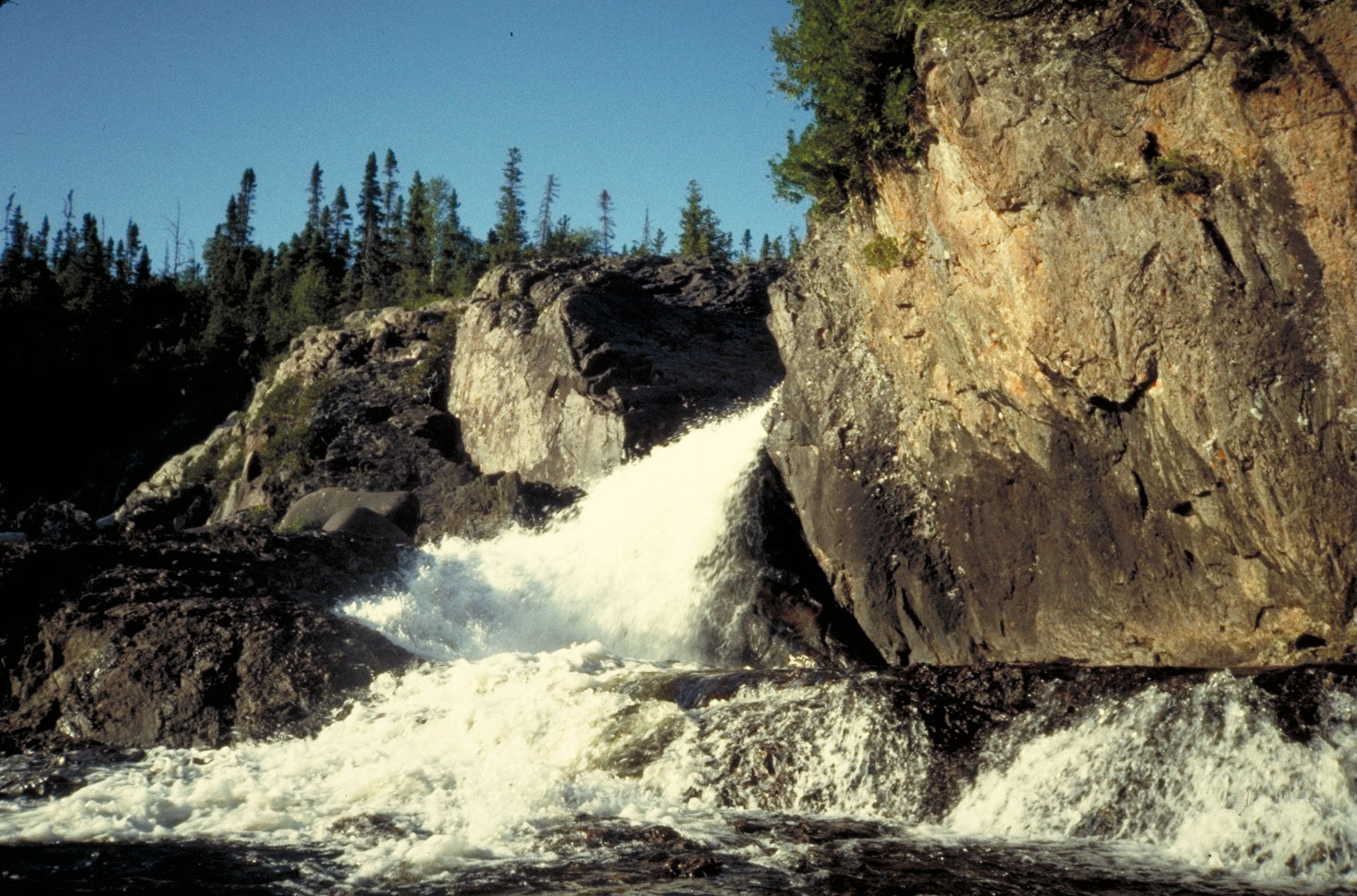
Pukaskwa National Park
Somewhere along the cobblestone beaches of northern Lake Superior, shallow depressions ringed by hand-placed stones have been sitting for centuries -- possibly millennia. Nobody knows exactly who built these Pukaskwa Pits, or why. Were they vision quest shelters? Hunting blinds? Fish-smoking hearths? Seasonal dwellings covered with caribou hide? About 250 of them line this stretch of shore, silent witnesses to a human presence that may reach back to 3000 BCE. The national park that bears their name protects 1,878 square kilometers of the most remote wilderness left on the Great Lakes, a place where boreal forest meets billion-year-old granite and the word 'undeveloped' is not a marketing slogan but a geological fact.
Shield Country
Pukaskwa sits on the Canadian Shield, an ancient plateau of granite and gneiss that ranks among the oldest exposed rock on Earth. The landscape is quintessential boreal: dense stands of black spruce, white spruce, jack pine, and trembling aspen blanketing a terrain of rock-rimmed lakes and tumbling rivers. The park protects the longest stretch of undeveloped shoreline anywhere on the Great Lakes -- a distinction that becomes vivid from the air, where the rocky coast runs unbroken by roads, towns, or marinas for dozens of kilometers. Lake Superior crashes against granite headlands with a force that has shaped this shore for ten thousand years, since the glaciers retreated and left behind the massive basin that holds the largest freshwater lake by surface area on the planet.
Stones Without Stories
The Pukaskwa Pits -- Maandawaab-kinganan in Ojibwe -- are the park's deepest mystery. These rock-lined depressions appear along the raised cobblestone beaches above the current lake level, evidence that they were built when the shore stood higher, thousands of years ago. Estimates of their age range from 1100 CE to as far back as 8000 BCE. The larger pits could have served as dwellings covered with domed frameworks of saplings and hides. Smaller pits may have been cooking hearths or fish-smoking stations. Some researchers believe they were vision quest sites where young Anishinaabe fasted in isolation. Whatever their purpose, they connect this landscape to the deep history of the people who have lived here through the Initial Woodland period, the Terminal Woodland period, and into the present. The Robinson-Superior Treaty of 1850 assured harvesting rights for First Nations members, and Anishinaabe people continue to practice traditional activities in the park today.
The Coastal Trail
Pukaskwa's 60-kilometer Coastal Hiking Trail is one of the most challenging backcountry routes in Ontario. It follows Lake Superior's edge from Hattie Cove southward, climbing steep headlands, crossing sandy and cobblestone beaches, and threading through dense boreal forest along the way. Two suspension bridges mark the trail's signature moments: one across the White River at Chigaamiwinigum Falls, swaying 23 meters above the cascade, and another across the Willow River. The White River bridge alone makes a rewarding 18-kilometer round-trip day hike. The trail is part of the Trans-Canada Trail and links with the longer Voyageur Hiking Trail. Backcountry campsites line the route, and paddlers can follow a parallel coastal route by kayak or canoe -- though finding the entrance to Hattie Cove from the water requires careful navigation, as the protected harbor is easy to paddle right past.
Wolves, Bears, and the Boreal Wild
Pukaskwa is home to the full cast of boreal predators and prey. Black bears forage along the shoreline in summer. Moose browse the wetlands and alder thickets. Timber wolves range through the interior, their howls carrying across the lakes on still nights. Lynx stalk snowshoe hares through the spruce bogs. Peregrine falcons nest on the cliff faces above Lake Superior, riding the thermals that rise from the sun-warmed granite. River otters and beavers work the inland waterways. The park was established in 1978 specifically to protect this ecosystem, and its remoteness has kept it remarkably intact. Highway 627, the only road into the park, dead-ends at Hattie Cove. Beyond that, the only way deeper is by trail or by water.
The Edge of Accessible
Getting to Pukaskwa is part of the experience. The park lies south of the small town of Marathon on the Trans-Canada Highway, a three-and-a-half-hour drive from Thunder Bay and five hours from Sault Ste. Marie. The name itself -- pronounced 'PUH-kuh-saw' -- comes from the Ojibwe language, though its precise meaning is debated. The park is open from May 15 to October 15, and the Hattie Cove campground operates from mid-May through Thanksgiving. There are no restaurants, no stores, no cell towers in the backcountry. Visitors bring everything they need and carry everything out. That austerity is the point. Pukaskwa offers what almost nowhere else on the Great Lakes can: shoreline that looks the way it did before European contact, boreal forest as thick and trackless as the interior of northern Quebec, and stone structures on the beach whose builders left no written record -- only the pits themselves, open to the sky, waiting.
From the Air
Pukaskwa National Park stretches along the northeastern shore of Lake Superior at approximately 48.25N, 85.89W, south of Marathon, Ontario. From the air, the park is identifiable by its unbroken forested coastline -- the longest undeveloped stretch on the Great Lakes -- with no roads, clearings, or settlements visible south of Hattie Cove. Look for the dramatic rocky headlands and the White River cutting through the forest. The single access road (Highway 627) terminates at Hattie Cove near the northern boundary. Recommended viewing altitude: 3,000-5,000 feet AGL for the coastal topography. Nearest airports: Marathon Aerodrome (CYSP) approximately 15nm north, Thunder Bay International (CYQT) approximately 150nm west, Sault Ste. Marie (CYAM) approximately 200nm southeast.