Pullman National Historical Park
George Pullman controlled everything. The rent, the water, the gas, the stores, even whether his workers could drink alcohol. When he built his company town south of Chicago in the early 1880s, Pullman believed beautiful architecture and total corporate oversight would produce loyal, productive employees. For a decade, it seemed to work. Then the Panic of 1893 gutted the railroad industry, and Pullman cut wages without reducing rents. The resulting strike paralyzed the nation's rail network, federal troops killed workers in the streets of Chicago, and the government scrambled to create Labor Day in the aftermath. Today, the brick rows and clock tower of Pullman stand as a National Historical Park - a monument to both the ambition and the arrogance of the company town idea.
The Engineer Who Raised Chicago
Born in Brocton, New York in 1831, George Pullman arrived in Chicago as the city was literally sinking into mud. He made his first fortune with an ingenious engineering solution: raising entire buildings on jackscrews to improve drainage. With that wealth, he founded the Pullman Palace Car Company in 1867, manufacturing luxury sleeping cars that transformed rail travel. Pullman's cars featured carpeting, upholstered chairs, and libraries, and they were typically leased to railroads with trained attendants - many of them formerly enslaved people recently freed by the Emancipation Proclamation. By the 1870s, Pullman dominated the sleeping car market and had turned his attention to a grander experiment: could you engineer a perfect workers' community the same way you engineered a perfect railroad car?
A Utopia with No Saloons
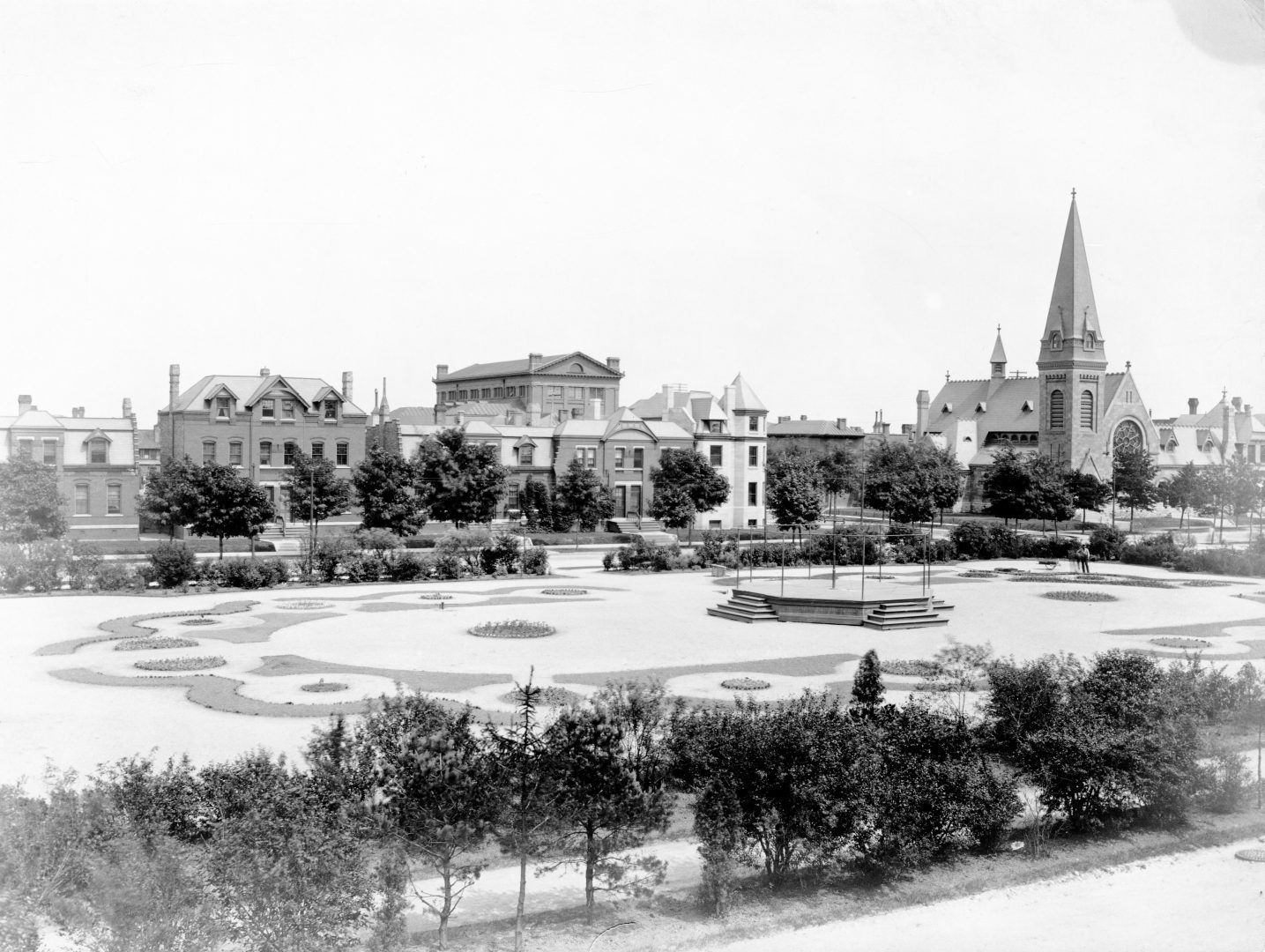
Between 1880 and 1884, Pullman built his model town on prairie land south of Chicago, between the Illinois Central Railroad line and Lake Calumet. The architecture was handsome: brick row houses for workers, more spacious homes for managers, an arcade building with a library and theater, parks, and the fifty-room Hotel Florence, named for Pullman's daughter and opened on November 1, 1881. The hotel featured the only bar in the entire community - Pullman considered alcohol destructive to worker productivity. The hotel cost $130,000 to build, and a suite on the second floor was kept permanently reserved for Pullman himself. Rent was deducted directly from wages. Workers could not own their homes or run businesses. The town attracted international attention as a social experiment, and during the 1893 World's Columbian Exposition, visitors flocked to see this unusual community advertised in the Transportation Building.
When the Wages Fell
The Panic of 1893 devastated demand for sleeping cars. Pullman slashed wages by 25 to 30 percent but refused to lower rents, insisting the housing operation was a separate business that had to remain profitable. Workers found themselves trapped - wages that once covered rent and food now did neither, and leaving meant abandoning the only home they knew in a company-owned town. When a delegation petitioned for relief, three of its members were fired. On May 11, 1894, workers walked out. The American Railway Union, led by Eugene Debs, attempted to mediate, but Pullman refused to negotiate. The ARU voted to boycott all trains carrying Pullman cars, and because Pullman sleepers were attached to most passenger trains, the national rail network ground to a halt. President Grover Cleveland sent federal troops. Violence erupted. Workers were killed. The strike was broken by July 20, and Debs went to prison.
From Company Town to National Park
The strike's aftermath discredited the company town model. A federal commission condemned Pullman's autocracy. When George Pullman died in 1897, his family buried him in a lead-lined casket under reinforced concrete, fearing his body would be desecrated. The community endured, though, passing from corporate control into the fabric of Chicago's South Side. Preservation efforts began in earnest in the 1970s, when the Historic Pullman Foundation purchased key buildings for rehabilitation. The district was named a Chicago Landmark in 1972. In 2015, President Barack Obama designated the site a national monument, and in 2022 it was redesignated Pullman National Historical Park. The restored clock tower administration building opened as a visitor center on Labor Day 2021, after toxic soil contaminated by decades of industrial use was painstakingly removed. The A. Philip Randolph Pullman Porter Museum, also within the park, honors the African American sleeping car porters who organized the Brotherhood of Sleeping Car Porters - the first Black labor union recognized by a major corporation.
From the Air
Located at 41.70°N, 87.61°W on Chicago's far South Side, roughly at 111th Street and Cottage Grove Avenue. From altitude, the Pullman Historic District is visible as a grid of uniform brick buildings distinct from surrounding development. The clock tower of the restored administration building is a useful landmark. Lake Calumet and the industrial corridor are visible to the east. Nearby airports include Chicago Midway (KMDW, 6 miles northwest) and Chicago O'Hare (KORD, 22 miles northwest). The Metra Electric Line's Pullman station provides rail access.