Qaboos bin Said
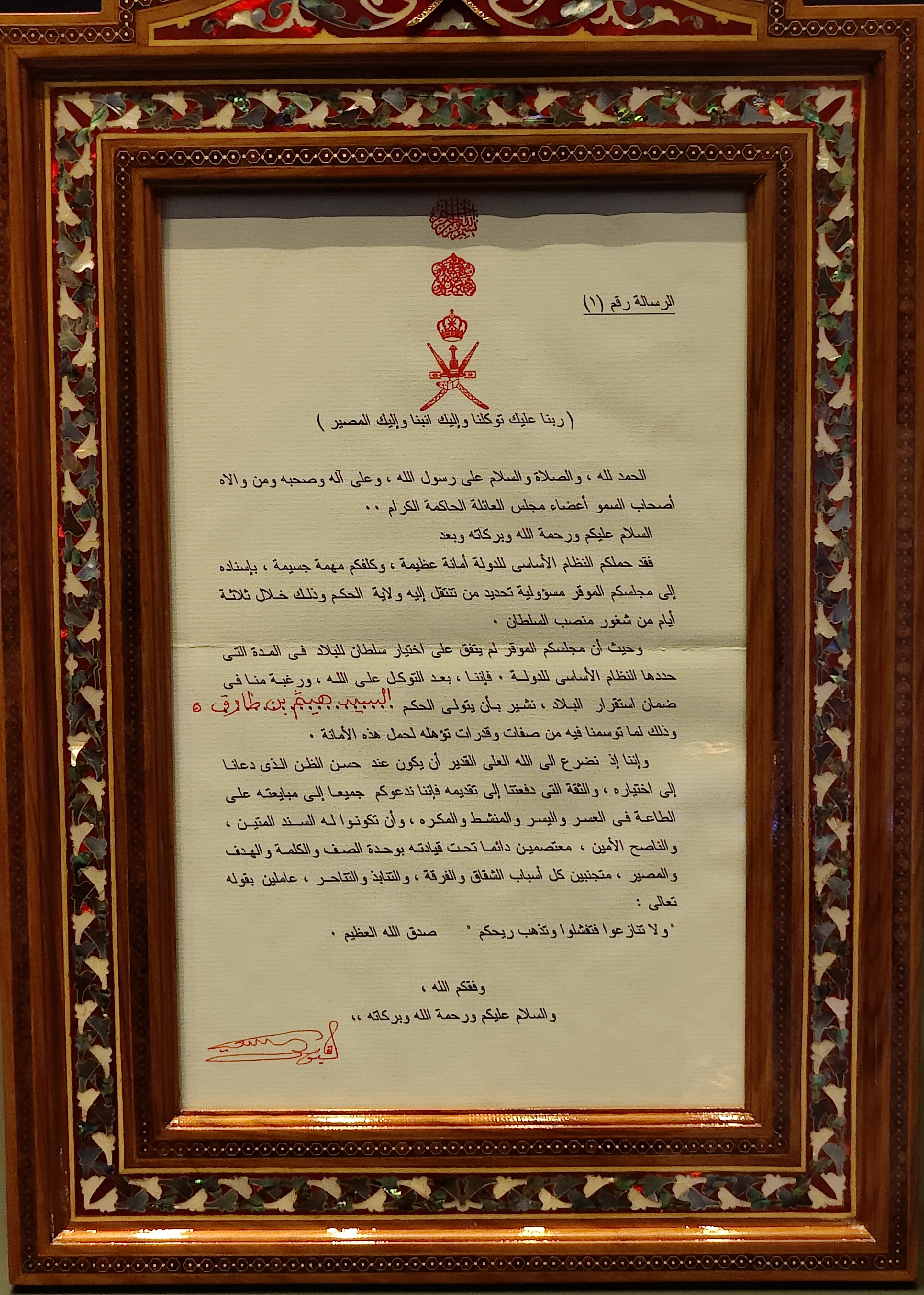
When Qaboos bin Said died on January 10, 2020, Oman's royal court opened a sealed letter. The Sultan had no children and no publicly designated heir. The letter, hidden against the possibility that the court could not agree on a successor, named his cousin Haitham bin Tariq. It was a characteristically Qaboos solution: quiet, prepared, and executed from beyond the grave. The man who had spent nearly 50 years transforming one of the most isolated nations on Earth into a modern state had planned his own succession with the same methodical care.
The Prisoner Prince
Qaboos was born on November 18, 1940, the only son of Sultan Said bin Taimur. His father sent him to England for education -- first to a private school in Suffolk, then to the Royal Military Academy Sandhurst, followed by a brief stint in the British Army. When Qaboos returned to Oman in 1966, his father placed him under what amounted to house arrest in Salalah. Said bin Taimur ruled a country deliberately kept in isolation: no television, limited education, restricted travel, and a capital whose gates closed at dusk. The old sultan viewed modernization as a threat. His son, trained by the British military and educated in a country that had just abolished rationing, saw his homeland differently.
The Coup of 1970
On July 23, 1970, Qaboos overthrew his father with British support. Said bin Taimur was wounded during the coup, exiled to London, and died there in 1972. Qaboos, at 29, became Sultan of what he immediately renamed the Sultanate of Oman -- dropping the older designation of Muscat and Oman that had divided coast from interior. The name change was programmatic. Qaboos intended to unify a country that his father had governed through fragmentation and neglect. He inherited a nation with almost no modern infrastructure, minimal healthcare, barely ten kilometers of paved road, and an active insurgency in the southern province of Dhofar.
Building a Country From Scratch
The modernization that followed was comprehensive and rapid. Qaboos abolished slavery. He built roads, schools, and hospitals. He opened Oman to international engagement after decades of self-imposed isolation. The Dhofar Rebellion, a Marxist insurgency backed by South Yemen and China, was defeated by 1976 with British and Iranian military assistance. Qaboos promulgated Oman's first constitution, the Basic Law of the State, in 1996. He created a consultative council, the Majlis al-Shura, that allowed limited citizen participation in governance. Oil revenues funded the transformation, but the direction was set by a ruler who combined autocratic power with a genuine vision of what Oman could become.
The Classical Sultan
Qaboos was a classically trained musician who played the lute and had a deep love of Western classical music. He ordered the construction of the Royal Opera House Muscat, which opened in 2011 with a production of Turandot conducted by Placido Domingo. The opera house was not merely vanity -- it expressed Qaboos's belief that cultural institutions were essential to national development. He never married, had no children, and maintained a private life that was genuinely private. His diplomatic style favored quiet mediation, and Oman under his rule maintained relationships with nations that were adversaries to each other -- Iran and the United States, Israel and the Arab world. The longest-serving ruler in the Middle East at the time of his death, Qaboos left behind a modern nation and a sealed envelope.
From the Air
Qaboos bin Said's legacy is visible across Muscat, from Al Alam Palace in Old Muscat (23.62N, 58.59E) to the Royal Opera House (23.61N, 58.47E) and the Sultan Qaboos Grand Mosque. He was born and spent his restricted years in Salalah (17.02N, 54.09E), roughly 1,000 km south of Muscat. Nearest airport to Old Muscat: Muscat International (OOMS). Salalah is served by Salalah Airport (OOSA).